
Tangaek — Decoctions · Trees
紫葳 Trumpet creeper
 Related Crop · Trumpet creeper →
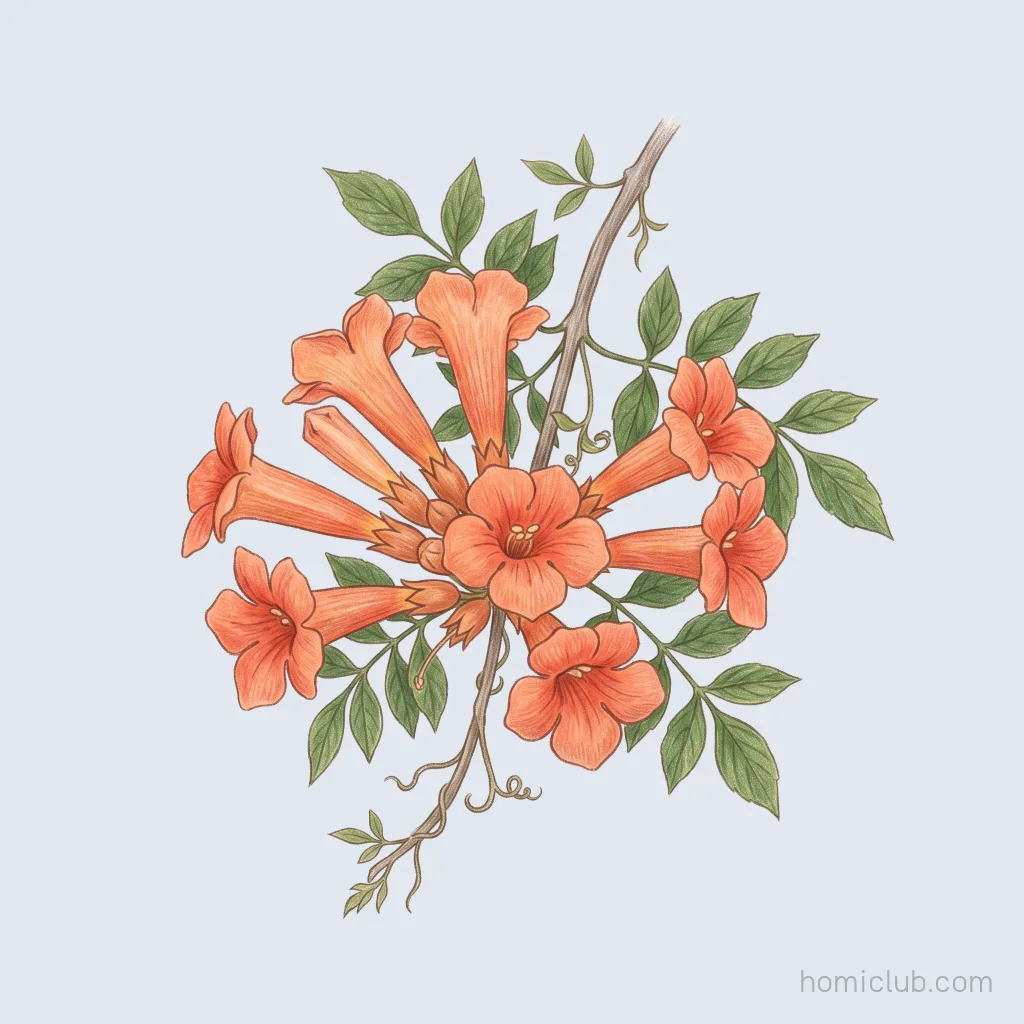
Jawi is the flower of the Chinese trumpet creeper. The vine climbs walls and tall trees and opens orange trumpet-shaped blooms at the height of summer, better known now as a garden climber. Dongui Bogam enters it under the name jawi and gives neungsohwa as its alternate, with the flowers picked and dried.
Original, read line by line 東醫寶鑑 · Tangaek — Decoctions vol. 3
-
性微寒, 味酸一云甘, 無毒. 主婦人産乳餘疾, 崩中, 癥瘕, 血閉, 産後奔血不定, 及崩中, 帶下.
Its nature is slightly cold and its taste sour, though one account calls it sweet, and it is non-toxic. It chiefly treats a woman's lingering disorders after childbirth and nursing, bungjung (崩中, flooding), jingga (癥瘕, abdominal masses), hyeolpye (血閉, blocked menses), unsettled flooding of blood after delivery, and daeha (帶下, vaginal discharge).
HomiclubJawi is the flower of the trumpet creeper. It is a vine that climbs walls and large trees, opening orange trumpet-shaped blossoms in midsummer, and is now better known as a garden climber.
-
能養血安胎, 治酒㾴, 熱毒, 風刺, 利大小便.
It nourishes the blood and settles the fetus, treats jusa (酒㾴, red nose from drink), heat toxin, and pungja (風刺, wind-borne eruptions), and promotes both stool and urine.
-
一名凌霄花, 在處有之. 初作藤蔓生依大木, 歲久延引至巓而有花, 其花黃赤色.
Another name for it is neungsohwa, and it grows everywhere. At first it forms a vine that leans on a large tree to grow, and after many years it stretches up to the crown and flowers there, its blossoms a yellowish red.
-
夏中乃盛, 採花乾用. 《本草》
It comes into its fullness in midsummer; gather the flowers and dry them for use. 《Boncho (本草)》
-
凌霄花, 治血中痛之要藥也. 且補陰甚捷. 《丹心》
Neungsohwa is an essential medicine for treating pain within the blood. It also supplements yin very swiftly. 《Dansim (丹心)》
HomiclubThe trumpet creeper was once called yangban-kkot, the nobleman's flower, from the belief that only gentry households planted it. A clue for recognizing the vine is that its spent blossoms drop whole and pile up intact beneath it.
Related Crop
Trumpet creeper →
Trees — more entries
This is a cultural and historical record from a classical text, not a claim about any food’s effects. Nothing here is a health supplement or intended to prevent or treat disease. Consult a medical professional about health concerns. · Text: Korean Medicine Classics DB · Reading: Homiclub