
Tangaek — Decoctions · Trees
蜀椒 Korean Pepper Tree (Chopi)
 Related Crop · Korean Pepper Tree (Chopi) →
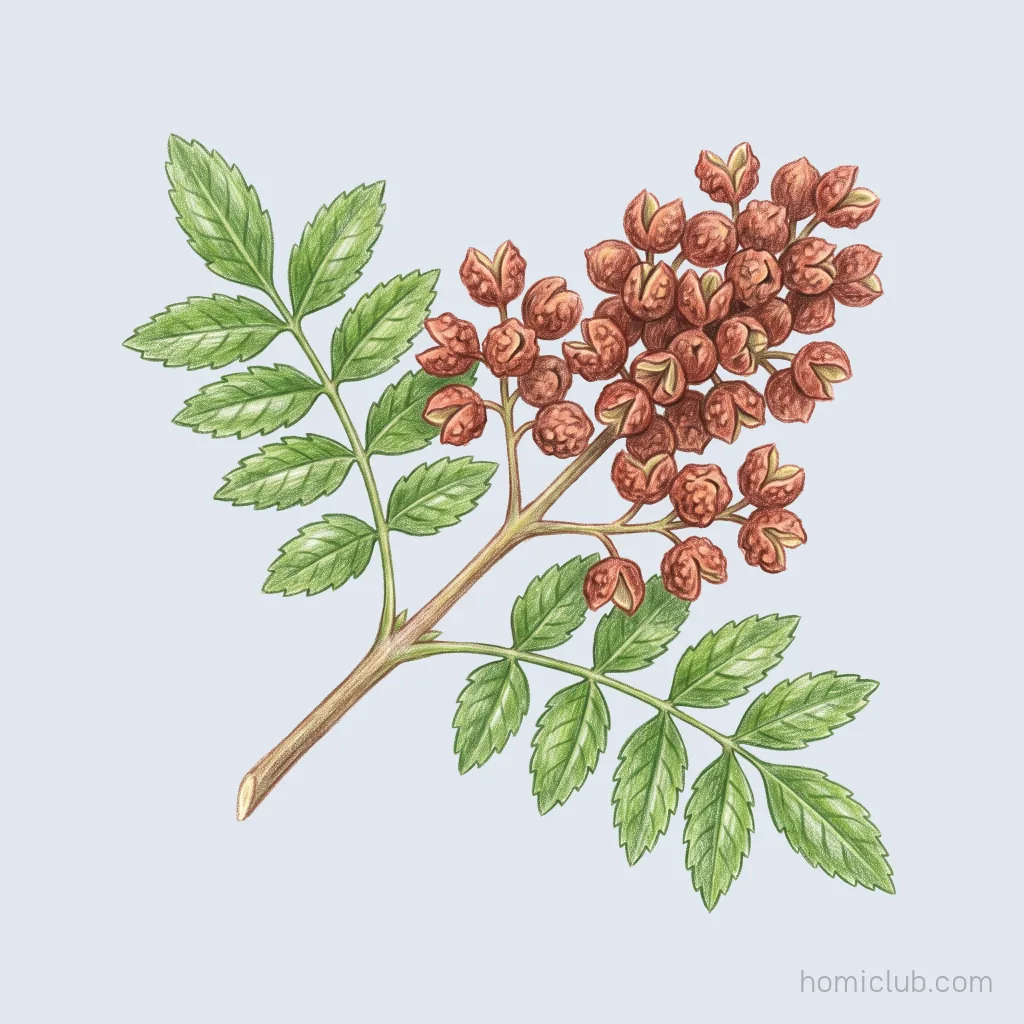
Chopi is the fruit husk of the Korean prickly ash, the same tree as the chopi in the crop guide. Ground fine, it is the sharp citrusy pepper sprinkled over loach soup. Dongui Bogam enters it as chokcho, lists chuncho, pacho and hancho as other names, and has the fruit gathered in the eighth month and dried in shade.
Original, read line by line 東醫寶鑑 · Tangaek — Decoctions vol. 3
-
性熱, 味辛, 有毒一云小毒. 溫中. 主皮膚死肌, 寒濕痺痛. 除六府寒冷, 鬼疰蠱毒, 殺蟲魚毒.
Its nature is hot and its taste pungent, and it is toxic, though one account calls the toxicity slight. It warms the center. It chiefly treats dead flesh on the skin and the numb pain of cold-damp. It clears cold in the six bowels, gwiju (鬼疰, corpse-transmitted disorder) and godok (蠱毒, gu poisoning), and kills the poison of insects and fish.
HomiclubChopi is the fruit husk of the Korean pepper tree, a citrus-family shrub. Ground fine it becomes jepi powder, sprinkled over loach soup and spicy fish stews.
-
除齒痛, 壯陽, 止陰汗, 煖腰膝, 縮小便, 下氣.
It removes toothache, strengthens yang, stops sweating of the genitals, warms the loins and knees, reduces urination, and brings down qi.
-
在處有之. 樹高四五尺, 似茱萸而小, 有鍼刺. 葉堅而滑.
It grows everywhere. The tree stands four or five ja (尺, feet) high, resembles the suyu tree but smaller, and bears needle-like thorns. Its leaves are firm and smooth.
-
四月結子無花, 但生於葉間, 如小豆顆而圓, 皮紫赤色.
It sets fruit in the fourth month without flowers, appearing only between the leaves, round like a red-bean grain, with a purplish red husk.
HomiclubThe claim that it has no flowers likely comes from the blossoms being tiny and yellow-green, tucked into the leaf axils where they escape notice. The ripe fruit splits open to reveal a glossy black seed inside.
-
八月採實, 陰乾, 一名川椒, 一名巴椒, 一名漢椒.
Gather the fruit in the eighth month and dry it in the shade; other names for it are cheoncho, pacho, and hancho.
-
蜀椒皮肉厚, 腹裏白, 氣味濃烈. 凡使須去目及閉口者, 勿用, 合口者殺人.
Chokcho has a thick husk, white within, with a strong and pungent scent and taste. Whenever it is used the seeds must be removed, and those whose mouths stay closed must not be used, for the closed-mouthed ones kill a person.
-
微火熬之, 令汗出, 乃有勢力, 舂之取紅末用. 《本草》
Parch it over a low fire until it sweats, and only then does it have force; pound it and take the red powder for use. 《Boncho (本草)》
-
酒拌濕蒸, 入瓮陰乾, 勿見風. 《入門》
Mix it with liquor, steam it damp, put it in a crock, and dry it in the shade without letting it meet the wind. 《Immun (入門)》
Related Crop
Korean Pepper Tree (Chopi) →
Trees — more entries
This is a cultural and historical record from a classical text, not a claim about any food’s effects. Nothing here is a health supplement or intended to prevent or treat disease. Consult a medical professional about health concerns. · Text: Korean Medicine Classics DB · Reading: Homiclub