
Tangaek — Decoctions · Herbs
地楡 Great burnet
 Related Crop · Great burnet →
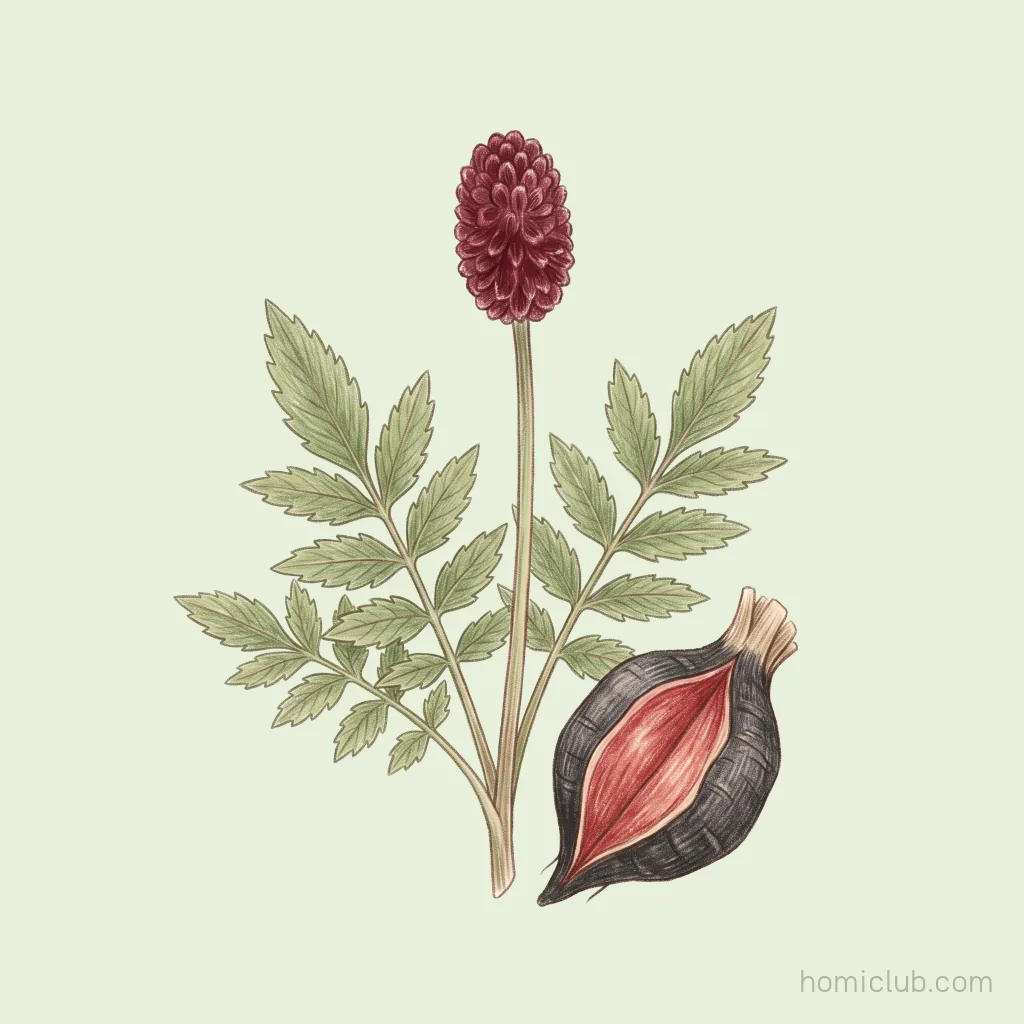
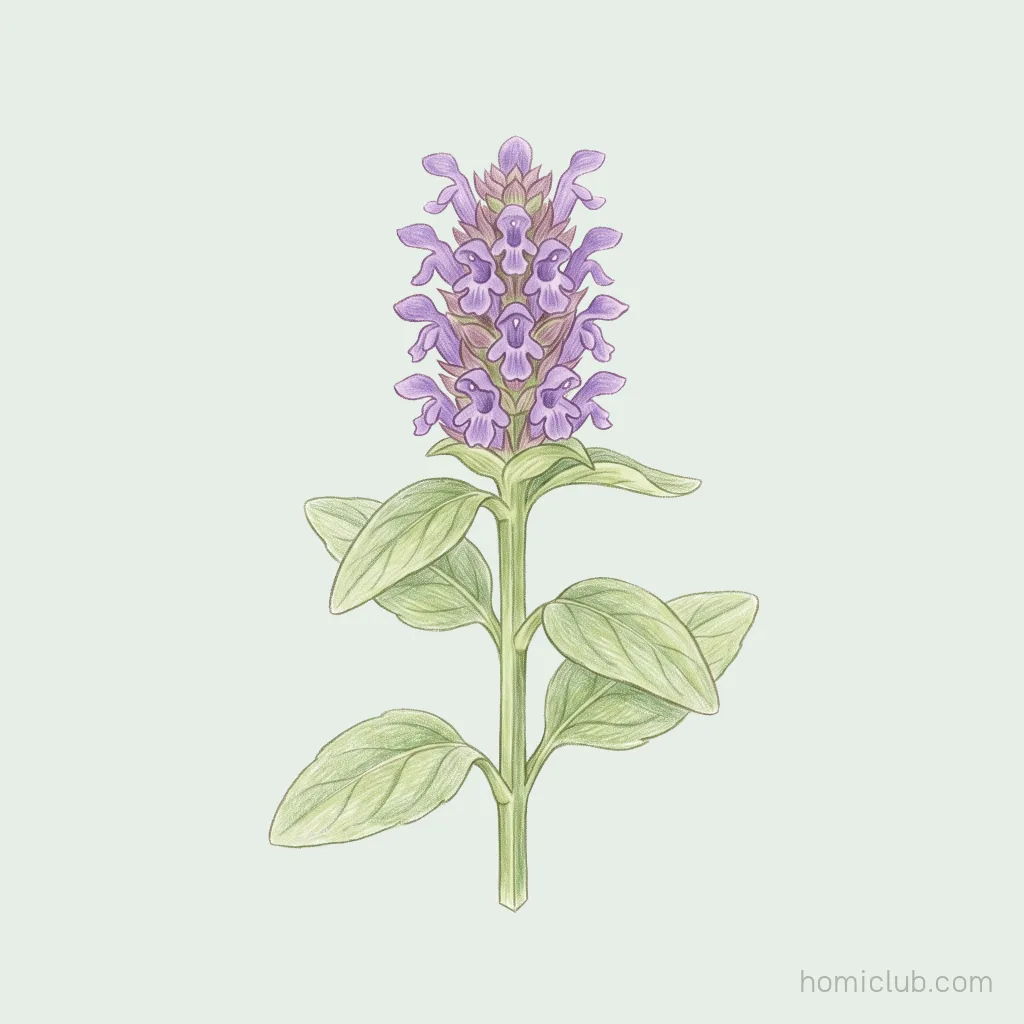
Jiyu is the root of great burnet. Crushed leaves smell of cucumber, which is where the Korean name oiipul comes from, and the dark purple flower heads earned it the nickname oksi, jade soybean paste. The root is black outside and red within, dug in the second and eighth months and sun-dried.
Original, read line by line 東醫寶鑑 · Tangaek — Decoctions vol. 3
-
性微寒一云平, 味苦甘酸, 無毒.
Its nature is slightly cold, though some say neutral. The taste is bitter, sweet, and sour, with no toxicity.
-
主婦人七傷帶下病, 及産後瘀痛.
It primarily treats the seven types of injuries in women and leukorrhea, as well as stagnant-blood pain after childbirth.
-
止血痢, 排膿, 療金瘡.
It stops bloody dysentery, drains pus, and heals wounds caused by metal blades.
-
生山野.
It grows in mountains and open fields.
-
葉似楡而長.
The leaves resemble those of the elm tree but are longer.
-
花子紫黑色如豉, 故一名玉豉.
The flowers and seeds are purplish-black like fermented soybeans, hence its alternative name 'jade-douchi' (玉豉).
-
根外黑裏紅.
The root is black on the outside and red on the inside.
-
二月八月採根, 暴乾. 《本草》
The roots are harvested in the second and eighth months and dried in the sun. 《Bencao》
-
性沈寒, 入下焦, 治熱血痢,
Its nature is sinking and cold, entering the lower burner to treat heat-induced bloody dysentery.
-
去下焦之血, 腸風及瀉痢, 下血須用之.
It removes blood from the lower burner and is essential for intestinal wind, diarrhea, dysentery, and bleeding from the lower body.
-
陽中微陰, 治下部血. 《湯液》
It is yang with a slight yin quality, treating bleeding in the lower body. 《Tangye》
Related Crop
Great burnet →
Herbs — more entries
This is a cultural and historical record from a classical text, not a claim about any food’s effects. Nothing here is a health supplement or intended to prevent or treat disease. Consult a medical professional about health concerns. · Text: Korean Medicine Classics DB · Reading: Homiclub