
Tangaek — Decoctions · Trees
合歡皮 Silk tree
 Related Crop · Silk tree →
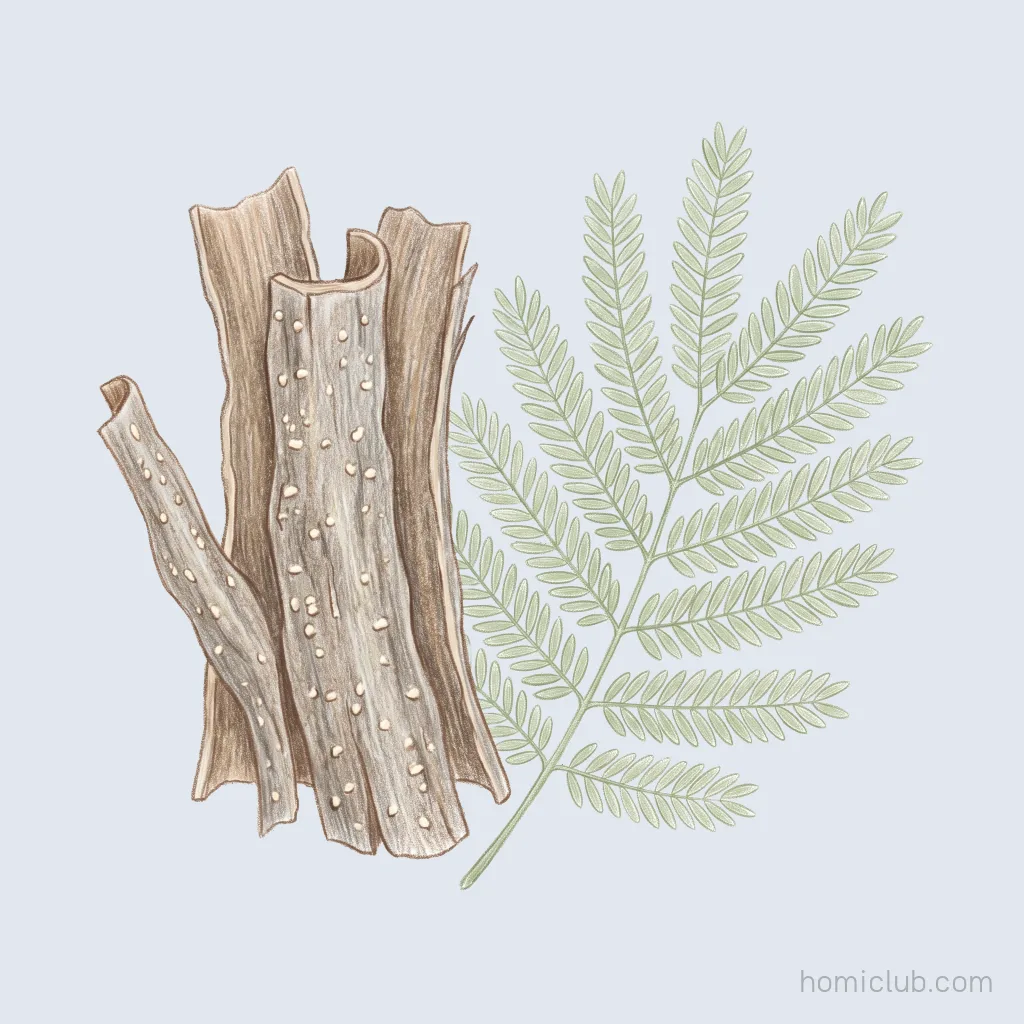
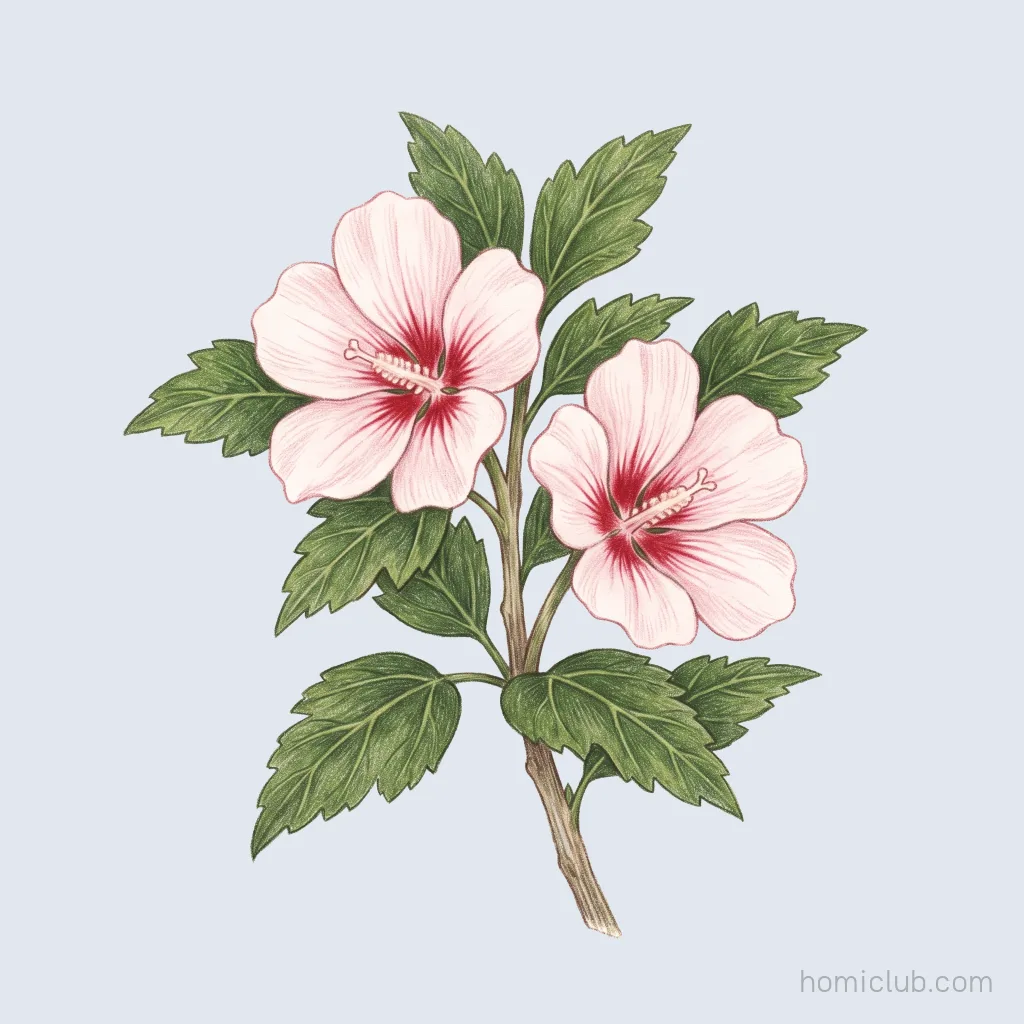
Hahwanpi is the stem bark of the silk tree. The tree opens thread-like pink flowers in summer and folds its leaflets together at dusk, which is why the Donguibogam also records the names haphon and yahappi. It remains a common garden tree today.
Original, read line by line 東醫寶鑑 · Tangaek — Decoctions vol. 3
-
性平, 味甘, 無毒.
Its nature is balanced, its taste sweet, and it is without toxicity.
-
主安五藏, 利心志, 令人歡樂無憂.
It chiefly calms the five viscera, benefits the heart and the will, and makes a person joyful and free of worry.
-
木似梧桐, 枝甚柔弱, 葉似皂莢槐等, 極細而繁密, 互相交結.
The tree resembles the paulownia, its branches are very soft and weak, and its leaves resemble those of the honey locust and the pagoda tree, exceedingly fine and dense, interlocking with one another.
-
其葉至暮而合, 故一名合昏.
Its leaves fold together at dusk, and for that reason it is also called hehun, the dusk-joiner.
HomiclubSilk tree leaflets fold shut at sundown and open again in the morning. That habit produced the names hehun and yahapsu, night-joining tree, and the Korean name is likewise traced to sleeping.
-
五月花發黃白色, 瓣上若絲茸然.
In the fifth month it blooms yellowish white, the petals topped with what looks like silken down.
HomiclubThe silk tree's bloom is a fan of thread-like stamens that reads as pink from a distance. The yellowish white described here is the pale lower half of those threads.
-
至秋而實作莢, 子極薄細.
By autumn the fruit forms pods, and the seeds are exceedingly thin and small.
-
不拘時月, 採皮及葉用.
Without regard to season, the bark and leaves are gathered for use.
-
又名夜合皮. 《本草》
It is also named yehepi, night-joining bark. 《Bencao》
-
主肺癰吐膿.
It governs lung abscess with the spitting of pus.
-
又殺蟲, 續筋骨, 消癰腫. 《入門》
It also kills worms, knits sinew and bone, and disperses abscesses and swellings. 《Rumen》
-
養生論曰, 合歡蠲忿, 卽此也.
The Yangshenglun says that hehuan dispels resentment, and this is that very tree.
-
樹之階庭, 使人不忿. 《入門》
Planted by the courtyard steps, it keeps people from anger. 《Rumen》
-
榮花樹皮, 卽夜合花根也. 《回春》
Ronghuashupi is the root of the yehe flower. 《Huichun》
Related Crop
Silk tree →
Trees — more entries
This is a cultural and historical record from a classical text, not a claim about any food’s effects. Nothing here is a health supplement or intended to prevent or treat disease. Consult a medical professional about health concerns. · Text: Korean Medicine Classics DB · Reading: Homiclub