
탕액편 · 초부 (풀)
天麻 천마 (천마)
 관련 작물 · 천마 →
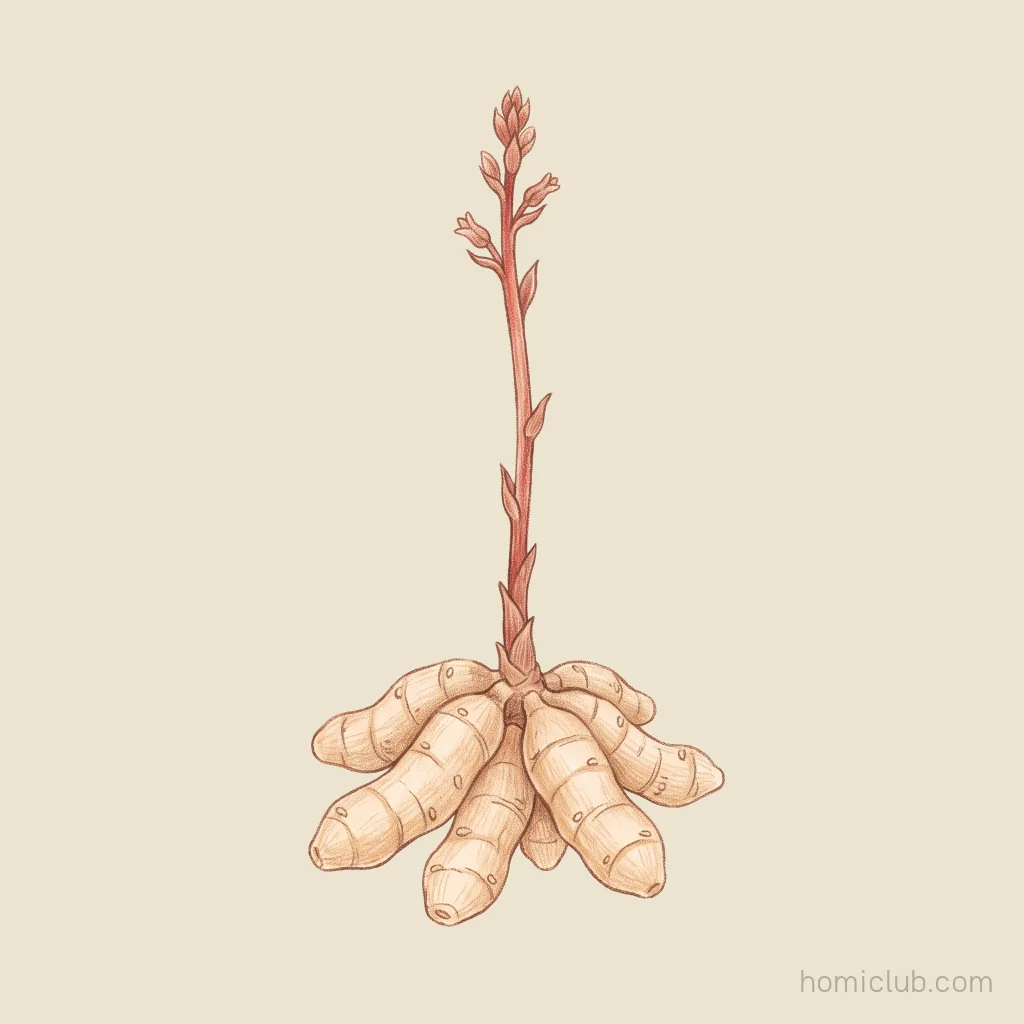
천마는 난초과 여러해살이풀의 덩이줄기다. 잎 없이 붉은 대만 곧게 솟아 적전(赤箭)이라 부르던 그 풀의 뿌리로, 지금은 밭에서 길러 즙·가루·환으로 팔린다. 《동의보감》은 껍질을 긁고 살짝 데쳐 볕에 말리라 적었다.
원문 풀이 東醫寶鑑 · 탕액편 권3
-
性平一云寒, 味辛一云甘, 無毒.
성평일운한, 미신일운감, 무독.
성질이 평하다 하고 더러 차다고도 합니다. 맛은 매우면서 달다는 말도 있으며, 독은 없습니다.
-
主諸風濕痺, 四肢拘攣, 小兒風癎驚氣.
주제풍습비, 사지구련, 소아풍간경기.
온갖 풍습으로 저린 증세, 팔다리가 굳어 오그라드는 증세, 어린아이의 풍간과 놀라 생긴 기운을 다스립니다.
-
治眩暈風癎, 語言蹇澁, 多驚失志.
치현훈풍간, 어언건삽, 다경실지.
어지럼증과 풍간을 다스리고, 말이 어눌해지는 증세와 자주 놀라며 정신을 잃는 증세에도 씁니다.
-
强筋骨, 利腰膝.
강근골, 이요슬.
힘줄과 뼈를 단단하게 하고, 허리와 무릎을 부드럽게 움직이도록 돕습니다.
-
卽赤箭根也.
즉적전근야.
바로 적전의 뿌리입니다. 적전은 줄기가 붉은 화살처럼 곧게 서는 모양에서 붙은 이름입니다.
-
形如黃瓜, 連生一二十枚.
형여황과, 연생일이십매.
생김새가 오이를 닮았고, 한자리에 열 개에서 스무 개가 잇달아 붙어 자랍니다.
-
二月三月五月八月採根, 暴乾.
이월삼월오월팔월채근, 폭건.
이월, 삼월, 오월, 팔월에 뿌리를 캐어 햇볕에 바짝 말립니다.
-
苗名定風草, 採得乘潤刮去皮, 沸湯略煮過, 暴乾收之.
묘명정풍초, 채득승윤괄거피, 비탕약자과, 폭건수지.
싹은 정풍초라 부릅니다. 캐낸 뒤 물기가 남아 있을 때 껍질을 긁어 벗기고, 끓는 물에 잠깐 데쳐서 햇볕에 말린 다음 갈무리합니다.
-
堅實者佳. 《本草》
견실자가. 《본초》
단단하고 속이 꽉 찬 것이 좋습니다. 《본초》에 나옵니다.
-
諸虛眩暈, 非此不能除也. 《丹心》
제허현훈, 비차불능제야. 《단심》
여러 가지 허로 생기는 어지럼증은 이 약이 아니면 다스릴 수 없습니다. 《단심》에 나옵니다.
관련 작물
천마 →
초부 (풀) 의 다른 항목

옛 문헌을 문화·역사 자료로 옮긴 것이며, 특정 식품의 효능을 주장하지 않습니다. 여기 소개된 것은 건강기능식품이 아니고 질병의 예방·치료를 위한 것이 아닙니다. 건강 문제는 의료 전문가와 상담하세요. · 동의보감(자체 풀이)