
Tangaek — Decoctions · Trees
梔子 Gardenia
 Related Crop · Gardenia →
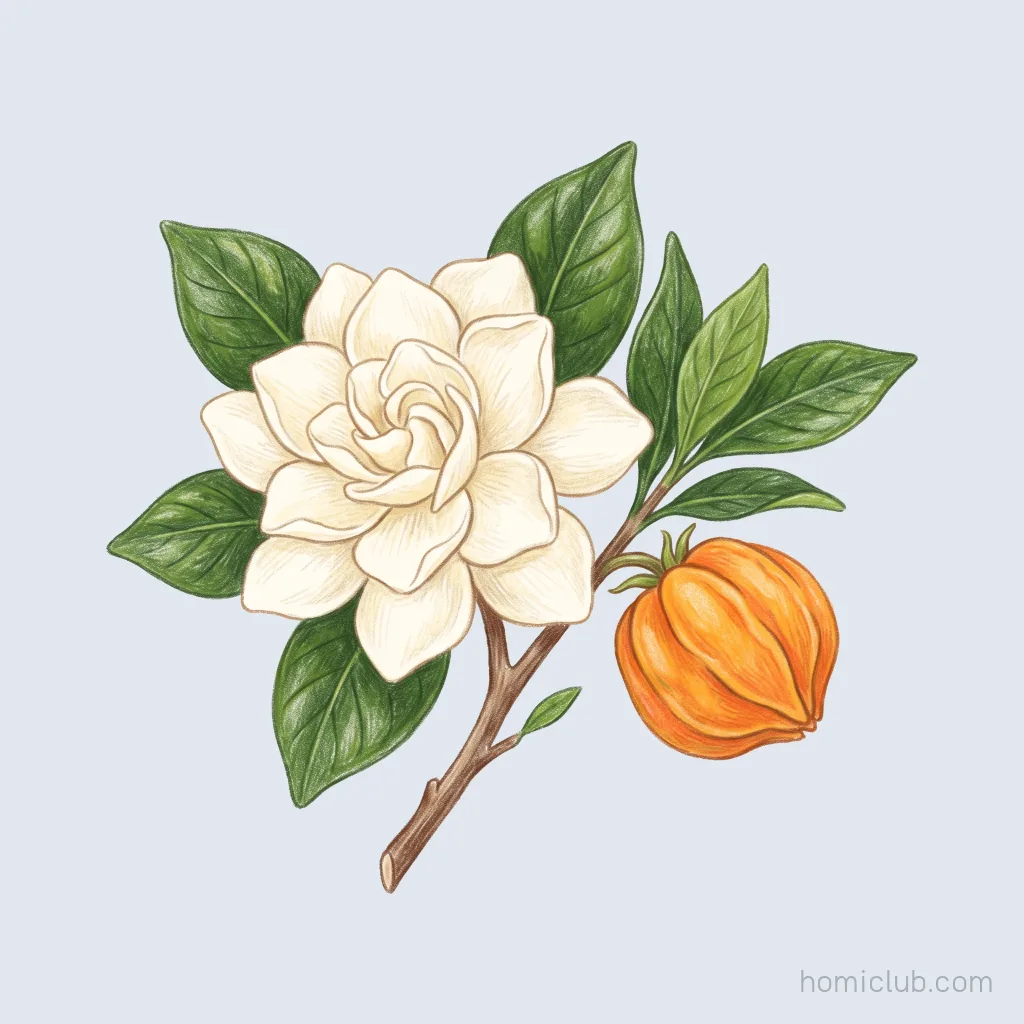
Chija is the red autumn fruit of an evergreen shrub in the madder family. Its crocin pigment is what turns pickled radish, savory pancakes, and traditional sweets yellow, and it is the same gardenia as the one in the crop guide. The Donguibogam lists it in the tree section and rates the small, roughly seven-ridged mountain kind highest.
Original, read line by line 東醫寶鑑 · Tangaek — Decoctions vol. 3
-
性寒, 味苦, 無毒.
Its nature is cold, its taste bitter, and it is without toxicity.
-
主胸心大小腸大熱, 胃中熱氣, 心中煩悶.
It governs great heat in the chest, heart, large and small intestines, heat qi within the stomach, and vexation and oppression in the heart.
-
去熱毒風, 利五淋, 通小便, 除五種黃病, 止消渴.
It removes heat-toxin wind, frees the five kinds of strangury, opens urination, removes the five kinds of jaundice, and stops wasting-thirst.
-
治口乾, 目赤腫痛, 面赤, 酒皰, 齄鼻, 白癩, 赤癩, 瘡瘍, 殺蟅蟲毒.
It treats dry mouth, red swollen painful eyes, a red face, jiupao (drink pimples), zhabi (red swollen nose), bailai and chilai (white and red skin blotches), and sores and ulcers, and it kills the toxin of the zhe insect.
-
葉似李而厚硬.
Its leaves resemble the plum's, but are thick and stiff.
-
二三月開白花, 花皆六出, 甚芬香.
In the second and third months it opens white flowers, each of six lobes, and very fragrant.
HomiclubGardenia flowers open white, yellow as they fade, and carry their scent a long way. In Korea they bloom in the southern provinces through June and July.
-
夏秋結實, 生靑熟黃, 中仁深紅.
It sets fruit in summer and autumn, green when unripe and yellow when ripe, with deep red kernels inside.
HomiclubThe fruit is a yellow dye. It still colors pickled radish, savory jeon pancakes and traditional confections.
-
九月採實, 暴乾.
The fruit is gathered in the ninth month and dried in the sun.
-
入藥用山梔子, 方書所謂越桃, 皮薄而圓小, 刻房七稜至九稜者, 爲佳. 《本草》
For medicine one uses shanzhizi, what the formula books call yuetao; those with thin skin, round and small, with seven to nine ridges cut into the capsule, are the good ones. 《Bencao》
-
小而七稜者佳.
Small ones with seven ridges are good.
-
長大者亦可用, 但無力耳. 《丹心》
Long, large ones may also be used, only they lack strength. 《Danxin》
-
入手太陰經, 治心煩懊憹不得眠, 能瀉肺中之火. 《湯液》
It enters the hand taiyin channel, treats vexation and anguish that prevent sleep, and can drain fire from the lung. 《Tangye》
-
用仁, 去心胸熱, 用皮, 去肌表熱.
Using the kernel removes heat in the heart and chest; using the skin removes heat at the surface of the flesh.
-
尋常生用, 虛火, 童便炒七次至黑色, 止血, 炒如墨, 涼肺胃, 酒泡用. 《入門》
Ordinarily it is used raw; for vacuity fire it is roasted seven times in a boy's urine until black; to stop bleeding it is roasted until it looks like ink; to cool the lung and stomach it is soaked in liquor before use. 《Rumen》
Related Crop
Gardenia →
Trees — more entries
This is a cultural and historical record from a classical text, not a claim about any food’s effects. Nothing here is a health supplement or intended to prevent or treat disease. Consult a medical professional about health concerns. · Text: Korean Medicine Classics DB · Reading: Homiclub