
Tangaek — Decoctions · Trees
雞舌香 Clove
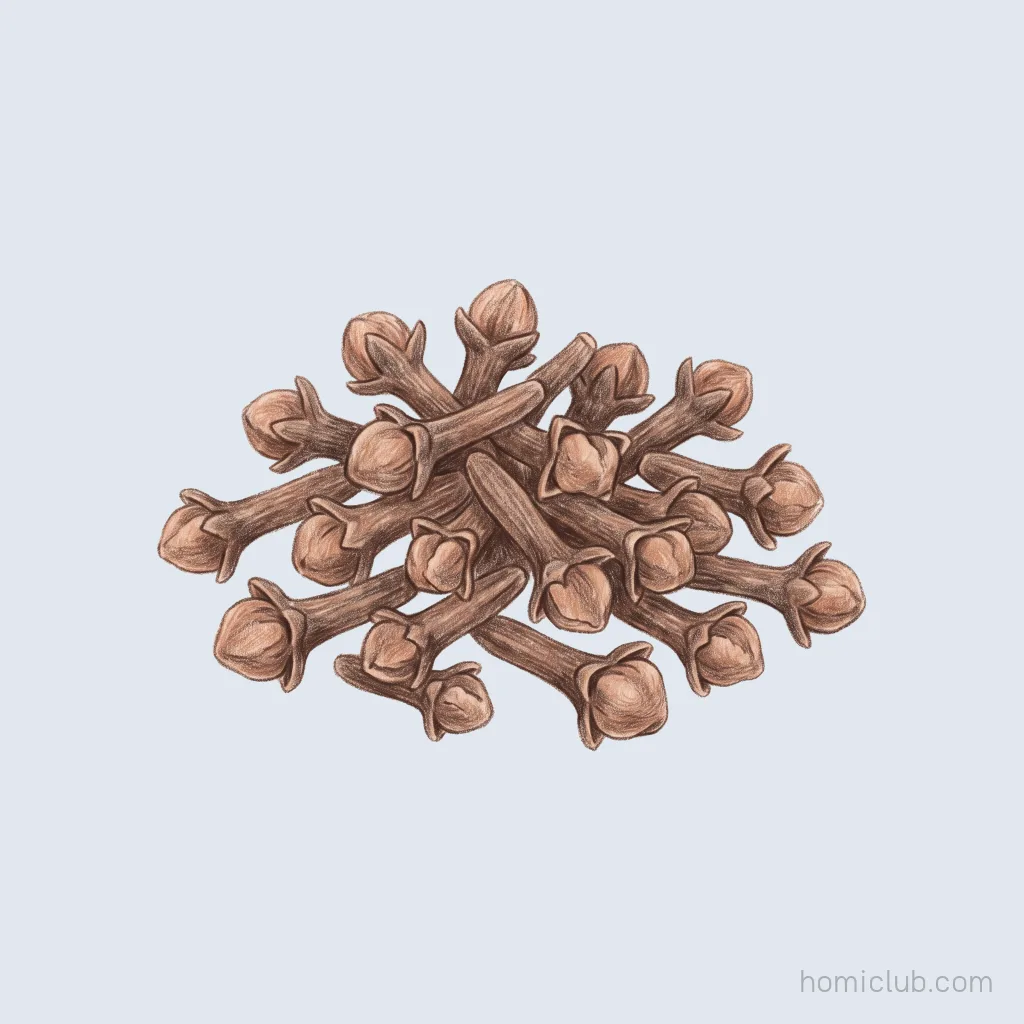 Related Crop · Clove →
Gyeseolhyang is the name given to cloves as large as a jujube stone. They belong to the same spice sold as clove today. An anecdote carried with the name tells of Ying Shao, a Han court official, receiving them from the emperor and holding them in his mouth.
Original, read line by line 東醫寶鑑 · Tangaek — Decoctions vol. 3
-
療口臭. 漢侍中應邵, 年老口臭, 帝賜雞舌香, 含之.
It addresses foul breath. When Eung So, a palace attendant of the Han, grew old and his breath turned foul, the emperor bestowed gyeseolhyang on him and he held it in his mouth.
HomiclubThe name gyeseolhyang means chicken-tongue fragrance, after its shape. Several records preserve the Han court practice of officials holding a fragrance in the mouth before approaching the throne.
-
今人於丁香中, 大如棗核者, 呼爲雞舌香, 堅頑枯燥, 了無香氣.
People today call the cloves as large as a jujube stone gyeseolhyang, but these are hard and stubborn and dried out, with no fragrance at all.
-
或云, 雞舌香出崑崙交廣, 採百花釀之以成香, 故口含此香, 欲使氣芬芳耳. 《本草》
Some say gyeseolhyang comes from Kunlun and from Jiao and Guang, that it is made by gathering a hundred flowers and fermenting them into a fragrance, and that holding it in the mouth is simply to make the breath sweet. 《Boncho (本草)》
Related Crop
Clove →
Trees — more entries
This is a cultural and historical record from a classical text, not a claim about any food’s effects. Nothing here is a health supplement or intended to prevent or treat disease. Consult a medical professional about health concerns. · Text: Korean Medicine Classics DB · Reading: Homiclub