
Tangaek — Decoctions · Trees
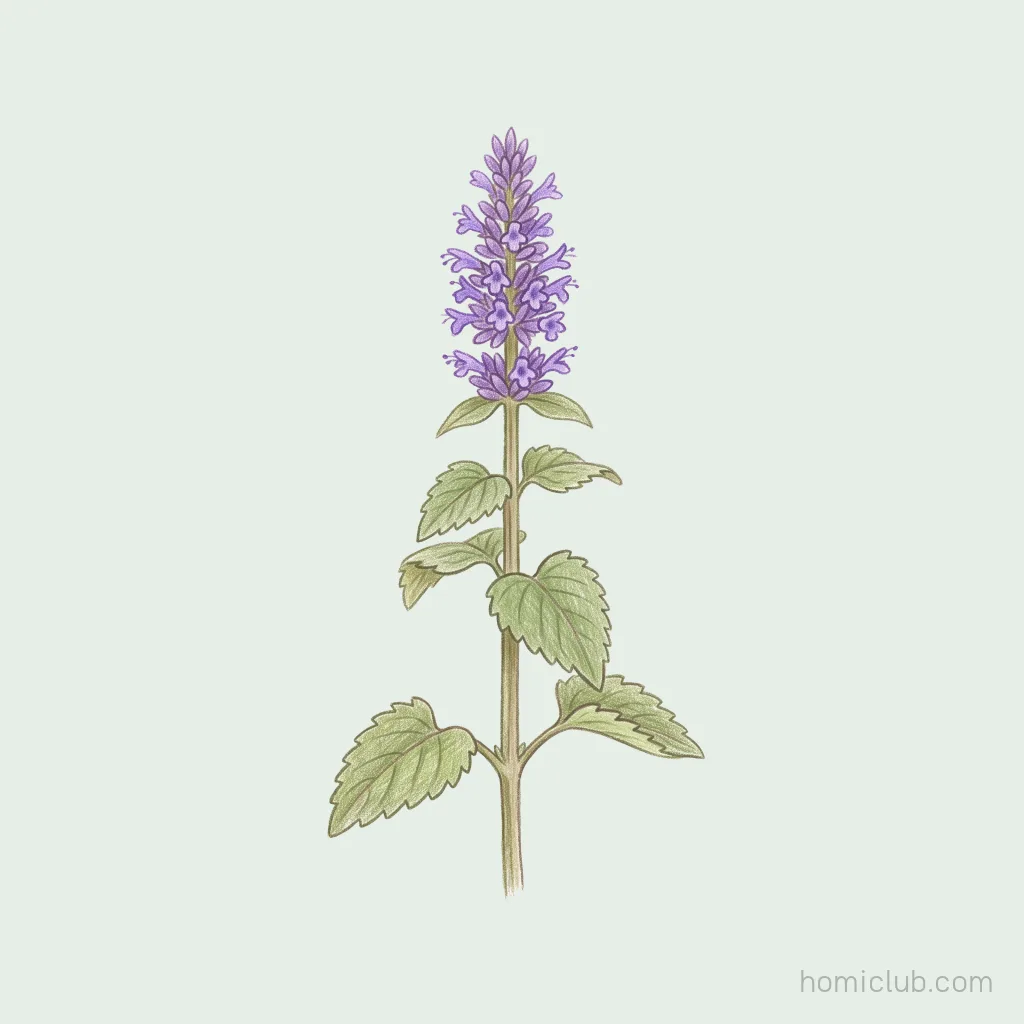
藿香 Korean Mint (Bangah)
 Related Crop · Korean Mint (Bangah) →
Gwakhyang is the leaf and stem of Korean mint, Agastache rugosa, the same plant as the baechohyang in the crop guide. Korean cooks still tear its leaves into loach stew and spicy fish soups, where it goes by the name bangah-ip. Donguibogam files it under Wood with the mark 【唐】, noting it came from China, and says to wash off the soil, discard the stalks, and keep only the leaves.
Original, read line by line 東醫寶鑑 · Tangaek — Decoctions vol. 3
-
性微溫, 味辛, 無毒. 療風水毒腫. 去惡氣, 止霍亂. 治脾胃吐逆爲最要之藥. 《本草》
Its nature is slightly warm, its taste pungent, and it is non-toxic. It addresses pungsu (風水, wind water) and toxic swelling. It dispels noxious qi and halts gwallan (霍亂, sudden turmoil). For the retching and vomiting of the biwi (脾胃, spleen and stomach) it is the most essential medicinal. 《Boncho (本草)》
HomiclubGwakhyang is the leaf and stem of baechohyang, a perennial of the mint family that grows wild across Korean hills and fields. In the southern provinces it is called bangailip and goes into loach soup and spicy fish stews.
-
入手足太陰經. 止嘔吐, 發散風寒爲上. 《湯液》
It enters the hand and foot taeeum channels. For halting vomiting and dispersing punghan (風寒, wind cold) it is foremost. 《Tangaek (湯液)》
-
苓藿虛燥, 古人乃以合熏香也. 《本草》
Poria and gwakhyang are empty and dry in nature, so the ancients combined them to make hunhyang (熏香, burnt incense). 《Boncho (本草)》
HomiclubGwakhyang gives off a strong scent when its leaves are rubbed, and it served as a perfume before it served as a medicine. This passage preserves the trace of its use as burnt incense.
-
入藥, 水洗去土梗, 用葉. 《入門》
For use in medicine, wash it in water, discard the soil and the stalks, and use the leaves. 《Immun (入門)》
Related Crop
Korean Mint (Bangah) →
Trees — more entries
This is a cultural and historical record from a classical text, not a claim about any food’s effects. Nothing here is a health supplement or intended to prevent or treat disease. Consult a medical professional about health concerns. · Text: Korean Medicine Classics DB · Reading: Homiclub