
Tangaek — Decoctions · Grains
葉 Byeondukong Byeondunip (변두콩 변두닙)
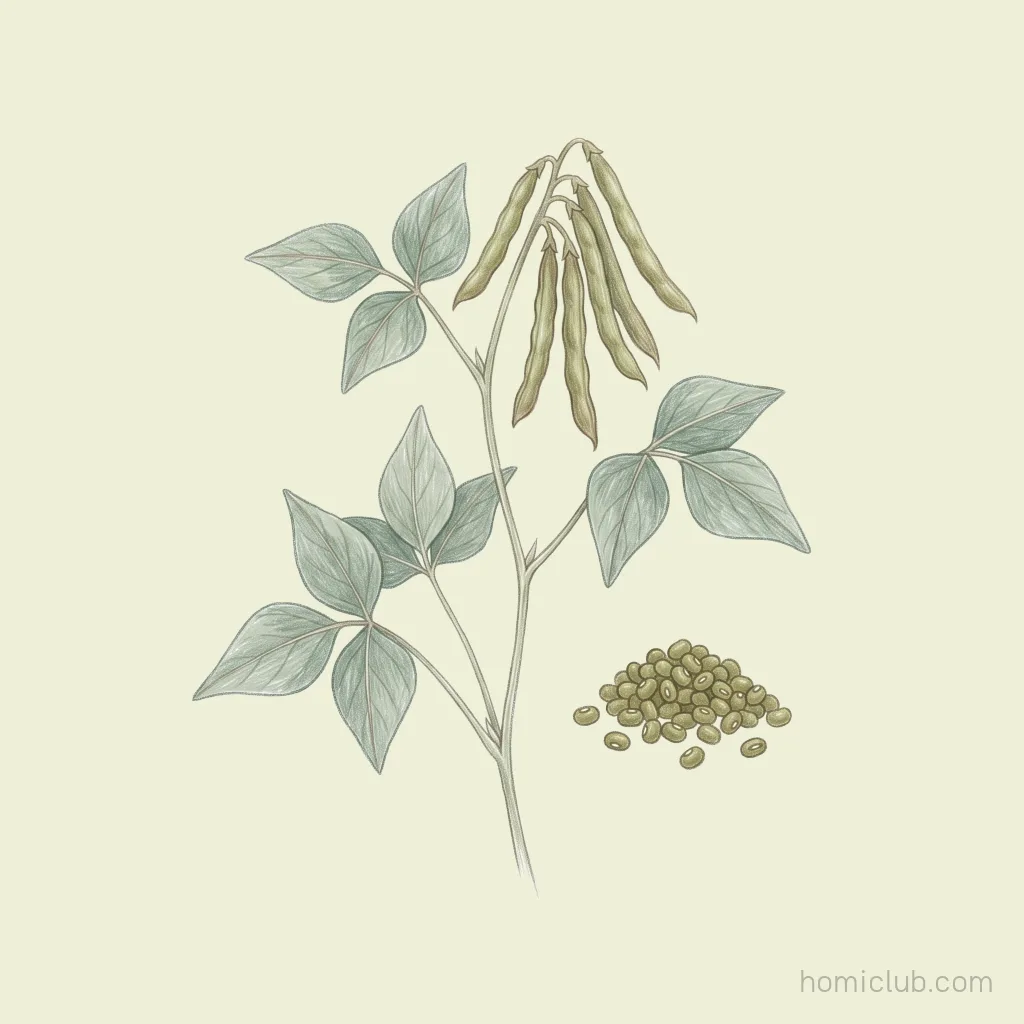
The byeondu leaf (byeondu-nip) is the leaf of the hyacinth bean plant. The hyacinth bean (Lablab purpureus) is a climbing vine of the legume family, known in Korea today as pyeondu or kkachi-kong — literally "magpie bean." Its leaves are trifoliate, with three small leaflets borne together on a single stalk.
In the Grains section (Gokbu, 穀部) of the Dongui Bogam, the leaf and the flower are each given their own brief entry — a single line apiece — beneath the main entry on the hyacinth bean itself. Unlike the seed, for which the Dongui Bogam records details such as its nature and flavor (the warming or cooling character and taste by which Korean traditional medicine classifies a substance), the leaf receives only this short notice.
Today the leaf is not gathered as a medicinal material in its own right; in practice, it is mainly the pods and seeds of the hyacinth bean that are used.
Original, read line by line 東醫寶鑑 · Tangaek — Decoctions vol. 1
-
主霍亂吐下不止. 又搗付蛇蟲咬. 《本草》
It governs unceasing vomiting and diarrhoea from gwallan (霍亂). It is also pounded and applied to snake and insect bites. 《Boncho (本草)》
HomiclubThe lablab leaf has the common legume form of three leaflets on one stalk. The vine climbs by twining, so it needs a fence or pole to grow up.
Grains — more entries
This is a cultural and historical record from a classical text, not a claim about any food’s effects. Nothing here is a health supplement or intended to prevent or treat disease. Consult a medical professional about health concerns. · Text: Korean Medicine Classics DB · Reading: Homiclub