
Tangaek — Decoctions · Vegetables
豌豆 Pea
 Related Crop · Pea →
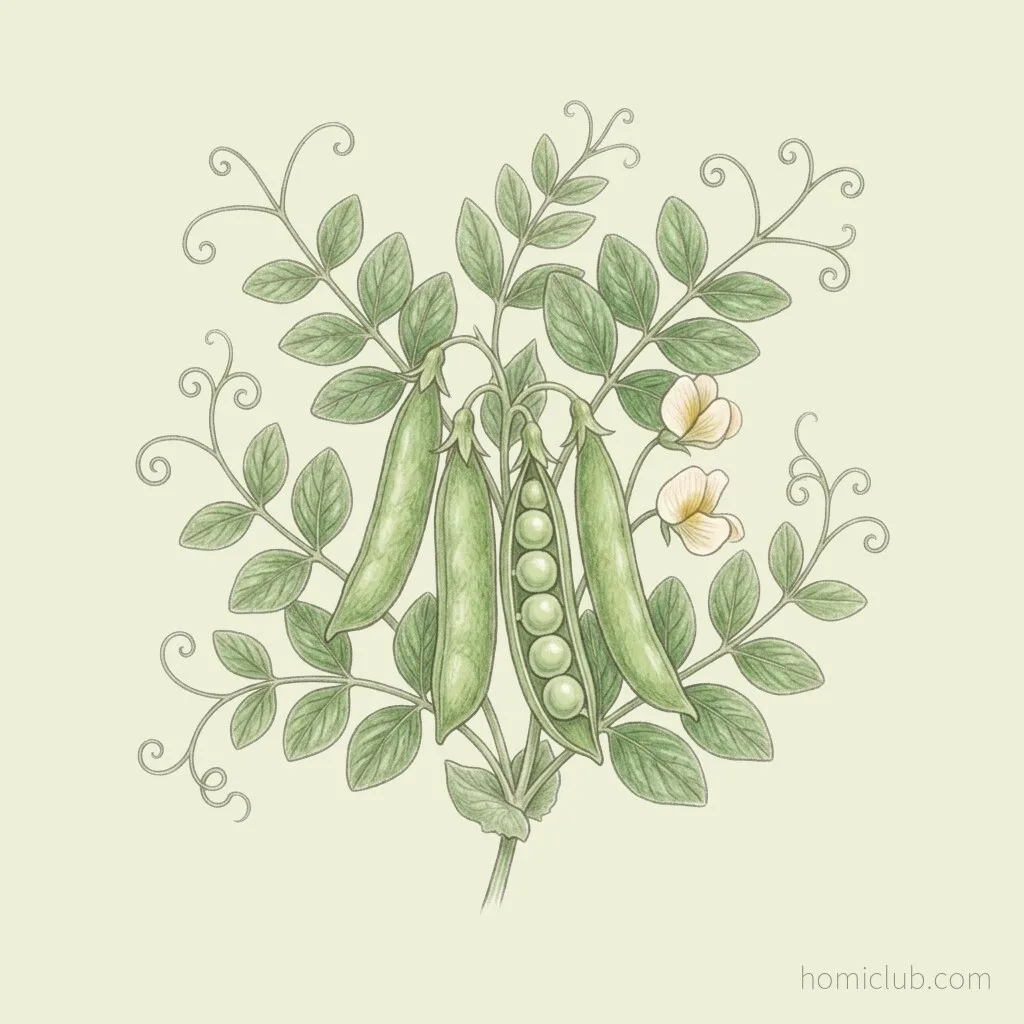
Wandu is the pod-borne seed of an annual legume vine, the green pea eaten as peas and pea shoots today and the same crop as the pea in the guide. Donguibogam equated it with jamdu, though jamdu now names a different legume, the broad bean.
Original, read line by line 東醫寶鑑 · Tangaek — Decoctions
-
性平, 味甘, 無毒. 主益中平氣, 調順榮衛. 《日用》
Its nature is neutral, its taste sweet, and it is non-toxic. It chiefly benefits the center, evens the qi, and harmonizes the yeong and wi (榮衛, nutrient and defensive qi). 《Ilyong (日用)》
HomiclubWandu (pea) is the pod fruit of an annual legume vine. It is the same pea eaten today as green peas and pea shoots, recognizable by the tendrils with which it climbs a support.
-
一名蚕豆. 快胃利五藏. 或點茶或炒食佳. 《入門》
It is also called jamdu (蚕豆). It eases the stomach and benefits the five jang (五藏). It is good either steeped in tea or roasted and eaten. 《Immun (入門)》
-
豌豆卽蚕豆也. 《得效》
Wandu is the same as jamdu. 《Deukhyo (得效)》
HomiclubHere wandu and jamdu are treated as one plant. Today jamdu means the broad bean or fava, a different legume, so this is a point where the old name and the current name diverge.
-
色靑似菉豆而大. 今出咸鏡道, 京中藉田亦有之. 《俗方》
Its color is green like nokdu (菉豆, mung bean) but it is larger. Today it comes from Hamgyeong Province, and it is also grown in the ritual field of the capital. 《Sokbang (俗方)》
Related Crop
Pea →
Reading on Pea
Vegetables — more entries
This is a cultural and historical record from a classical text, not a claim about any food’s effects. Nothing here is a health supplement or intended to prevent or treat disease. Consult a medical professional about health concerns. · Text: Korean Medicine Classics DB · Reading: Homiclub