
Tangaek — Decoctions · Herbs
藍實 Chinese indigo
 Related Crop · Chinese indigo →
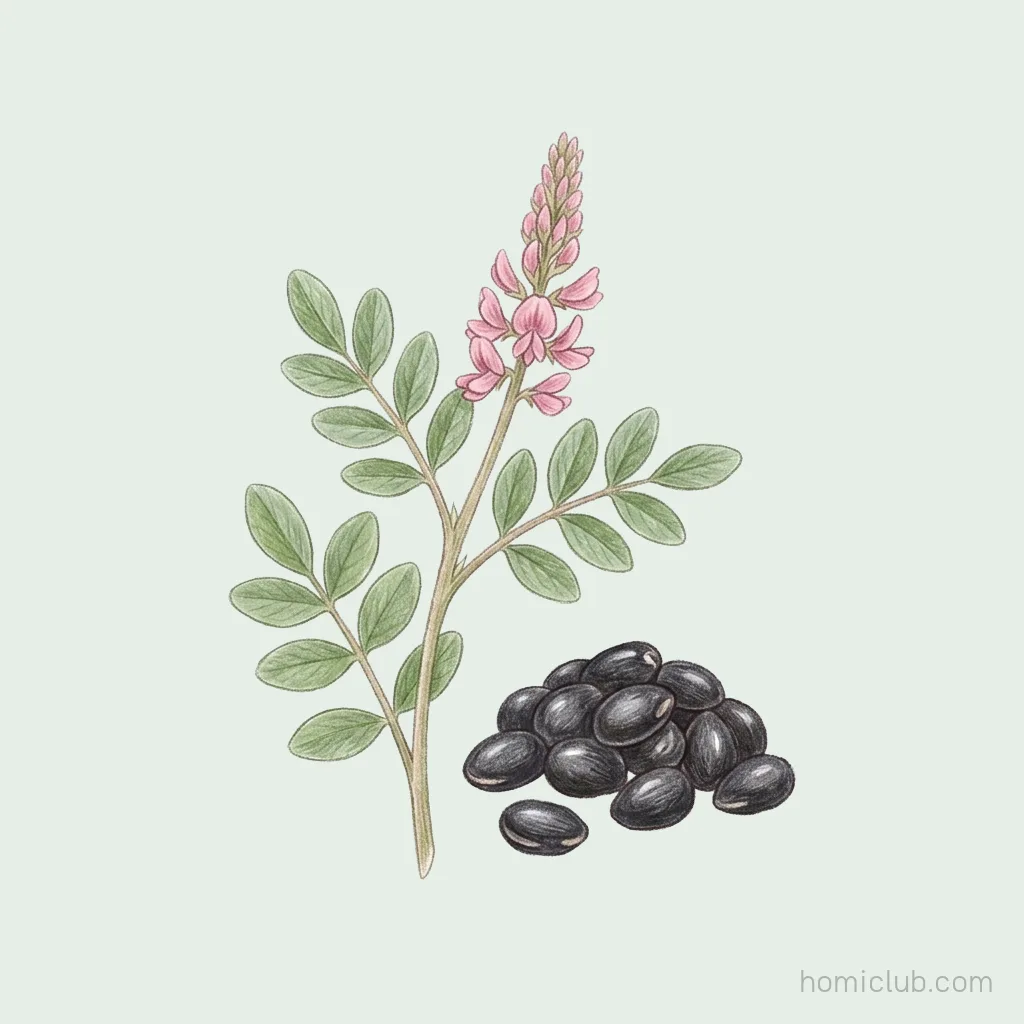
Namsil is the seed of dyer's knotweed, the plant whose leaves yield indigo blue. The Donguibogam calls it the seed of the cultivated daeram and notes that the seed looks like smartweed's, only larger and black — fitting, since the two are close relatives.
Original, read line by line 東醫寶鑑 · Tangaek — Decoctions vol. 2
-
性寒一云冷, 味苦一云甘, 無毒.
Its nature is cold, though one account calls it chilly; its taste is bitter, though one account calls it sweet, and it is non-toxic.
HomiclubNamsil is the seed of jok, the dyer's knotweed. Jok is an annual in the buckwheat family; the blue pigment taken from its leaves is what is known today as indigo, and Korean jok dyeing uses this same plant.
-
主解諸毒. 殺蠱蚑疰鬼螫毒. 治經絡中結氣, 令人健少睡.
It chiefly resolves the various toxins. It kills go (蠱), gi (蚑), ju (疰), specters, and stinging toxins. It treats knotted qi within the channels and network vessels, and makes a person robust and in need of little sleep.
-
卽今種蒔大藍實也. 五月六月採實, 子若蓼子而大黑色. 《本草》
This is the seed of the large ram (大藍) now planted and tended. Gather the seeds in the fifth and sixth months; they are like knotweed seeds but larger and black. 《Boncho (本草)》
HomiclubThe comparison of its seed to a knotweed seed fits: jok belongs to the same buckwheat family as the knotweeds. Jok has thicker leaves, and a bruised spot turns indigo blue — which sets it apart from its knotweed relatives.
Related Crop
Chinese indigo →
Herbs — more entries
This is a cultural and historical record from a classical text, not a claim about any food’s effects. Nothing here is a health supplement or intended to prevent or treat disease. Consult a medical professional about health concerns. · Text: Korean Medicine Classics DB · Reading: Homiclub