

- Type
- Roots & Stems
- Difficulty
- Moderate
- Season
- Spring·Fall
- Sowing
- From seed
Burdock (Ueong)
Arctium lappa
Inulin and fiber in a crisp taproot
Burdock is a root vegetable whose crisp taproot is braised in soy sauce or rolled into gimbap. The root is high in inulin, a water-soluble fiber that human digestive enzymes cannot break down. The cut surface browns as polyphenols such as chlorogenic acid meet the air, so a short soak in vinegar water keeps it lighter. It is worth keeping the parts straight: the old materia medica dealt with the seed (惡實, 牛蒡子), while the part eaten is the root. Most of the aroma sits close to the skin, so clean the root by scraping gently rather than peeling it away. Roots sown in spring are lifted between autumn and winter; roots sown in autumn overwinter and are lifted the following year.
Year-Round Calendar
- 1
- 2
- 3
- 4
- 5
- 6
- 7
- 8
- 9
- 10
- 11
- 12
- 3
- 4
- 9
- 10
- 11
- 12
Where It Grows
- Main producer This is the country that grows and eats the root as a vegetable more than any other. Aomori, Ibaraki, and Hokkaido are the main producing areas, and most of what is cultivated today belongs to the Takinogawa line from the Edo period.
- Main producer Feng County and Pei County in Jiangsu Province are the largest producing area, with extensive acreage under cultivation, and a considerable share of the crop is exported to Japan and South Korea.
- Major producer It is grown in the sandy-soil belt along the western coast, and much of the crop goes to Japan for export.
-
Major producer
It is grown in deep fields with sandy soil. Harvest October, November, December
- 10
- 11
- 12
Although the plant grows wild throughout the temperate zones of Eurasia, East Asia is the only place where the root is eaten as a vegetable and grown in fields on a large scale. In Europe, its native home, it has remained a weed along field margins, and the breeding of cultivated varieties was carried out in Japan.
- Optimum
- 20~25℃
- Range
- 3~30℃
- Hardiness
- Hardy
Burdock is a biennial that favors a cool climate. Its root reaches deep into the soil, so in the south the plants are left in the field to overwinter (stay in the ground through winter); if young plants are exposed to low temperatures for an extended period, they send up flower stalks the following year and the roots turn woody.
In Korea Nationwide
Because the crop needs deep sandy soil for the root to grow straight down, it is raised in sand-mixed fields along rivers and the coast. In the south, seed is sown in autumn and the plants overwinter in the field, so sowing and harvest fall in different years.
- 9
- 10
- 5
- 6
- 7
- 3
- 4
- 10
- 11
- 12
How to grow
- Light
- Somewhere sunny
- Soil and depth
- 50cm deep or more. The root goes a long way down. Pots are difficult
- Spacing
- 15cm
- Watering
- Moderate
- Feeding
- Generous base dressing
- Harvest
- Lift in autumn. It is deep, so dig alongside and work down
What makes the difference. Too little depth and the root forks. Without deep ground, choose a short-rooted variety
Why this one is harder. The root is deep enough to be hard work to lift, and shallow soil gives you nothing worth having
This page describes how a crop is grown and used. It does not claim health effects for any food, nor is it intended to prevent or treat disease. Component and study notes are references only and do not mean the same result occurs in people. Consult a medical professional about health concerns.
Health Benefits
The old records dealt with the seed. Burdock seed appears in old materia medica under the names 惡實 (aksil) and 牛蒡子 (ubangja), a different part from the root eaten as a side dish. These are historical records and differ from present-day judgment.
What has been confirmed about inulin. It is established that inulin is not broken down by human digestive enzymes and travels to the colon, where it serves as a fermentation substrate for microbes. What changes in the body when a person eats burdock has not been settled in human studies, so for now what can be said stops at the properties of the compound.
Why the cut surface browns. The browning at a cut surface comes from polyphenols such as chlorogenic acid meeting the air. The antioxidant activity of these compounds is measured in laboratory assays, and that result does not transfer directly to what happens when a person eats the root.
Nutrition
- Inulin (Water-soluble dietary fiber) — A polysaccharide built from fructose units
- Polyphenols (chlorogenic acid) (Detected at the cut surface) — Phenolic acids involved in browning
Inulin & dietary fiber Inulin, the signature compound of burdock root, is a water-soluble dietary fiber and a polysaccharide built from fructose units. Human digestive enzymes do not break it down, so it reaches the colon and serves as a fermentation substrate for microbes. Human studies remain limited, so for now what can be said stops at the properties of the compound.
Polyphenols (chlorogenic acid) The cut surface of burdock turns brown as polyphenols such as chlorogenic acid meet the air. Soaking the pieces in water with a few drops of vinegar keeps the browning down.
Pairings
○ Carrot (ueong-jorim) — Burdock and carrot braised in soy sauce and sugar—a kinpira-style braise—is a classic side dish that pairs the root's fiber with the carrot's beta-carotene. Carrot
○ Gimbap and japchae — Soy-braised burdock is a go-to ingredient that adds savory depth and texture to gimbap (Korean seaweed rice rolls) and japchae (stir-fried glass noodles).
○ Vinegar water (prep) — Scrape and slice the root, then soak it briefly in vinegar water to reduce browning and astringency for a cleaner result when cooked.
Varieties
- Long-root line (Takinogawa type) (Seed) — The standard line, with a straight root near a metre long. Needs deep soil and hard digging.
- Short-root line (mini burdock) (Seed) — Roots stop at 30-40cm, so it can be lifted from shallow beds or a grow bag.
Source: Rural Development Administration (Nongsaro) · traditional materia medica (ubangja, burdock seed)
Stories about Burdock (Ueong)
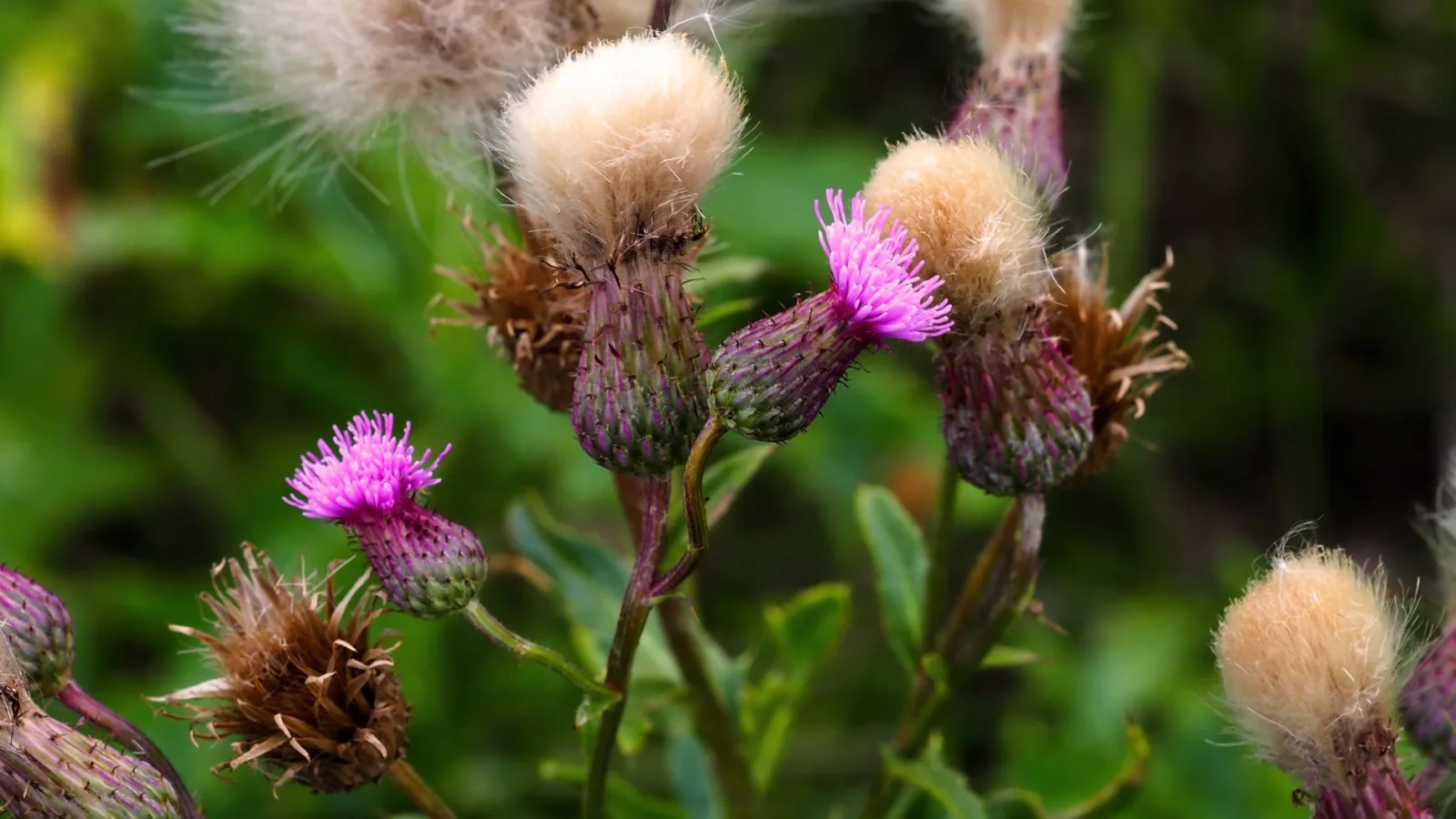
Burdock and Health Through the Eyes of the Donguibogam
Burdock root is a familiar crunchy side dish, but the Donguibogam, Korea's classic medical text, prized the plant's fruit as medicine. Here's how the old view compares with modern nutrition science, plus tips for taking burdock from your garden to your table.
Three Leaves — Time to Dig?
In much of the United States, wild ginseng can legally be dug only once a plant is five years old with three prongs. New research finds that count says surprisingly little about whether the plant will set seed or survive — a caution worth carrying into your own garden beds.
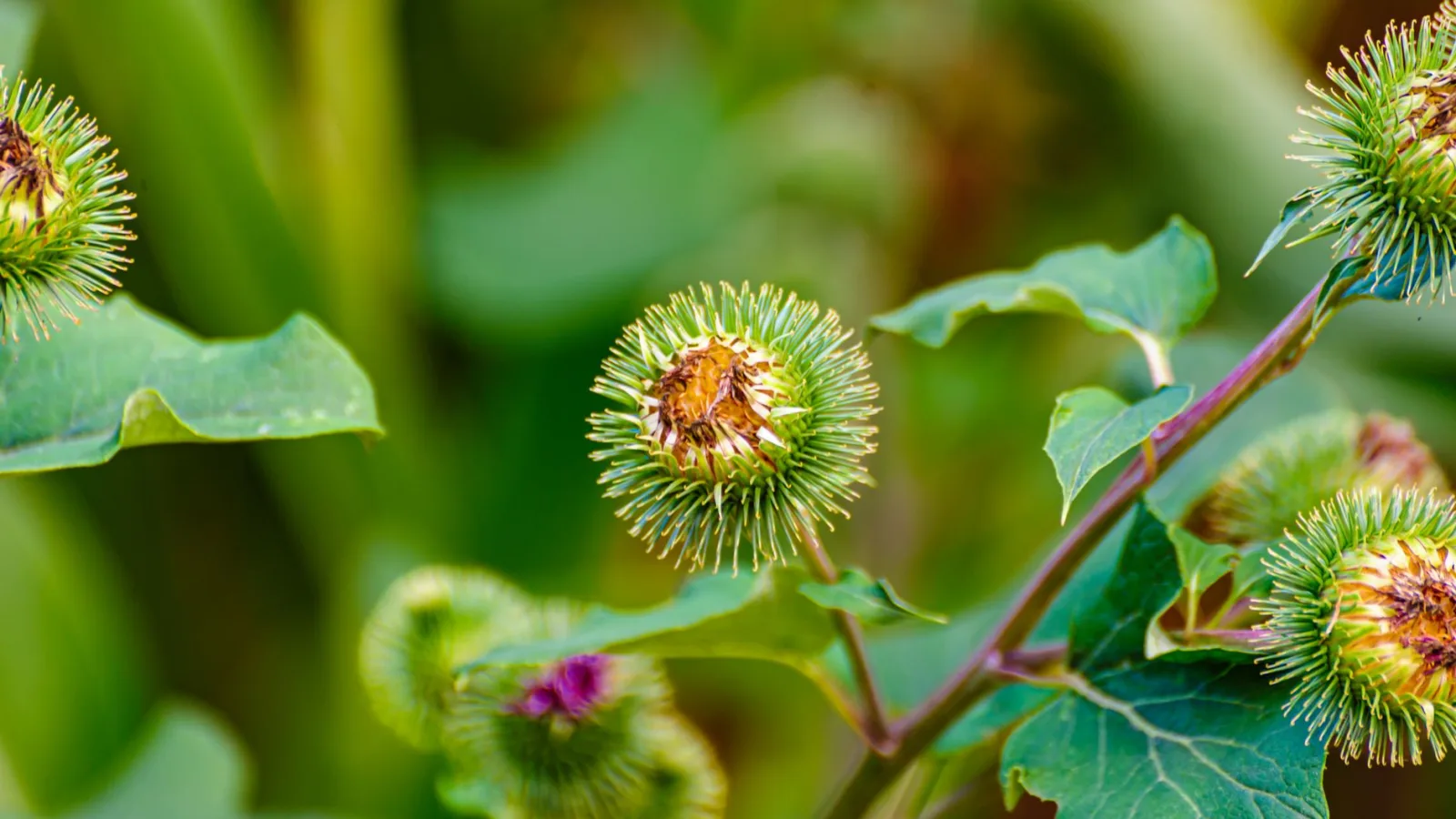
What Sunchokes and Burdock Leave Behind in Your Gut
Sunchokes, burdock, and onions all stockpile inulin, a sugar our enzymes can't break down, so it arrives in the colon intact and gut bacteria ferment it into butyrate. A 2026 mouse study ties that butyrate to a stronger immune attack on tumors — and the summer garden is already growing the raw material.