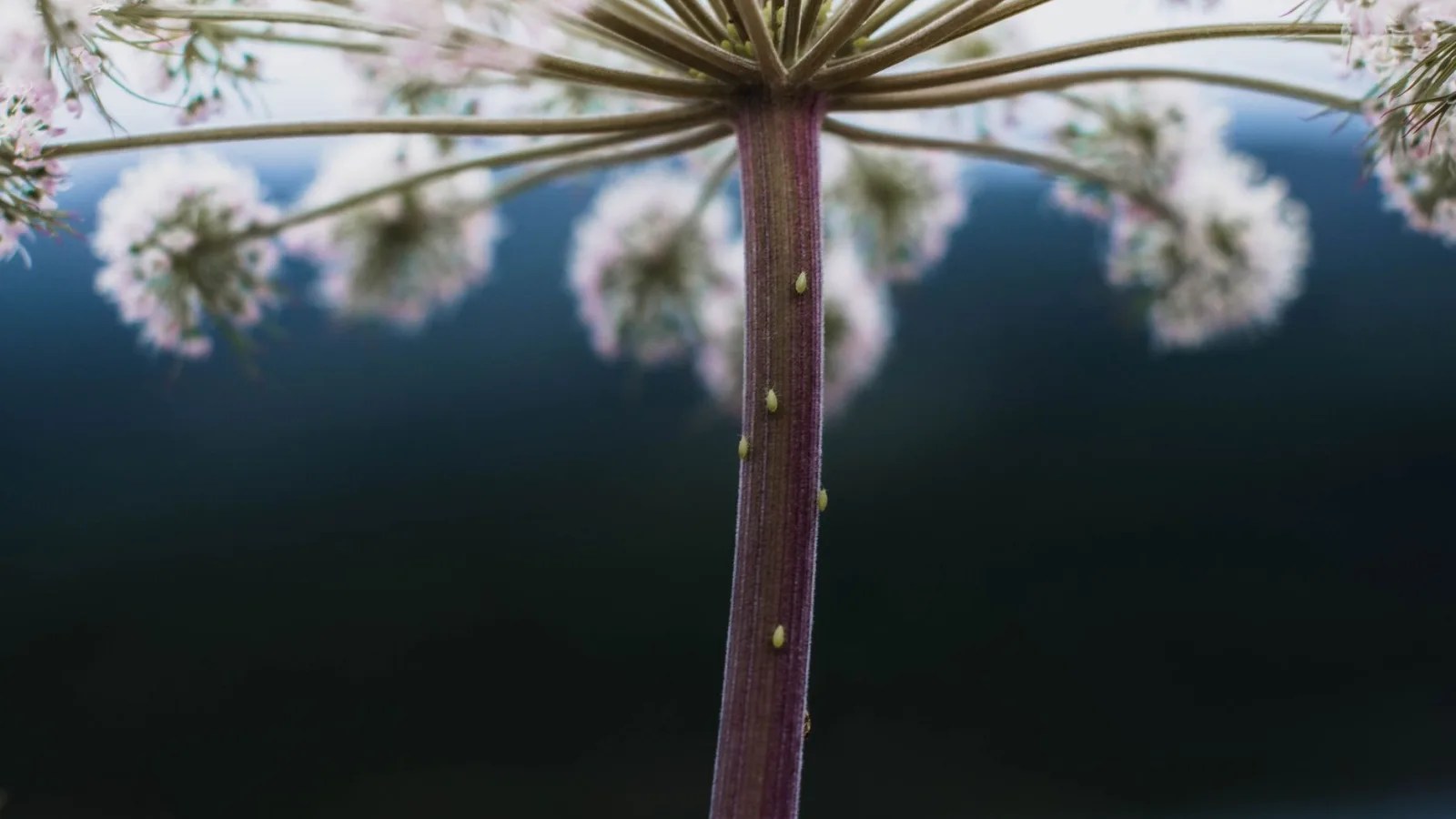
In May, the Korean angelica in one corner of the garden finally came into its own, leaves at full size. Snap a leaf stem and the scent stays on your fingers for a long while. But the people who find their way here searching for this plant don't open with the fragrance. Their questions almost always land in two places: is this the same plant I saw up in the mountains, and is it safe to eat?
As a Foraged Green, There's No Telling Them Apart
Korean angelica (Angelica gigas) has a close lookalike: jirigangwhal, commonly called gaedanggwi, or "false angelica." It is poisonous, and severe poisonings have been reported more than once. Once the two plants flower, color separates them cleanly — Korean angelica blooms deep purple, jirigangwhal white. The trouble is that people forage for greens long before anything flowers. At the young-leaf stage, leaf shape alone will not tell you which is which.
There's also the old advice about cutting the root and going by smell. That test rests on the senses of someone who has handled the same plant for years. It is not a call for a first-time forager to stake anything on. Don't eat what you dig up in the mountains. With Korean angelica, that one line comes before everything else.
Same Name, Different Species, Different Chemistry
The name "danggwi" doesn't point to a single plant. The coumarins that dominate in Korean angelica root are decursin and decursinol angelate. In the root of Japanese angelica — wae-danggwi — ligustilide-type compounds lead instead. That's what root analyses show: a name can travel around while the actual composition shifts with the species. These are findings about chemical makeup, nothing more; they have no bearing on preventing or treating disease.
So when you're picking out a seedling, read the botanical name on the tag. Korean angelica is Angelica gigas. Even the Donguibogam, the 17th-century Korean medical compendium, notes in its chapter on herbs (草部) that danggwi grows wild in hills and fields and is also cultivated. Working with the cultivated kind is a choice people have been making for a very long time.
Start with a Seedling You Can Identify
Korean angelica is a perennial in the carrot family. In the Northern Hemisphere, sow seed or set out transplants in March or April, then pick leaves from May through August. In the Southern Hemisphere, shift those months by six to line up with your own spring. It's grown mainly in Korea, China, and Japan, and in Korea it also comes up on its own in mountain country.
In a city garden, you don't have to aim for the root at all. Roots thicken over several years, but leaves arrive the same season you plant. Even a deep pot will give you leaves. Bring home a single plant whose species you've confirmed. When you're choosing, keep the Korean angelica entry in the crop guide open beside you and match the botanical name and the leaf photos against what's in front of you.
Pick the Leaves Young
Korean angelica leaves are thicker than lettuce and far more aromatic. That's exactly why they balance so well as ssam — a leaf wrapped around a piece of grilled meat. Leaves picked young, before they grow to the size of your palm, are the tender ones. If the stem has gone tough, strip off the leafstalk and use the blade alone.
If the fragrance feels like a lot, serve doenjang (fermented soybean paste) alongside. The salt and savory depth press down on the leaf's perfume and make it easy going even for a first-timer. Go light on the ssamjang, the seasoned dipping paste — a small dab keeps the leaf's own scent in play. You can also chop the leaves fine and stir them into soup at the very end. Shade-dried leaves need only 2 to 3 minutes in hot water; steep them longer and the bitterness takes over. Simmering the root into a strong decoction belongs to medicinal use, which is a different conversation from the garden.
The Hands That Trim, and People on Medication
Plants in the carrot family carry coumarin compounds. If leaf sap gets on your skin and that skin then takes a long stretch of strong sun, there are cases of the spot turning red or blistering. If you're trimming a large batch at midday in summer, wear gloves, and wash with soap when sap gets on your hands. Wash children's hands too, after they've been handling the leaves.
Anyone on medication has one more thing to weigh. Angelica species have been reported to interact with anticoagulants such as warfarin. Suddenly eating a large quantity of leaves, or drinking strong infusions, is better put off until you've talked it over with your doctor or pharmacist. The same holds if you're pregnant or scheduled for surgery. A few leaves wrapped around meat and a concentrated decoction are two different things.
There's one thing to do today. Even if a trip to the mountains is on your calendar, don't dig angelica to bring home — set out one seedling of confirmed species in your garden or a pot instead. The leaves you pick from that plant, you can eat without ever second-guessing the name.