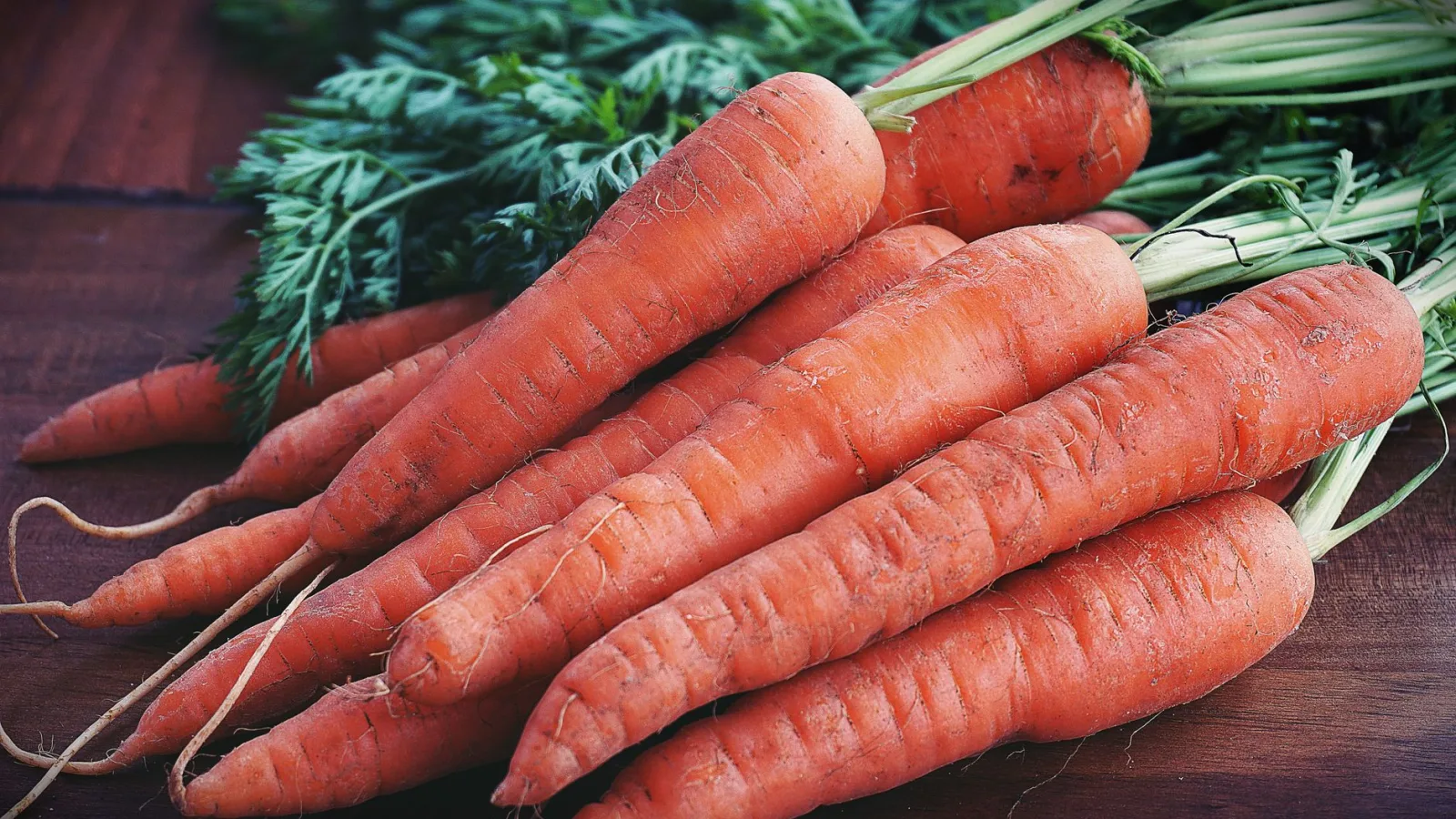
Purple carrots sown in late summer and left through a frost turn sweeter over the winter. Pull one, rinse off the soil, and the outside is deep violet — but slice into it and the core runs closer to orange. Run a peeler down the sides, push the shavings aside, and a purple stain bleeds across the cutting board. When there's field work waiting, the peels are the first thing to go. Yet the color is concentrated not in the part you're about to eat, but in the pile you set aside to discard.
The purple lives in the skin
The color in purple carrots comes from a pigment called anthocyanin. It doesn't distribute evenly through the root — it accumulates in the outer skin and the layer immediately beneath it. Polyphenols behave the same way, which means the peelings carry more pigment and more antioxidant compounds than the flesh does.
In a 2026 study published in the journal Plants, researchers dried purple carrot peels and analyzed what was in them. They identified 32 phenolic compounds, the most abundant of which was shikimic acid. One gram of dried peel yielded roughly 20 mg of polyphenols and about 2 mg of anthocyanins. That's what's sitting in the material processing plants throw out by the hundreds of kilograms a day.
Some conditions pull it out better than others
The researchers ran thirty trials, varying temperature, time, solvent concentration, and acidity. The best extraction came at a mildly acidic pH of about 4, at 80°C, for roughly 36 minutes. The half-alcohol solvent they used assumes industrial equipment, so it isn't something to replicate at the stove. But mild acidity and brief heat translate straight to a home kitchen.
Anthocyanins fade and turn grayish in neutral or alkaline water. Boil them long enough and the structure breaks down, taking both the color and the antioxidant capacity with it. That's why a few drops of vinegar or lemon juice in the blanching water keep purple carrots purple. Do the opposite — blanch them in water with baking soda — and you'll watch the color drain out.
Putting the peels to use
Scrub the soil off with a brush and slice the carrots skin and all. If you'd rather peel them anyway, just collect the shavings in a separate bowl.
- Steep them for color — Cover the peels with lukewarm water and a teaspoon of vinegar, let them sit about 20 minutes, and you'll draw out a pink infusion. Use it as the cooking water for rice, work it into dumpling or noodle dough, or add it to a batch of pickled radish.
- Sauté them in oil — Chop the peels fine and cook them in oil to capture the carotene along with everything else. It's fat-soluble, so your body absorbs it better when there's oil in the pan.
- Dry them — Spread the peels on a drying rack until they're completely crisp, then drop them into broths or steep them as tea. Drying shrinks them down, which makes storage easy too.
Anthocyanins and polyphenols are understood to help reduce oxidative reactions in the body. That said, the evidence isn't strong enough to claim that eating the peels will improve your circulation or your eyesight. Think of it instead as one piece of a habit of eating deeply colored vegetables regularly.
Next time you're prepping purple carrots for dinner, put the peels in a small bowl instead of the trash. Lukewarm water and a few drops of vinegar, and that night's rice comes out a lovely shade of pink.