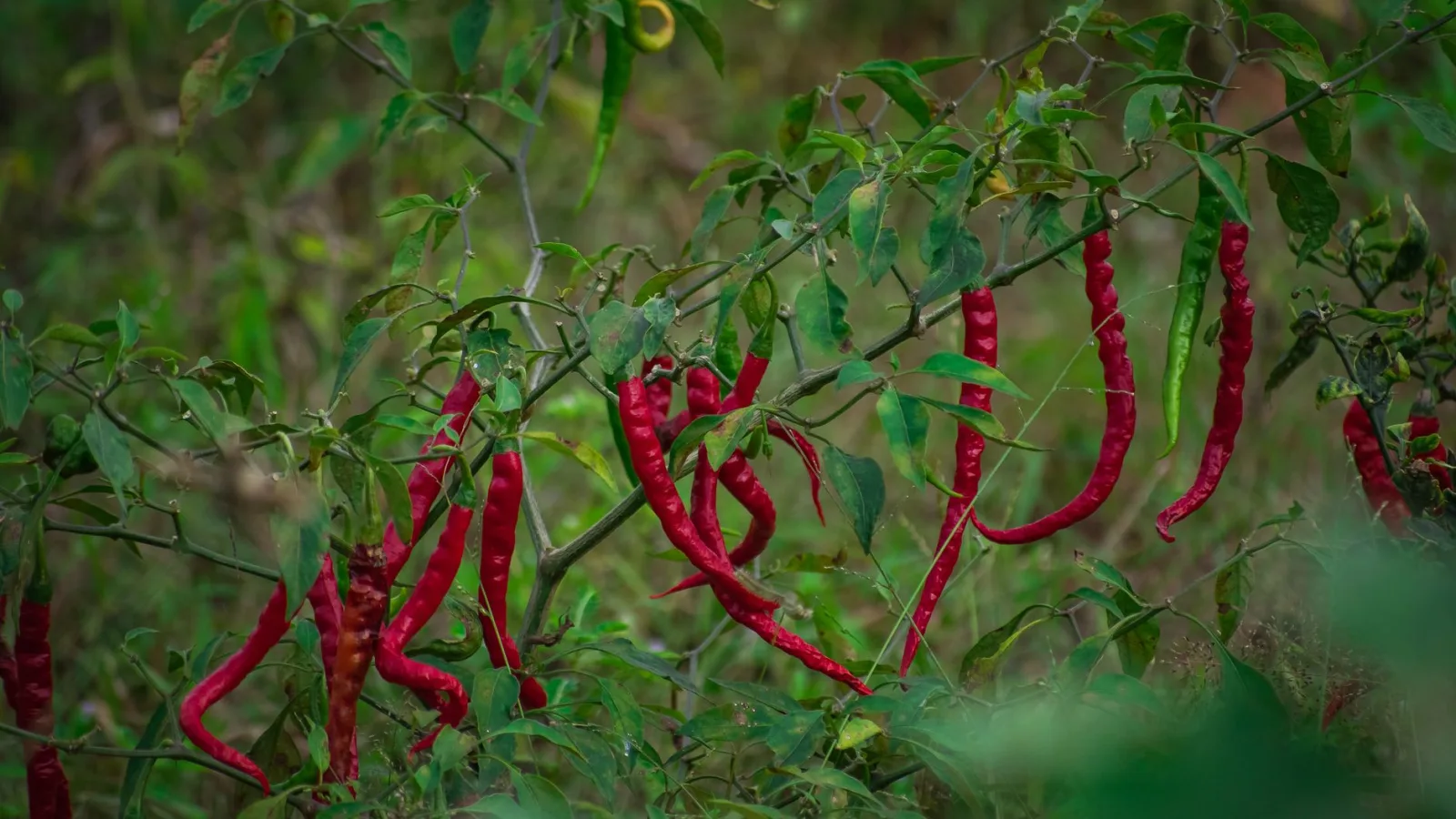
It's 2 p.m. in July, and the lettuce and chili pepper plants in your garden are drooping. You gave them a good soaking this morning, and they're still limp. As the sun gets lower, the leaves quietly perk back up. They weren't short on water. During the heat of the day, the leaves were losing water faster than the roots could draw it up.
That water escapes through stomata, tiny pores packed closely together on the undersides of leaves. A research team in Germany recently worked out how these pores form, and the finding could help scientists develop crops that stand up to drought.
What Those Tiny Pores Do
Stomata are microscopic openings in a leaf's surface. Each one sits between a pair of guard cells, which open and close it. A single square millimeter of leaf can hold anywhere from dozens to hundreds of them.
Plants open these pores to take in the carbon dioxide they need for photosynthesis. But while the pores are open, water inside the leaf escapes as vapor. Most of the water roots pull from the soil never stays in the fruit or leaves. It evaporates out through the stomata. That's why leaves wilt at midday, and it's why a summer garden needs so much water.
Fewer pores means less water lost. It also means less carbon dioxide coming in, so the leaves grow more slowly and harvests get smaller. All day long, a plant weighs those two needs and adjusts how far its pores open.
Two Enzymes Found by a Team in Bochum
A team led by Professor Christopher Grefen of the Molecular and Cellular Botany lab at Ruhr University Bochum in Germany set out to learn what stomata need in order to form properly. They narrowed it down to two enzymes, GELP80 and GELP100. Both act on lipids, the fatty, oily compounds that surround cells.
A stoma forms when a single cell divides into two guard cells and a gap opens between them. If the two enzymes don't do their job, the wall between those cells isn't cleared away on schedule. A pore may still form, but it can't open and close. It looks like a stoma but doesn't work like one.
A stoma that can't close can't hold on to water. Looked at the other way, understanding how these enzymes work could give scientists a way to control how many stomata a plant forms and how well they close. That's the basis for ongoing research into crops that use less water without giving up photosynthesis.
So far, though, these results come only from laboratory plants. No one has confirmed yet whether the same approach will work in wheat, corn, or the lettuce in your backyard. It will probably be years before drought-tolerant seeds reach your local garden center.
What You Can Do in Your Garden Today
You can't change the stomata themselves, but you can give your plants conditions that make their job easier.
- Water before sunrise or after sunset. Water you give at midday evaporates straight out of the soil, and droplets sitting on the leaves can scorch them in the sun.
- Cover the soil. A 3 to 5 cm (about 1 to 2 inches) layer of straw, fallen leaves, or dried grass keeps the soil surface cooler and holds moisture far longer. When the roots can send up plenty of water, the leaves don't have to close their pores to save it.
- Water deeply once every three days instead of a little at a time. Frequent shallow watering keeps roots near the surface, and those plants wilt more easily in the midday heat.
This evening, after you water, tuck a handful of dried grass around the base of your lettuce. Check the leaves tomorrow at midday, and you'll see the difference.