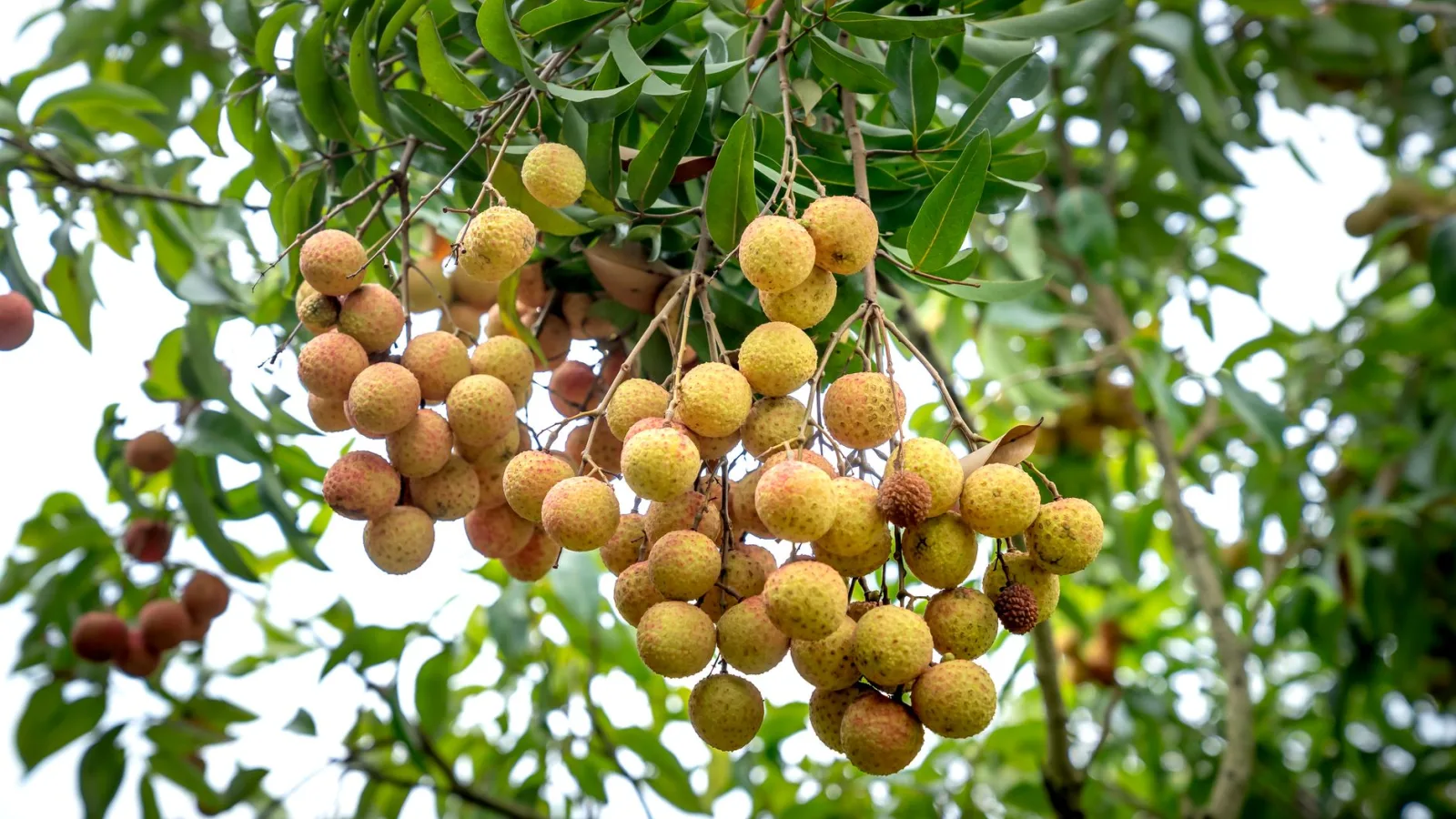
After the first frost, what's left to harvest in the garden comes down to a few heads of napa cabbage and a patch of scallions. As the beds empty, dried goods start piling up in the kitchen, and in some homes a bag of dried longan sits next to the dried jujubes. Longan is a southern fruit that can't survive a winter in the ground where temperatures dip below freezing, so most garden readers meet it first in a bag.
If you searched "longan" and landed here, chances are you want to know how much dried longan is reasonable in a day. The one number to remember the day you open the bag is 0.74. Our longan crop guide notes that as the flesh dries, the water leaves and the share of sugar in a given weight climbs. 0.74 is that share, written as a number.
Drying removes the water and leaves the sugar
The Donguibogam, a seventeenth-century Korean medical text, lists longan in its chapter on fruits as neutral in nature, sweet in taste, and free of toxins. It also records the nickname "lychee's servant," since eaten fresh the longan was judged to fall short of the lychee. Those are the words of an old medical book and should be read apart from modern medical judgment, but the part about sweetness holds up in the nutrient tables.
The US Department of Agriculture (USDA) food composition database lists fresh longan and dried longan flesh as separate entries. Figures are per 100 g.
- Fresh fruit: about 83 g water, 15 g carbohydrate, 84 mg vitamin C, 60 kcal
- Dried flesh: about 18 g water, 74 g carbohydrate, 28 mg vitamin C, 286 kcal
With water dropping from 83 g to 18 g, everything else should concentrate nearly fivefold in the same weight, and carbohydrate rising from 15 g to 74 g fits that math. Since the fructose, glucose, and sucrose named in the crop guide make up most of that carbohydrate, dried longan counts as a high-sugar food. Vitamin C moves the other way: by the same math it should land near 400 mg, but it stops at 28 mg. It's a water-soluble vitamin that breaks down with heat and air, so most of it appears to be lost during drying. If vitamin C is what you're after, choose the fresh fruit during its short summer season, and treat dried longan as what it is, an ingredient for sweetness and aroma.
Set your daily amount by weighing ten pieces
How many pieces a day is right depends on body weight, activity, and how much sugar the rest of your meals carry, so no single number fits everyone. What is the same for everyone is how to turn a count into grams. The day you open the package, put ten pieces of dried longan on a kitchen scale. Multiply that weight by 0.74 and you have the grams of carbohydrate in those ten pieces, most of it sugar. Piece size varies by origin and grade, so the number on your own scale is the most accurate one you'll get.
In your palm, a dried piece is less than half the size of a fresh longan. Yet a single dried piece holds almost the same sugar as the fresh fruit it came from. What left was water, so ten dried pieces carry the same sugar as ten fresh ones, just in a smaller volume. Fresh longans take time to peel and spit out the seed, which makes it hard to eat too many. Dried flesh is different: a handful disappears fast, and keeping count gets hard. The fix is not to eat straight from the bag. Tip a few pieces onto a plate, close the bag, and you've set the limit in advance. If you're managing blood sugar, the pieces that go into your tea count toward that plate too.
Tea: 10 g dried longan in 600 ml water, counted before it goes in the pot
Simmered with jujube and ginger, longan gives up both its sweetness and its aroma. This makes two cups.
- Put 10 g dried longan, 3 dried jujubes, and 600 ml water in a pot and bring to a boil over high heat.
- Once it boils, turn the heat down as low as it goes and let it simmer gently for 15 minutes.
- Add 2 thin slices of ginger in the last 3 minutes. Put them in at the start and the ginger's heat overpowers the sweetness.
- Skip the sugar and honey. The 10 g of longan alone brings more than 7 g of carbohydrate.
If it tastes too sweet, try 8 g next time. The same trick works in glutinous rice porridge. When the porridge is nearly done, stir in the dried longan and cook just 2 to 3 minutes more. Cook it longer and the pieces fall apart, leaving only sweetness behind. It needs no added sugar to taste sweet. Dry nuts like walnuts or pine nuts will go soft if kept in the same container as the longan, so mix them in only when serving.
Check for seeds and mold as you plate it
The longan's black, round seed and thin shell are not for eating. The seed is smooth and round, and a small child who swallows one whole can easily choke on it. When serving children, remove the seed and split the flesh in half. Canned longan occasionally has a seed left in as well, so check as you spoon it out.
Dried longan that has taken on moisture turns sticky on the outside and develops a white film or mold. If it smells sour or you can see mold, don't use it, even rinsed. Store it in an airtight container in a cool, dark place, move it to the refrigerator in summer, and plan to finish an opened bag within a month or two. Fresh longans are harvested from July to September in the main growing regions of China, Thailand, Vietnam, and Taiwan. Avoid fruit with cracked or soggy shells, and pick ones where the seed doesn't rattle when you shake them.
What a bag of dried longan has lost is water and volume, and along with them, vitamin C. The sugar is still there, exactly as it was in the fresh fruit. If the ten pieces you set out on a plate are still there by evening, that's where the day's portion ended.
Sources: USDA FoodData Central (longan, raw and dried, per 100 g) · Donguibogam, chapter on fruits, entry on longan