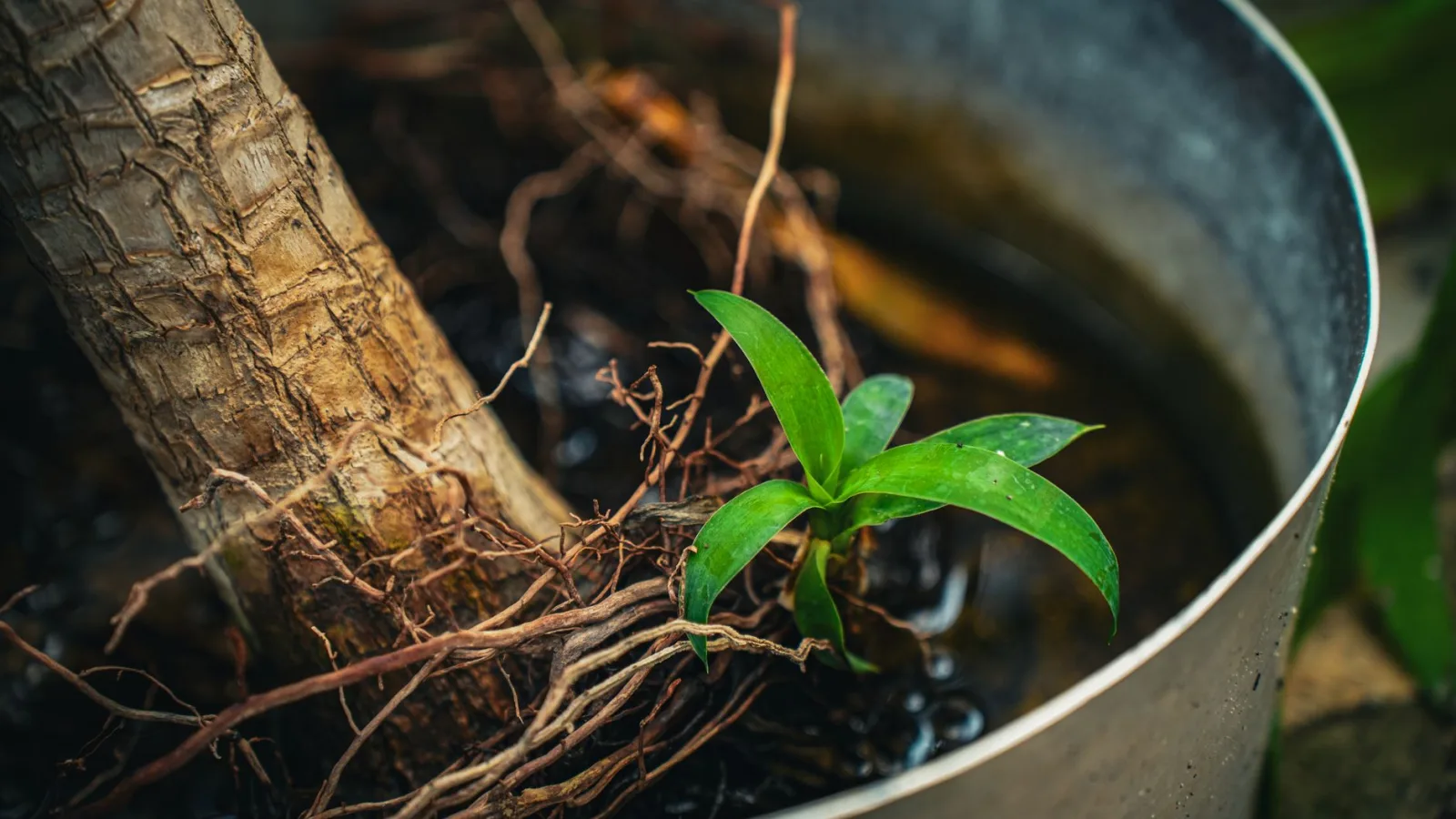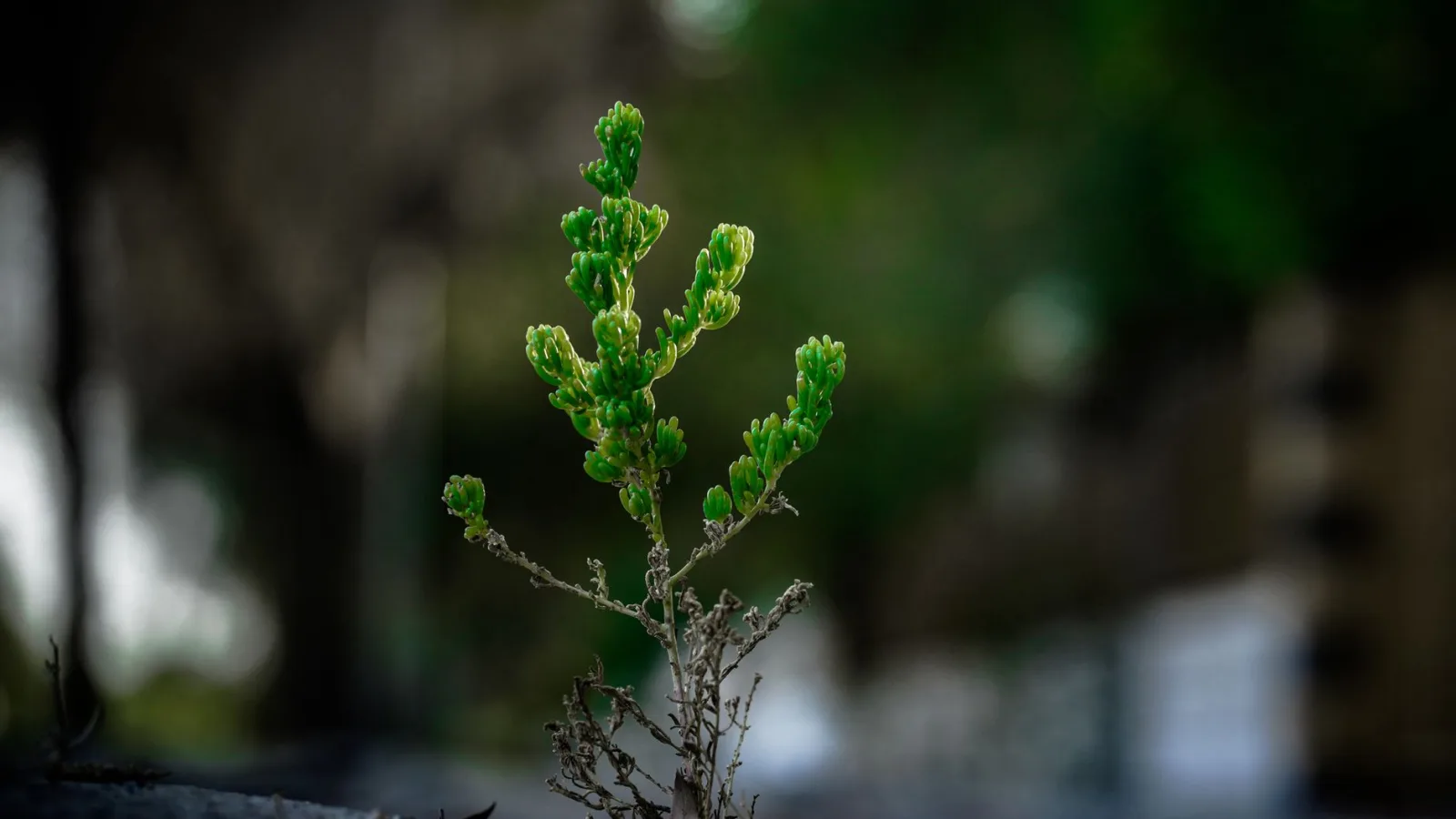
Cut back the summer-grown mugwort stalks along the edge of the garden in September, and new leaves push up from the crowns. Once mugwort settles in, it stays: it is a perennial whose rhizomes creep sideways underground and send up shoots in the same spot year after year. In the Northern Hemisphere, September is a good month to set out a transplant. Those underground rhizomes ride out winter down to around −25°C (−13°F). Plant one this fall and you will be picking young leaves between April and June. Freshly cut mugwort is deeply fragrant, though — and that same intensity brings bitterness and an acrid edge with it. What you cook it with decides how the bowl tastes.
Rice Flour — Mugwort Rice Cake
Blanched mugwort pounded together with short-grain and glutinous rice flours becomes ssuk-tteok, mugwort rice cake. The sweetness of the rice covers the bitterness, and the moisture held in the cake carries the aroma a long way. Blanch the leaves briefly in boiling water and rinse them in cold water, and their color stays put. After blanching, wring them out hard. Any water left behind slackens the dough, and it will not hold a shape. April's young leaves have tender fibers, so once the dough is worked, little catches in your teeth.
Doenjang and Ground Perilla — Mugwort Soup
Ssuk-guk starts with a broth loosened with doenjang (fermented soybean paste), young mugwort dropped in, and ground perilla seed stirred through at the end. The savory depth of the doenjang and the oil in the perilla take the edge off the bitterness and the acrid bite. Mugwort loses its scent to long boiling, so try adding it just before you turn off the heat. The compound behind that scent is 1,8-cineole, carried in the plant's essential oil. Essential-oil composition shifts with when you harvest and which part you pick. That is why spring's young leaves and early-summer leaves smell different. If you are making soup with leaves picked past May, try cutting the amount back a little.
Roasted Soybean Flour — Steamed Mugwort
Ssuk-beomuri is a spring dish of young mugwort dusted with roasted soybean flour and wheat flour, then steamed. The nutty soybean flour suits mugwort's bitterness, and the result is less dry than wheat flour alone. Coat the leaves just thinly enough to keep them from sticking to each other, and steam them briefly once the steam is up. Steam them too long and the aroma fades.
How Much, and Which Leaves
Mugwort contains thujone, so avoid eating large amounts over a long stretch. In season, from April through June, enjoying it as rice cake, soup, and a steamed toss is about right. Flavonoids in the leaves such as eupatilin and jaceosidin have shown antioxidant activity in test-tube studies. But the concentrations used in those experiments and the amount a person eats as a vegetable are worlds apart, so treat it as a supporting player at the table.
- The white down on the underside of the leaves is a trait shared by many species across the genus Artemisia, so it cannot tell you which mugwort is the edible one. Do not pick any plant whose species you cannot identify with certainty.
- It grows best between 15 and 25°C (59–77°F), and will grow anywhere from 5 to 30°C (41–86°F). The stronger the sun, the thicker the leaves and the deeper the scent, so plant it where the light lingers all day.
- It shrugs off dry spells but does poorly where water pools. It grows throughout Korea, Japan, and China, and in Korea it comes up on its own in open fields, along roadsides, and in fallow ground.
The Donguibogam lists it in the Herbs section (草部) as aeyeop (艾葉), mugwort leaf. The text describes it as warm in nature, bitter in taste, and free of toxicity. It also records the alternate names bingdae (氷臺) and uicho (醫草), and notes that the leaves were gathered on the third day of the third lunar month and the fifth day of the fifth, dried in the sun, and used only after long aging. This is a record from an old medical text and differs from modern medical judgment.
Today, tuck a single mugwort transplant into a sunny edge of your garden. Next spring, on the day you pick the first leaves, the only thing left to decide is whether to pound them with rice flour or drop them into a doenjang broth.
Sources: Donguibogam, Herbs section, "Aeyeop" · Rural Development Administration, Nongsaro · Korea's National Standard Plant List