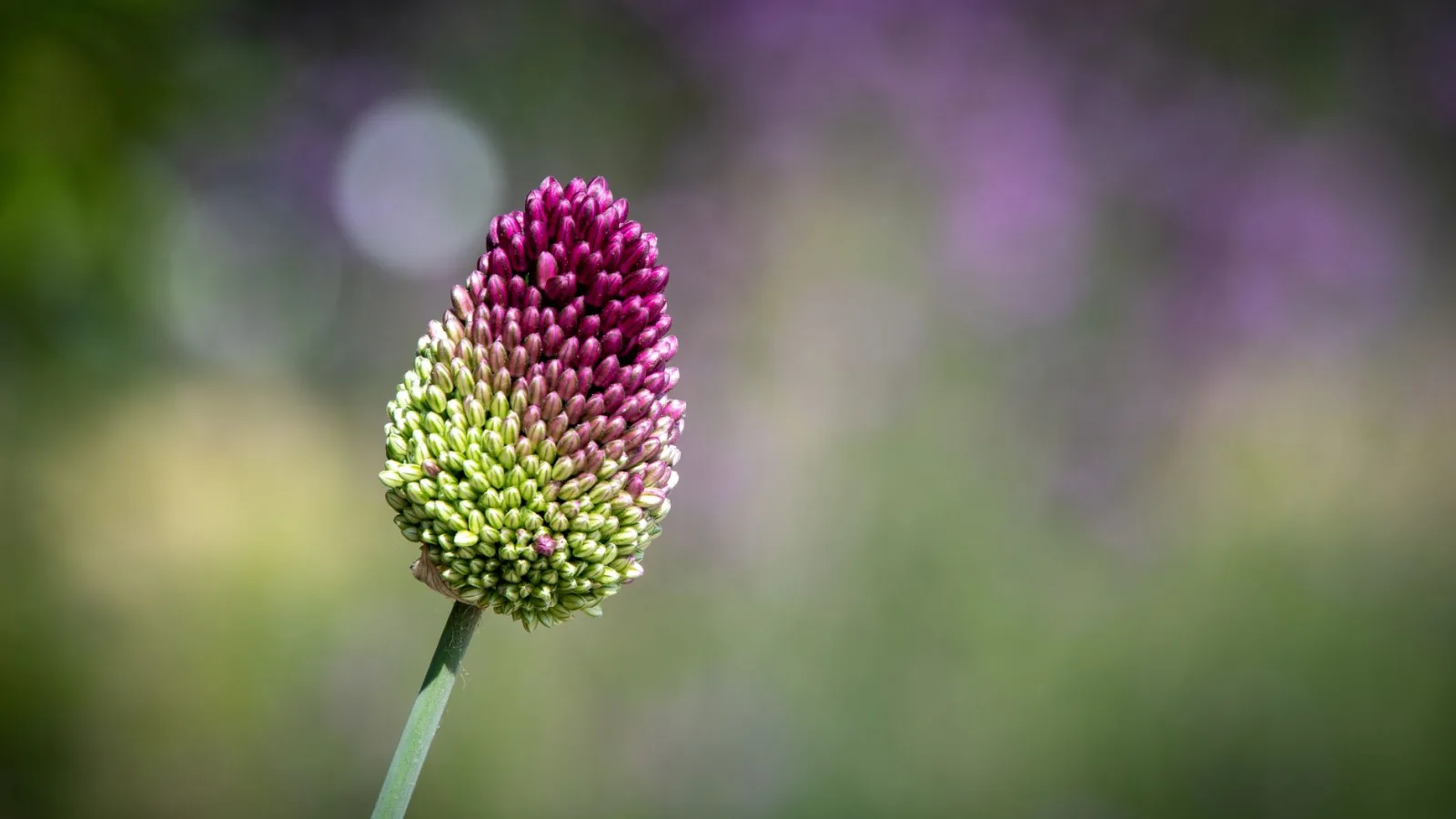
In the Northern Hemisphere, September through November is garlic-planting season. Garlic is an overwintering crop: you plant it in fall, it rides out the winter, and you harvest it the following May through July. Right now gardeners are breaking heads of seed garlic into cloves and tucking them into the soil, while in the kitchen we're peeling the garlic we pulled last early summer.
The garlic story I hear most often starts in the kitchen. Someone hears that raw garlic is good for them, chews a few cloves, and ends up with a stomach that burns for quite a while afterward. Once you know where garlic's heat comes from, you can decide for yourself how to chop it, how to cook it, and how much to eat.
The heat appears the moment you chop
Garlic (Allium sativum) contains a compound called alliin. When you mince a clove with a knife or crush it in a mortar, its cells break open and alliin is converted into allicin. Allicin gives garlic its signature pungency and aroma, and it is also the compound garlic researchers have studied most.
That's why the same clove can be mild or fiery depending on how you prep it. The finer you mince it, or the longer you chew it, the more cells rupture, and the more allicin is likely to form. If you're worried about irritation when eating garlic raw, try cutting it into thick slices instead of mincing it.
Several raw cloves on an empty stomach can irritate it
The compound that sets your mouth on fire appears to irritate the stomach lining as well. For people with a sensitive stomach or acid reflux, eating several raw cloves on an empty stomach can bring on heartburn and irritate the lining. The same amount eaten with rice or other dishes will likely sit easier than it would on its own.
Old medical texts offer the same caution. The Donguibogam (Treasured Mirror of Eastern Medicine), written by the court physician Heo Jun and published in 1613, classified garlic as a hunchae (葷菜), a pungent, strong-smelling vegetable, and warned against eating too much of it for too long. A medical text from more than 400 years ago and the stomach troubles people describe today point in the same direction.
It's hard to put a single number on how many cloves a day is fine, because every digestive system is different. If raw garlic has ever given you heartburn, start by breaking the habit of eating it on an empty stomach.
Cook it, and pair it with oil or meat, for a gentler bite
So how should people with sensitive stomachs eat garlic? The simplest answer is to cook it. Cooked garlic is far less irritating than raw.
In Mediterranean cooking, garlic and olive oil are the most basic of pairings. Warm some olive oil over low heat and let sliced garlic cook in it slowly: the aroma infuses the oil and the sharpness mellows. Some researchers also suggest that certain organosulfur compounds formed from allicin change into oil-soluble forms, which may make them easier to absorb when eaten with oil.
Garlic and pork have gone together for a long time, too. Garlic tones down the meat's gamey smell. There are also reports that when allicin meets vitamin B1 (thiamine), it forms allithiamine, a form the body absorbs readily, and pork is especially rich in vitamin B1. In Korea, grilled pork is often eaten as ssam, wrapped in a lettuce leaf with a slice of garlic tucked inside. Swap the raw garlic slices for grilled ones and the sting fades.
If you can't give up the taste of raw garlic, try making garlic honey. It's a long-standing home preparation: you steep peeled cloves in honey and eat the two together. The honey's sweetness softens garlic's sharp bite, so even people who can't stand chewing raw cloves on their own can eat it without much trouble.
If you take medication, keep your intake steady
Some studies report that garlic keeps platelets from clumping together. As a result, people taking anticoagulants such as warfarin, or antiplatelet drugs, may face a higher risk of bleeding if they also take garlic supplements or high-dose extracts. The amounts used in everyday cooking rarely cause problems.
Keep in mind, though, that much of the research on garlic has been done with supplements. Most clinical trials looking at blood pressure and blood lipids gave participants supplements or extracts, so their results don't translate directly to the garlic in your cooking.
If you're on medication, try to keep the amount of garlic you usually eat consistent. It's safer not to suddenly eat a lot more or cut it out altogether. And if you have surgery or a medical procedure coming up, let your care team know ahead of time that you take garlic supplements.
Most of the world's garlic is grown in China, India, Bangladesh, Egypt, and Korea. Once it's in the ground it needs very little attention, which makes it a good fit for first-time gardeners. For planting and harvest months, pairings, and key compounds, see the garlic entry in the Homiclub Crop Guide.
Tonight, instead of minced raw garlic, try starting with sliced garlic cooked slowly in olive oil.