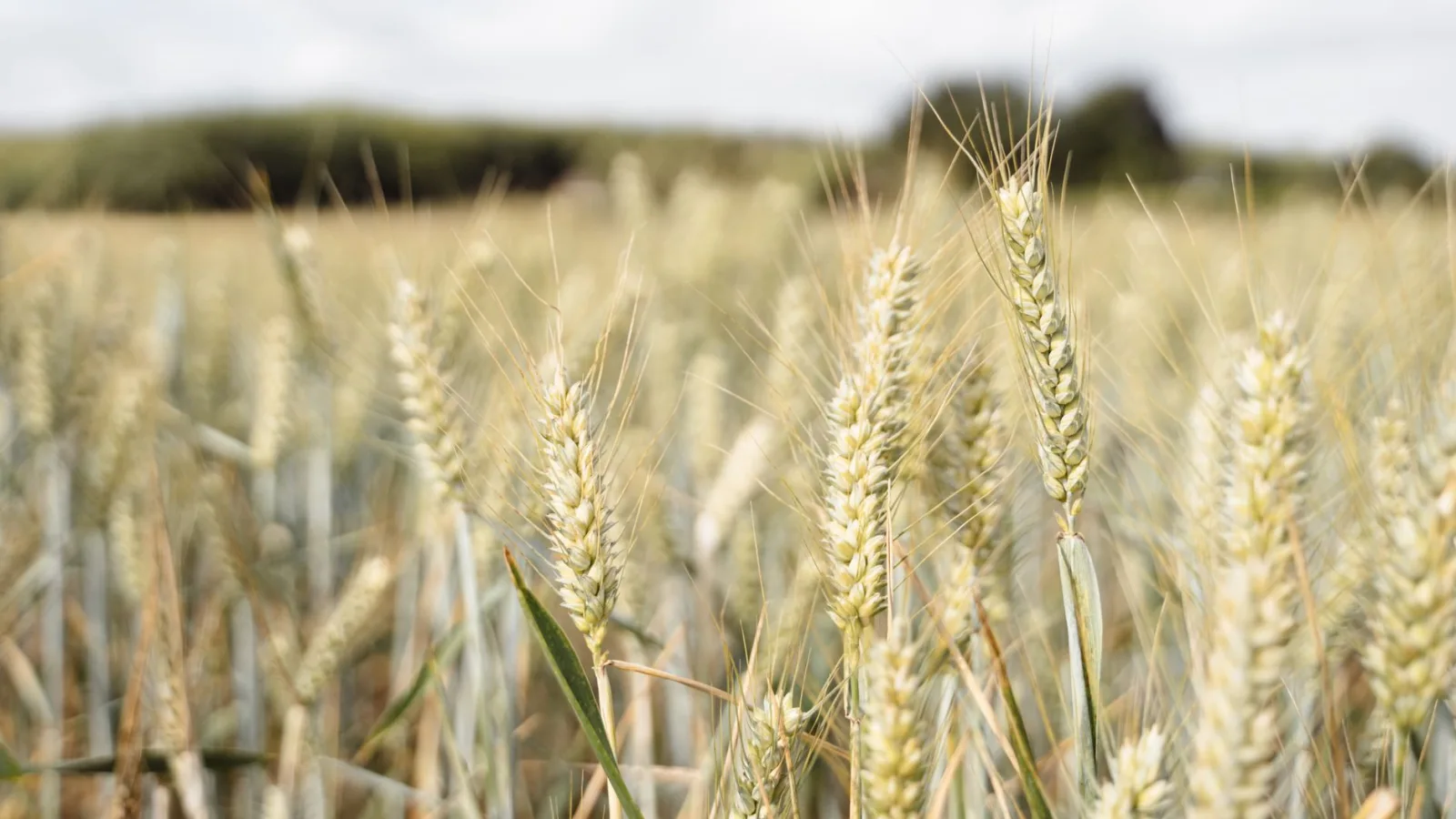
By late September, the beds that held tomatoes and eggplants are being cleared and left bare one by one. In the Northern Hemisphere, wheat is sown in October and November, so sowing starts next month. Wheat is a cool-climate grain. It's planted in autumn, gets through the winter as young leaves and is harvested around June of the following year. It grows best at 15–22°C. Under a blanket of snow it can survive temperatures as low as -20°C, and it needs a stretch of winter cold before it will send up heads in spring. China, India and Russia grow the most wheat, and it's also widely farmed in the United States, France and Australia. Sow a few rows in a corner of your garden or in a large planter box, and green blades will cover the bare soil all winter long.
Once this grain has grown through the turn of the year and reaches your plate, what it does in your body depends on how much of the kernel was milled away.
What Whole Wheat Keeps
The outer layers of the wheat kernel are called bran. White flour is ground after the bran has been stripped off. Whole wheat flour is ground with the bran still on.
Gluten, which gives dough its chew, is in both. It forms when two proteins, gliadin and glutenin, meet water and bond together, and it gives dough its spring and stretch.
Whole wheat flour also contains compounds that come from the bran. Arabinoxylan, a type of dietary fiber, holds a great deal of water. Ferulic acid, one of the phenolic acids that plants produce, stays in whole wheat. Whole wheat also has minerals such as magnesium and selenium, but the amounts vary widely depending on the soil the wheat grew in.
What Happens in the Gut and to Minerals
For decades, studies have found that wheat bran fiber changes stool bulk and how long food takes to pass through the gut. This is likely because the water-holding fiber adds volume to what's moving through the intestines. But these studies come with a caveat: if you don't drink more water along with it, you may end up feeling more uncomfortable, not less. If you're adding whole wheat bread or bran to your diet for the first time, keep a glass of water nearby and increase the amount a little at a time.
Whole wheat also contains phytic acid, which binds to minerals and locks them into forms that don't dissolve easily. Research shows that fermenting wheat dough for a long time with lactic acid bacteria lowers phytic acid and makes the minerals dissolve more easily. How much it drops, however, reportedly varies widely with fermentation time, temperature and bacterial strain. Sourdough is bread made from dough that has been fermented at length with lactic acid bacteria and then baked. Gluten remains even after a long ferment, so sourdough is not suitable for people who must avoid gluten, such as those with celiac disease.
Somaek in the Dongui Bogam
In the Grains section (穀部) of the Dongui Bogam, Korea's classic medical text, wheat appears under the name somaek (小麥). The book describes its nature as slightly cold and also records another view that it is neutral. Its taste is sweet, and it is said to be non-toxic. The text separates flour (麪), which it calls hot, from bran (麩), which it calls cold. It also leaves a preparation tip: because the husk is cold and the inside is hot, add wheat to a medicinal broth as whole grains and don't crack the husk.
The same book notes that wheat sown in autumn grows through the winter, heads in spring and ripens in summer. Because it absorbs the energy, or qi, of all four seasons, wheat was prized above the other four of the five grains. The text treats wheat sown in spring on warm ground and harvested in summer as a different case: it takes in less of that energy and is toxic. This comes from an old medical text and does not match what modern medicine says. Still, its observation that wheat has to pass through winter cold before it heads in spring agrees with what growers know today.
How to Eat Wheat, and What to Pair It With
- With beans and lentils: Wheat protein is low in lysine, while beans and lentils are rich in it. Eaten together, they make up for the lysine wheat lacks. In Korea, summer means kongguksu, wheat noodles served in a chilled broth of ground soybeans. In many other parts of the world, bread comes with a bowl of lentil soup.
- With olive oil and nuts: Dipping whole wheat bread in olive oil or working nuts into the dough adds fat, which softens the coarse texture and keeps you full longer. Chop the nuts coarsely so they tear the dough less.
- Give fermentation time: Leave the dough at room temperature for 12 hours, or in the fridge for about a day, and you have a long ferment at home. The bread picks up a pleasant tang and aroma, and some analyses suggest phytic acid drops as well.
Today, try letting a ball of whole wheat dough ferment in the fridge for a day. Then clear a row in your garden or a large planter box for next month's wheat. After you harvest the wheat in June, plant beans in the same bed. That way one plot grows, in turn, two crops that go well together on the table.
Source: Dongui Bogam, Grains section (穀部), Somaek (小麥)