In the Northern Hemisphere, by mid-October the fruit at the ends of Chinese quince branches turns from pale green to yellow. It's so hard that pressing it with your thumb leaves no mark. Still, just walking under the tree, you'll smell its tangy scent before you even see the fruit.
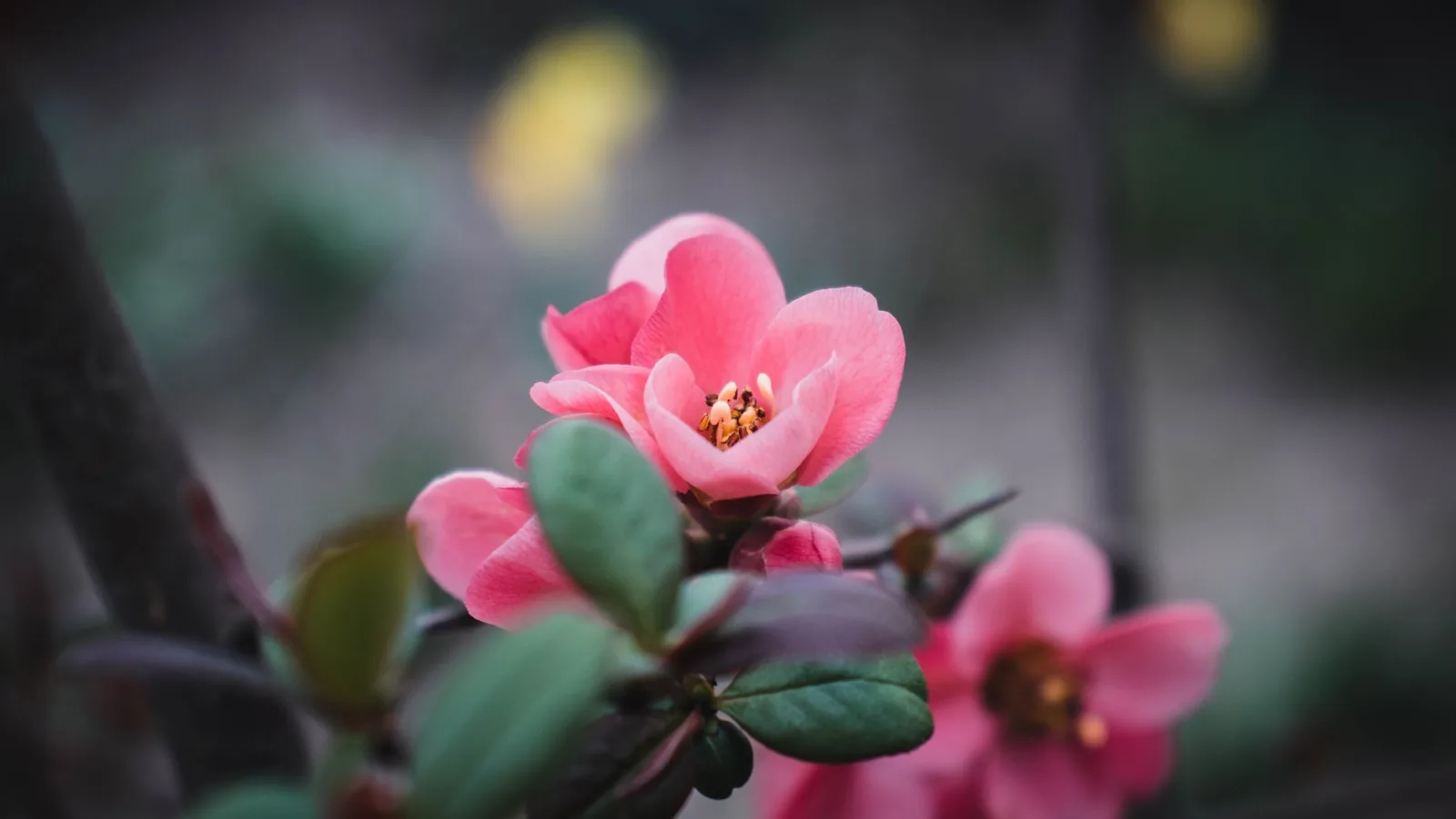
Chinese quince (Pseudocydonia sinensis), called mogwa in Korean, is the fruit of a tree in the rose family. It's native to China and widely planted in yards and along roadsides in Korea and Japan. It belongs to a different genus from the quince grown in Europe and western Asia (Cydonia oblonga), but the two are close relatives. It's too sour and hard to eat raw, so in Korea it's usually sliced thin and made into tea or cheong, a sweet fruit syrup. How did a medical text from some 400 years ago describe this fruit, and what has modern analysis confirmed?
Mogwa (木瓜) in the Donguibogam
Heo Jun's Donguibogam (Treasured Mirror of Eastern Medicine) lists Chinese quince under the name 木瓜 (mogwa) in its fruit section, 果部. It describes the fruit as warm in nature (性溫), sour in taste (味酸), and nontoxic (無毒).
The text also tells you how to prepare it: keep it from touching iron, use a copper knife to pare away the skin and seeds, then slice it thin and dry it. There was no refrigeration then, so drying was probably a way to keep the hard fruit for a long time. Keep in mind, though, that this comes from a 17th-century medical text and does not reflect the judgment of modern medicine. "Warm nature" is a category traditional Korean medicine uses to classify medicinal ingredients. Modern medicine has not verified it.
Source: Heo Jun, Donguibogam, Tangaek-pyeon (Materia Medica), 果部 (Fruit Section), "木瓜." You can read the original classical Chinese text, with a Korean explanation, in Homiclub's Donguibogam entry on Chinese quince.
What Modern Analysis Has Found
Chinese quince gets its sourness from organic acids such as malic acid and citric acid. That strong acidity is one reason the fruit is so hard to eat raw. The scent that fills a room when you leave one out comes from essential oils concentrated near the skin. Chemical analysis has confirmed where the sourness and the scent come from.
Very few studies, however, have looked at what happens in the body when people eat Chinese quince. So for now, all we can say is which compounds the fruit contains. That evidence doesn't support any claim that Chinese quince cures a particular ailment.
Where the Old Record and Modern Analysis Agree, and Where They Differ
The two accounts agree on taste. The sourness the Donguibogam recorded, modern analysis attributes to malic and citric acid. What people once picked up with their tongues, we now call by the names of compounds.
On the skin, they differ. The old text says to pare away both skin and seeds. Today, many people making quince syrup keep the skin to hold on to the fragrance and remove only the seeds. That habit fits the finding that the aromatic compounds sit mostly in the skin. "Warm nature," on the other hand, isn't something a chemical analysis can measure, so modern science can't confirm or rule it out. The most accurate approach is to read the old text as a record of long experience and to hold off judging the fruit's effects on the body until there is more research.
Planting and Harvesting Chinese Quince
Chinese quince is a deciduous fruit tree that grows well above head height when mature. It does better in the ground than in a container, somewhere you can give it plenty of room, such as the edge of a vegetable garden or a yard. Plant saplings in March–April or November (Northern Hemisphere), in a spot with full sun.
Harvest runs from October to November in the Northern Hemisphere. Pick the fruit once the skin turns yellow and the fragrance gets stronger. The surface may feel sticky, but that doesn't mean it has gone bad. Just rinse it in lukewarm water before using. For planting and harvest months and ingredients that pair well, see the Chinese quince entry in Homiclub's Crop Guide.
Mogwa-cheong and Quince Tea
The most common use is mogwa-cheong, a Korean quince syrup. Halve the washed fruit, remove the seeds, and slice it thin. Then layer the slices in a jar with sugar or honey at a 1:1 ratio by weight and let them sit. For 500 g of quince, use 500 g of sugar. The fruit's acids and pectin combine with the sugar to make a thick syrup.
- Quince tea: Stir the syrup into warm water and drink. Start with a weak mix, then make it stronger or weaker to suit your taste.
- With ginger and jujubes: Simmer the syrup with a few slices of ginger and some jujubes (Korean red dates) to tone down the sourness. Koreans have brewed this combination in winter for generations.
The syrup contains as much sugar as fruit by weight, so decide how much you'll drink each day and stick to it.
This week, set a ripe yellow quince on your kitchen table and enjoy its scent. Then slice it thin and start a batch of syrup with an equal weight of sugar.