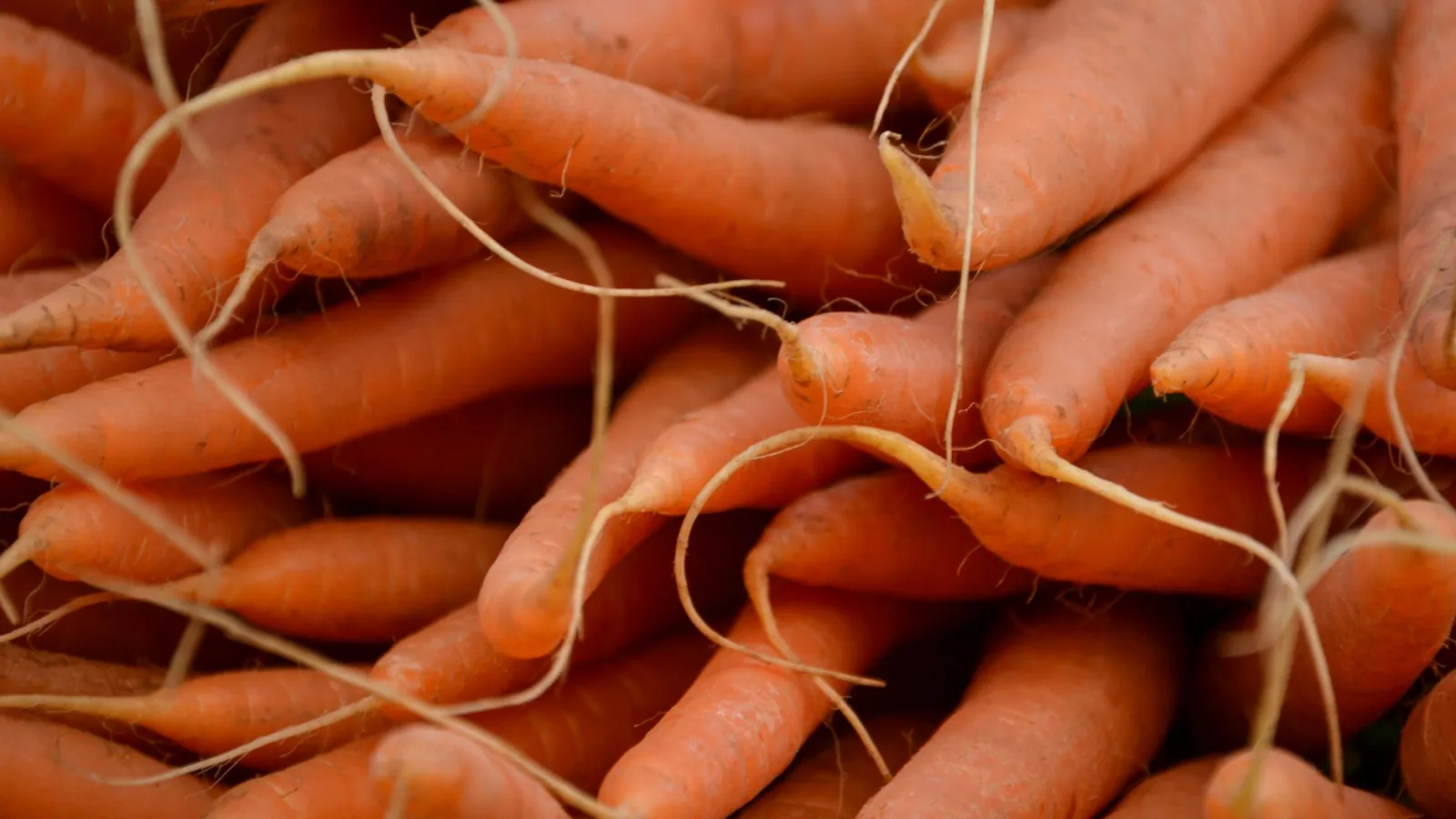
Once the summer monsoon rains clear, pull a spring-sown carrot from the garden, brush off the soil, and there's that bright orange. The pigment behind it is beta-carotene, and most of us learned as kids that the body turns it into vitamin A. What that same vitamin A does while the human eye is still forming, though, is only now being pieced together.
A Shift Deep Inside the Eye
At the very center of the human retina is a small patch that lets us read fine print clearly. It's tightly packed with cone cells that detect red and green light, and it has almost none of the cones that detect blue.
Having few blue cones there actually helps vision. Blue light has a short wavelength and focuses slightly in front of the other colors, so blue cones mixed into this spot would blur the image. That's why the part of the eye we read with holds only densely packed red and green cones. For a long time, researchers believed the blue cones simply migrated outward from the center and out of the way.
A study of human retinal tissue grown in the lab points to a different answer. Instead of moving away, the blue-sensing cells change identity and become red- and green-sensing cells, influenced by a compound derived from vitamin A and by thyroid hormone. The switch takes place over a few months before birth.
The findings should help scientists grow retinal tissue in the lab that more closely resembles a real eye. They also lay the groundwork for research that aims to use cells to restore vision lost to age-related eye disease. Still, treatments for people are some time away, and it's too early to say whether they will work.
What Vitamin A Does for Your Eyes
Even in a fully developed eye, vitamin A is a building block for the pigments that capture light. A long-term shortage causes night blindness, which makes it hard to see in dim light. In more severe cases, the cornea dries out and becomes damaged. That's why the World Health Organization (WHO) has long treated vitamin A deficiency as a cause of blindness in children. Up to this point, the evidence is solid.
For people who already get enough, however, there's little clear evidence that taking more will improve their eyesight. High doses of retinol supplements taken over a long period can strain the liver, and extra caution is needed during pregnancy. The beta-carotene in vegetables is different, because the body converts only as much of it into vitamin A as it needs. That makes it far less of a concern.
Getting It from Your Garden
Orange root vegetables and dark leafy greens are rich in beta-carotene. Here are a few that are easy to grow in a home garden.
- Carrots — Harvest spring-sown carrots starting in late June. Sow again in early August for a fall crop.
- Kabocha squash and mature pumpkins — Starting in late summer, pick the fruit that set over the season. (Koreans prize pumpkins left on the vine until fully ripe.)
- Spinach, Swiss chard, and Chinese mallow — The darker the leaves, the more beta-carotene they contain. (Chinese mallow is a tender green often cooked in Korean soups.)
- Garlic chives and perilla leaves — Leafy greens you can keep cutting right through midsummer. (Perilla, or kkaennip, is the fragrant Korean cousin of shiso.)
Beta-carotene dissolves in fat. Rather than crunching carrots raw, try sautéing them lightly in perilla oil, a nutty oil pressed from perilla seeds, or adding them to soup. With spinach, blanch it and toss it with toasted sesame oil so your body absorbs more of the beta-carotene. One medium carrot provides close to an adult's recommended daily amount, so eating them regularly is better than eating a lot at once.
Tonight, try serving an orange root vegetable or some dark leafy greens at dinner, cooked with a spoonful of oil. If you're planning an August sowing, now is a good time to pick up carrot seeds.
Sources — Research on cone cell differentiation using human retinal organoids; World Health Organization materials on vitamin A deficiency