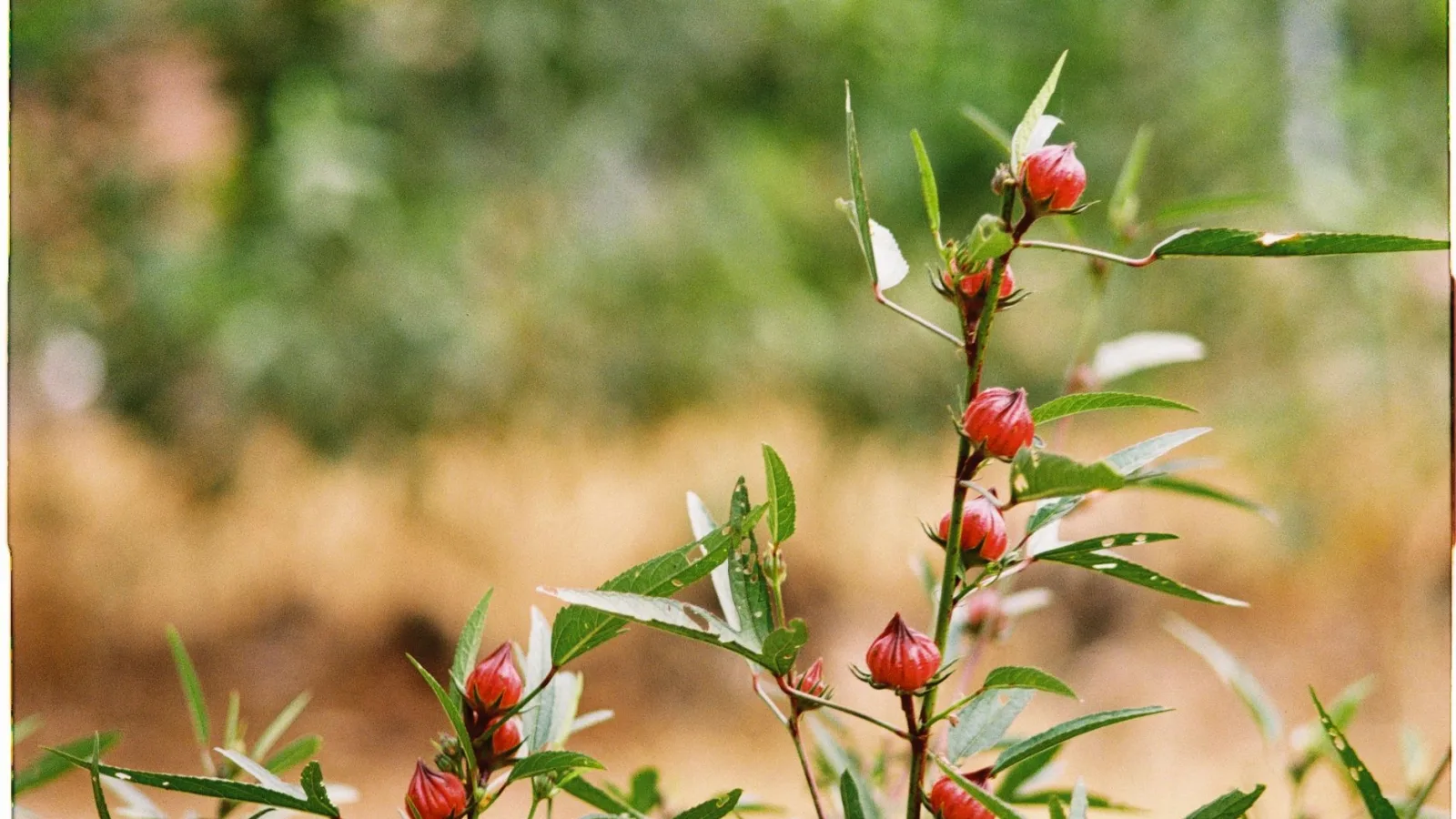
At the end of summer, when the mornings start to turn cool, the sunset hibiscus (known in Korea as dakpul) at the edge of the garden opens a new pale yellow flower every day. Each bloom has a deep purple center. It closes as the sun goes down and drops the next day. The Dongui Bogam (Treasured Mirror of Eastern Medicine), Korea's classic 17th-century medical encyclopedia, lists this flower in its section on vegetables. What did the old record say about it, and what has modern analysis added?
The Dongui Bogam's "One-Day Flower"
In the vegetable section (Chaebu, 菜部) of the Dongui Bogam, the sunset hibiscus flower appears under the name hwangchokgyuhwa (黃蜀葵花). The book gives its Korean name as ilil-hwa, or "one-day flower," because each bloom opens and fades within a single day.
For most medicinal ingredients, the Dongui Bogam begins with the ingredient's nature (how cooling or warming it is) and its taste. The entry for hwangchokgyuhwa says nothing about its nature or taste. Instead, it describes in detail what the plant looks like and when to harvest it. The leaves are narrow and pointed at the tips and deeply lobed, and pale yellow flowers bloom at the end of summer. The flowers were picked in the sixth and seventh lunar months, roughly July and August on today's calendar, and dried in the shade before use.
The entry also explains a point about the name. Hwangchokgyu literally means "yellow hollyhock," but the text states that it is not a yellow-flowered hollyhock (蜀葵). The two are separate plants. Both belong to the mallow family and have similar flowers, so people probably confused the names often. Everything above comes from an old medical text and is not the view of modern medicine. You can read the original text and a commentary in the Homiclub Dongui Bogam entry for hwangchokgyuhwa.
Source: Dongui Bogam, vegetable section (菜部), entry for hwangchokgyuhwa (黃蜀葵花)
The Name Dakpul and Korean Paper
The name dakpul comes from the way the root is used. Dak refers to the paper mulberry, the tree that paper is made from, and pul means a sticky paste. To make hanji, traditional Korean paper, papermakers soak paper mulberry fiber in water and mix in a slimy liquid taken from dakpul roots. The root contains mucilaginous polysaccharides that dissolve in water and thicken it, and the thickened water keeps the fibers evenly spread out. Japanese papermakers use the root of the same plant to make washi. This information comes from records of traditional papermaking and tells us nothing about how the plant affects the body when eaten.
How It Compares With Modern Analysis
Modern studies have focused on the flower. Researchers who analyzed sunset hibiscus flowers isolated several flavonoid glycosides, including hyperoside.
The old record and the modern analysis both deal with the flower. The Dongui Bogam says the flowers were picked and dried for use, and modern researchers also studied the flowers. What they report is different, though. The modern work is a compositional study. It identifies the compounds in the flower and says nothing about preventing or treating disease. So far there is no evidence that eating sunset hibiscus flowers has any particular effect on the body.
The first thing you notice when you eat the flower is its texture. Sunset hibiscus belongs to Abelmoschus, the same genus as okra. When you blanch the petals, their mucilage is released and they turn smooth and slippery.
How to Grow and Eat It Today
In the Northern Hemisphere, sow sunset hibiscus in April or May and harvest the flowers in August and September. Wait until there is no more risk of frost and choose a sunny spot. The plants grow tall, so space them well apart. If you can't tell sunset hibiscus from hollyhock, look at the leaves. As the Dongui Bogam describes, sunset hibiscus leaves are pointed and deeply divided into several lobes, while hollyhock leaves are mostly rounded.
Each flower lasts only one day, so it's best to pick them in the morning, soon after they open. Here are a few ways to eat them.
- Pan-fried flowers (kkot-jijim): Open the petals flat, dip them in a thin batter, and fry them briefly in oil. Their color fades if they sit, so serve them right away with only a small pinch of salt.
- Blanched and dressed: Drop the flowers into boiling water, take them out right away, and rinse them in cold water. Toss lightly with soy sauce and vinegar. If you blanch them too long, the petals fall apart and lose their shape.
- Flower tea: Put a couple of shade-dried petals in hot water and they will turn it a pale color. The aroma is light, so don't make the water too hot, and steep the petals only briefly.
Drying the flowers in the shade is the same method the Dongui Bogam describes. You can check planting and harvest months on the sunset hibiscus page in our Crop Guide.
If your plants are blooming, pick two sunset hibiscus flowers that opened this morning. Blanch and dress one, and spread the other out in the shade to dry.