- Type
- Herbs & Aromatics
- Difficulty
- Moderate
- Season
- Summer
- Sowing
- From seed
Sunset Hibiscus
Abelmoschus manihot
Mucilage polysaccharides and flavonoid glycosides · the sticky root behind hanji paper and a pale yellow flower
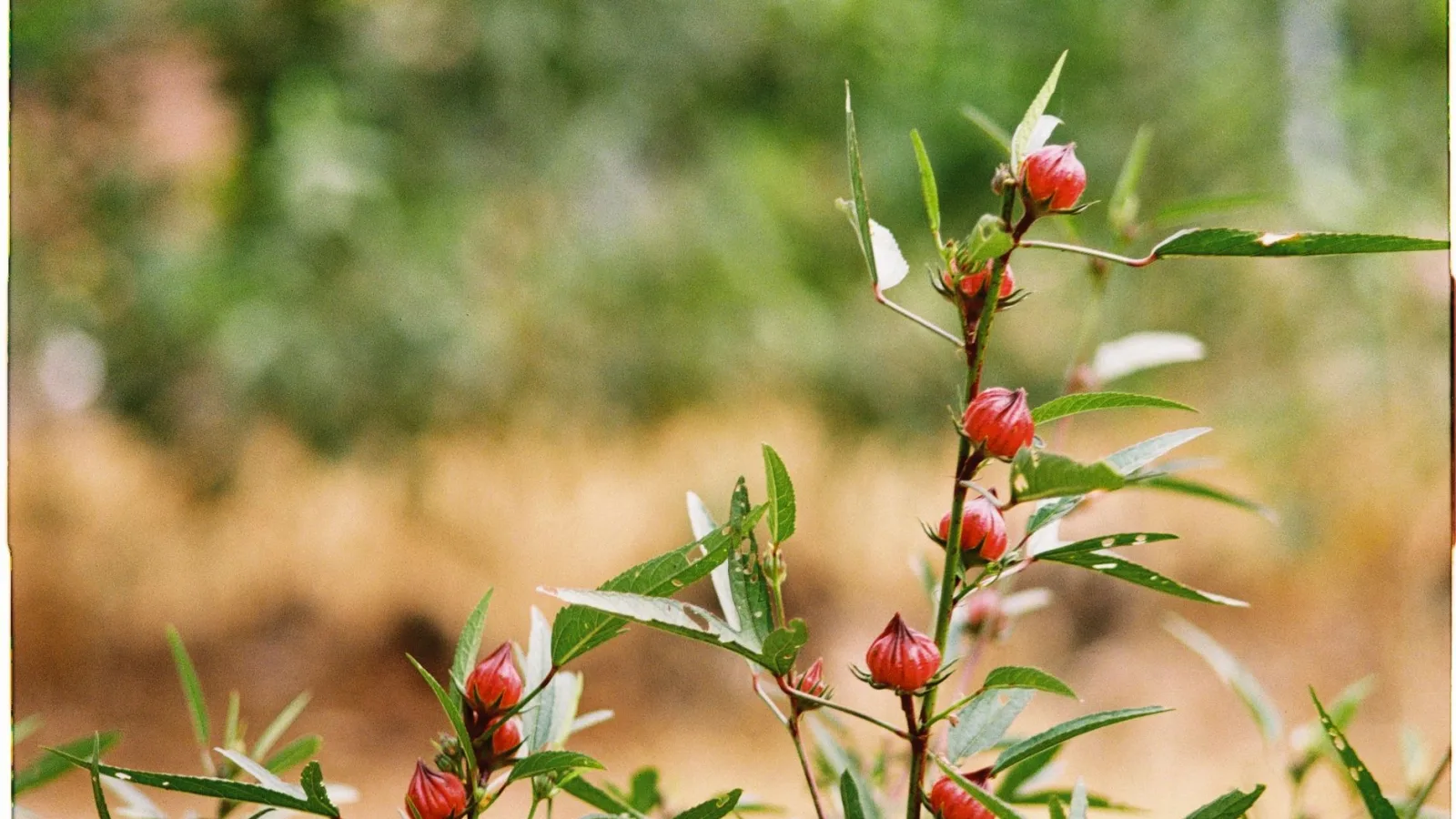
Sunset hibiscus is an annual that reaches head height, a mallow and so a relative of hibiscus and okra. At the end of summer a pale yellow flower the size of a palm opens in the morning and closes the same evening, which is why the Donguibogam recorded it under a name meaning one-day flower. Its Korean name comes from paper — pounded and steeped, the root gives a sticky liquid, and stirred into a vat of mulberry-bast fibre that liquid keeps the fibre from clumping so the sheet lifts thin and even. The edible parts are the flowers and the young leaves; flowers are coated thinly and pan-fried, blanched and dressed, or dried for infusion. The petals are so thin that a flower not used the day it is picked collapses, so what opens in the morning is gathered the same morning. The Donguibogam is explicit that the plant is a different kind from hollyhock, and describes leaves that are narrow, pointed and deeply cut. Set at the back of a border it flowers right through summer, and the seed is large enough to save easily for the following spring.
Year-Round Calendar
- 1
- 2
- 3
- 4
- 5
- 6
- 7
- 8
- 9
- 10
- 11
- 12
- 4
- 5
- 8
- 9
Where It Grows
- Main producer It is called huangshukui, and is grown on a large scale for its flowers in Anhui, Jiangsu and other areas.
- Main producer It is called tororoaoi, and is grown in Ibaraki and other areas for the root mucilage used in forming washi (Japanese handmade paper).
- Major producer In the districts that make hanji (Korean handmade paper), it has long been planted alongside paper mulberry.
- Major producer It is known as aibika and is planted in kitchen gardens as an everyday leaf vegetable.
It is native to the subtropics stretching from southern China into Southeast Asia, and since each country uses a different part of the plant, the growing regions differ in character as well. The three East Asian countries grow it for its flowers and for the root mucilage used in forming paper, while in the Pacific islands it is planted as a leaf vegetable. Neither use has a separate heading in international statistics, so the countries cannot be ranked by output.
- Optimum
- 22~30℃
- Range
- 15~35℃
- Hardiness
- Not hardy
Because it comes from the subtropics, the plant takes heat well but dies at frost, so in Korea it grows as an annual: sown in spring, finished by autumn. It sets the most flowers in a spot that gets sun all day, and if the soil dries out around flowering time, the flowers come out smaller.
In Korea Nationwide
Seed is sown in April–May and the flowers are picked in August–September; plants grown for their roots are dug after the frost has come. In the districts that make hanji, it has long been planted as a companion crop.
How to grow
- Light
- Sun all day. In shade it stretches upward and flowers sparsely
- Soil and depth
- Free-draining soil at least 30cm deep. If the root is wanted, ground with few stones is better
- Spacing
- 50 to 60cm between plants. It reaches head height with broad leaves, so crowding shades it out
- Watering
- Soak it through summer drought. Dry ground at flowering shrinks the flowers
- Feeding
- A liquid feed monthly from a month after planting. Heavy nitrogen builds leaves alone
- Harvest
- August and September, picking the day's flowers the morning they open. Strip the calyx and the central column and use the petals alone. The Donguibogam records gathering flowers in the sixth and seventh lunar months and drying them in the shade
What makes the difference. The seed is large and easy to save. Take ripe pods before the first frost, dry them, and sow in April or May the following year
Why this one is harder. Using the root as paper size means lifting it after frost, pounding it and steeping it, and the steeped liquid loses its body as it ages. With no papermaking in view, growing it purely for the flowers is enough
Common problems
- Aphids You will see Colonies on new growth and flower buds What to do Wash them off with a jet of water; if it recurs, use an egg-yolk oil spray. Observe pre-harvest intervals where flowers are to be eaten
- Cotton leafworm You will see Holes in the leaves with frass left behind What to do Turn the leaves and pick off the larvae. Numbers rise in late summer
- Falling over You will see The whole stem lies flat after wind and rain What to do Stake it as it gains height. One cane per stem, tied at three points, keeps it from snapping
This page describes how a crop is grown and used. It does not claim health effects for any food, nor is it intended to prevent or treat disease. Component and study notes are references only and do not mean the same result occurs in people. Consult a medical professional about health concerns.
Health Benefits
The old record — hwangchokgyuhwa (黃蜀葵花). The Donguibogam lists the flower in the Vegetable section as 黃蜀葵花, with a vernacular name meaning one-day flower. This entry carries no statement of nature or taste. It is explicit that the plant is a different kind from hollyhock and not simply the yellow-flowered form of it. The leaves are described as narrow, pointed and deeply cut, and the pale yellow flowers as opening at the end of summer. Flowers were gathered in the sixth and seventh lunar months and dried in the shade. This is a historical medical record and differs from modern medical judgment.
The plant and hanji paper. That the mucilage from the root is used to hold mulberry-bast fibre evenly apart when hanji is lifted is documented in the traditional papermaking process. The Korean name of the plant comes from that use. This is a record of composition and use.
Flavonoid analyses of the flower. Flavonoid glycosides including hyperoside have been isolated from the flowers in reported analyses. These are compositional analyses and have nothing to do with preventing or treating disease.
Nutrition
- Mucilage polysaccharides (the sticky liquid drawn from the root) — polysaccharides that give body to water they dissolve in
- Flavonoid glycosides (hyperoside and others) (reported in the flowers) — the flavonoid group identified in the pale yellow petals
- Mucilage (in the young leaves and petals) — the component that turns them slippery on blanching
Flowers are used the day they are picked The flower opens in the morning and closes by evening. The petals are thin enough that they weep and collapse once time passes, so what opens in the morning is fried or blanched the same day. If it is to be dried, spread it out where it was picked and dry it in shade.
What the sticky liquid is The sticky liquid drawn by pounding and steeping the root is a mucilage polysaccharide. Dissolved in water it gives the water body, and that is what holds mulberry-bast fibre evenly apart when a sheet of hanji is lifted. This is the papermaking part of the plant, not the edible one.
Flavonoids in the flower Analyses report flavonoid glycosides such as hyperoside from the flowers. They are discussed alongside the pale yellow colouring. This entry stays with the compositional record.
Why frying is the usual route The petals are thin and full of water, so blanching quickly reduces them to a smear. A thin coating and a short turn in hot oil is the commonest handling. The calyx and the central column are tough, so strip them and use the petals alone.
Pairings
○ Light batter — fried flowers — Spread the petals, coat them thinly and give them a short turn in oil. The colour dies if they sit, so serve them straight from the pan. Season with the smallest pinch of salt.
○ Soy sauce and vinegar — blanched and dressed — Dip very briefly in boiling water, rinse in cold and dress lightly with soy sauce and vinegar. A long blanch dissolves the petals, so lift them out the moment they go in.
○ Dried for infusion — Two or three shade-dried petals in hot water draw a pale colour. The aroma is faint, so keep the water off the boil and the steeping short.
△ Confusion with hollyhock and rose of Sharon — The Donguibogam is explicit that this is a different kind from hollyhock. Sunset hibiscus has narrow, pointed leaves cut deeply into finger-like lobes, while hollyhock leaves are rounded with shallow lobes. Read the leaf shape rather than the flower colour. Rose of Sharon is a shrub; this is an annual. Hollyhock
△ Sprays applied in a border — Plants set in borders and along paths may have been treated with insecticide or herbicide. Take flowers to eat only from a plant whose treatment you know. Nursery-bought bedding carries an unknown spray history, so do not eat the flowers in its first year.
△ Treating the root as food — The root is the papermaking part, not an edible one. The only parts this entry treats as food are the flowers and the young leaves. The liquid steeped from the root goes into the paper vat, not into a cup.
Source: Donguibogam, Vegetable Section 黃蜀葵花 · Korea National Arboretum, Korea Biodiversity Information System