By late September, it's time to thin the Korean radishes sown in late summer (in the Northern Hemisphere). The young ones, about as thick as your finger, are perfect for tossing into soup, greens and all. But soup starts with broth, and in a Korean kitchen that means reaching for a sheet of dried kelp.
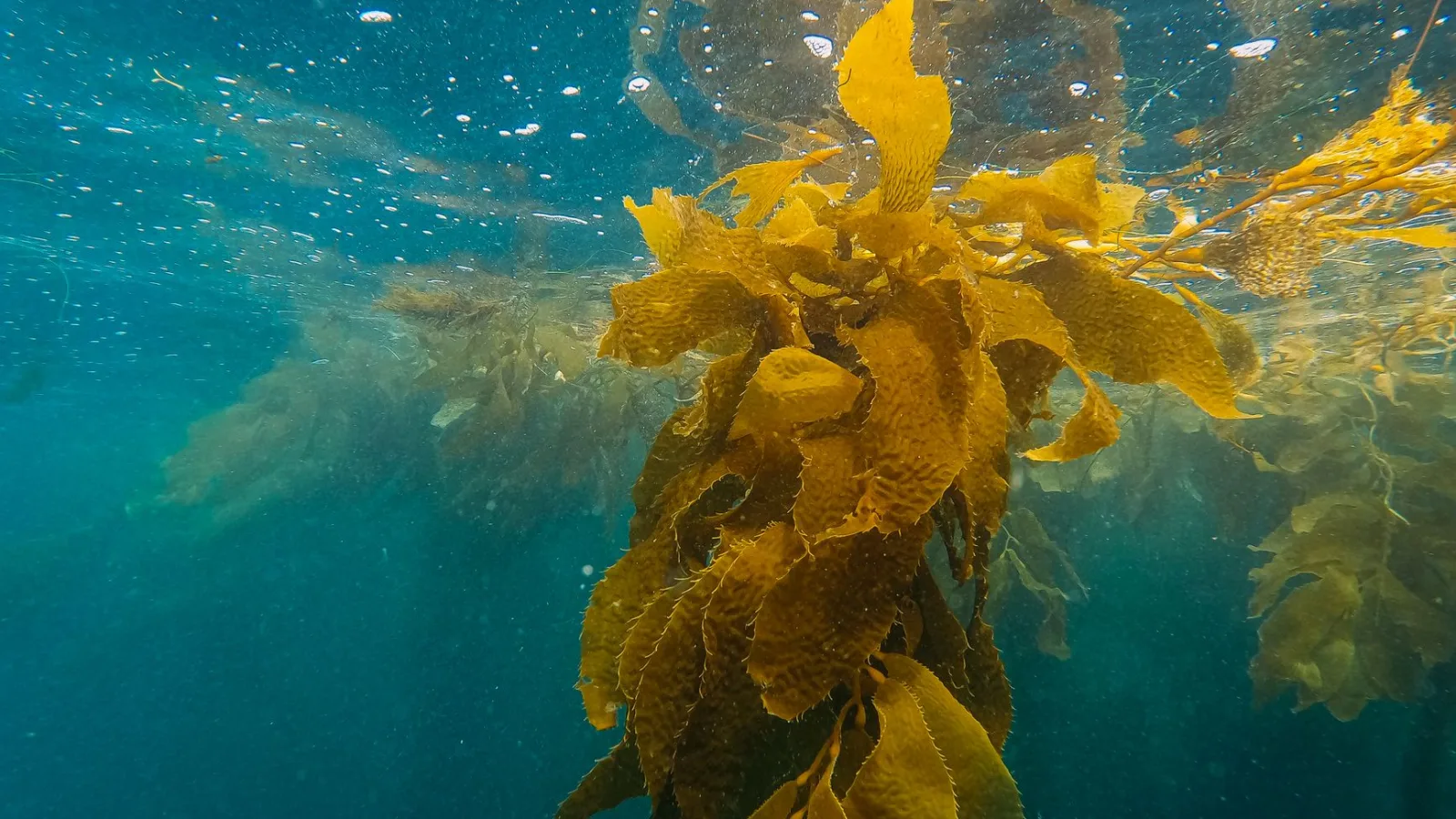
Kelp is a brown seaweed that grows in cold seas. Glutamic acid, the compound behind umami, was first identified in kelp broth. Kelp makes a good broth by itself, but what you pair it with changes both how it tastes and how you can use it.
Where Kelp Grows, and How to Prep It
Most of the kelp that reaches our tables is farmed, much of it in China, Korea, and Japan. Its growing season depends less on air temperature than on water temperature. In October and November (in the Northern Hemisphere), as the sea starts to cool, growers lower ropes seeded with young kelp into the water. Right now, in September, they're getting those seedlings ready. Kelp grows long through winter and spring, when the water stays between 5 and 15°C (41–59°F). By early summer, once the water climbs past 20°C (68°F), the blades start to rot from the tips. That's why kelp is harvested from May through July, before the sea warms up, and then dried in the sun.
The white powder on dried kelp is mannitol, a sugar alcohol. It's easy to mistake for mold, but it has a mild sweetness, so scrubbing the kelp under running water rinses away flavor along with it. Just give the surface a light wipe with a damp cloth before you use it.
Making Broth with Anchovies and Shiitake
The glutamic acid in kelp, the inosinic acid in dried anchovies, and the guanylic acid in dried shiitake are three different umami compounds. Together they make a deeper broth than any one of them alone. Here's the order:
- Soak the kelp, dried anchovies, and dried shiitake together in cold water.
- Put the pot over the heat, and just before the water boils, take out the kelp only.
- Let the anchovies and shiitake simmer a little longer to release their flavor, then take them out.
If kelp boils hard, it releases a slippery slime and a bitter taste into the broth. The slime seems to come mostly from alginic acid, a polysaccharide in the cell walls of brown seaweed, which swells when it absorbs water. When you want a clear soup, take the kelp out at the right moment. Then add the thinned radishes and their greens to the broth and season with soy sauce or salt.
Put the Spent Kelp into Rice and Braises
Don't throw out the kelp once the broth is done. Cut it into thin strips and simmer it in soy sauce. Stir it into kongjaban (soybeans braised in soy sauce, a classic side dish), and it softens the saltiness.
You can also lay a palm-sized piece on top of the rice before you cook it. The rice picks up a gentle sweetness, most likely from the mannitol and glutamic acid on the kelp's surface dissolving into the cooking water. That's the reason to leave the white powder on.
Salted Kelp for Ssam and Tangy Salads
Salted kelp is fresh kelp that has been packed in salt, and it needs a soak in water first to remove the extra salt. Then try it as ssam (rice and side dishes wrapped in a broad leaf or a sheet of seaweed). You can add a lettuce leaf from the garden for another layer.
Or blanch it briefly and toss it with chogochujang (gochujang, Korean chili paste, mixed with vinegar). It keeps its silky, slippery texture. The thinner the kelp, the shorter the blanching time should be.
Iodine and How Much to Eat
When you add kelp to your meals, iodine is the thing to keep in mind. Brown seaweeds absorb iodine from seawater and store it, so their levels tend to be high. The amount varies a lot, though, depending on the species, where it grew, and how thoroughly it was dried. Because it's hard to tell how much iodine you're getting in any one serving, it's safest to eat kelp in small amounts, in broths and side dishes.
The Dongui Bogam, a 17th-century Korean medical classic, lists kelp in its vegetables section (菜部) under the name gonpo (昆布). It describes kelp as cold in nature, salty in taste, and nontoxic, and notes that it comes from the East Sea (東海). It also gives a prep instruction: kelp from the sea should be used only after its salt has been washed off. This comes from a historical medical text, so read it apart from modern nutrition advice.
If you thinned your radishes today, make tonight's broth with a sheet of kelp plus anchovies and shiitake. Slice the spent kelp into strips and set it aside, and tomorrow you can braise it into a side dish.
Sources: Dongui Bogam, Vegetables (菜部), Gonpo (昆布) · Korean National Standard Food Composition Table