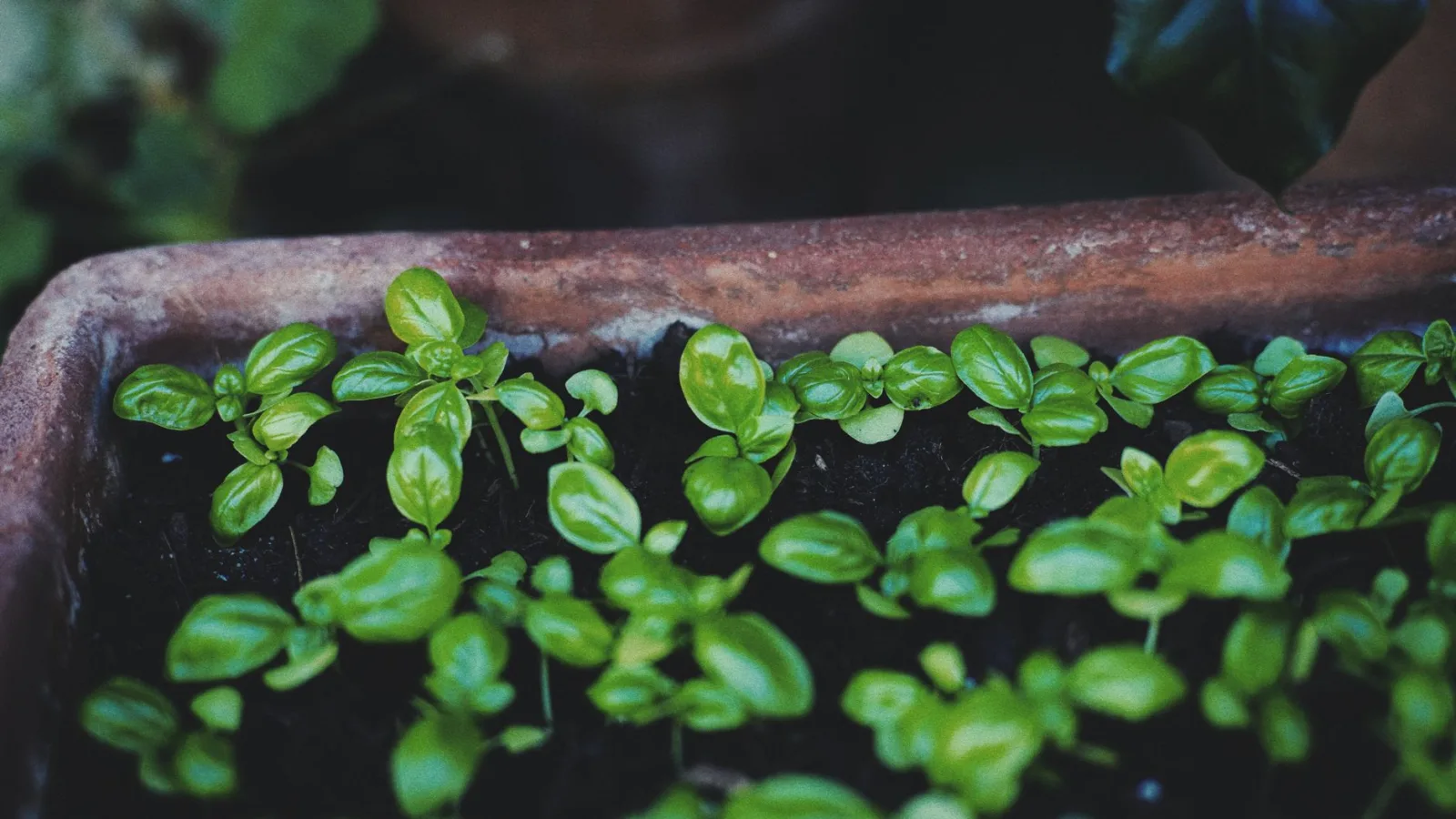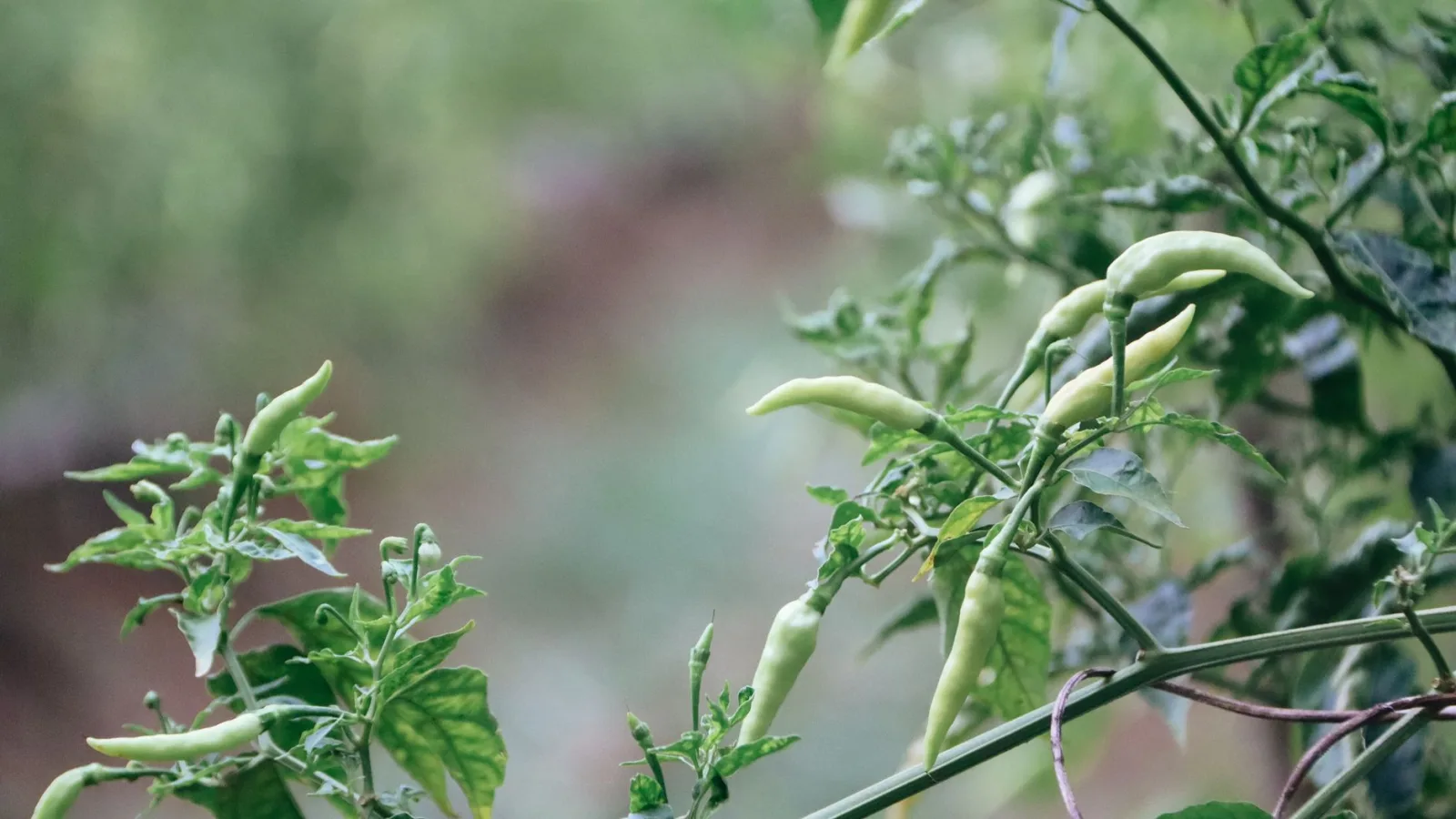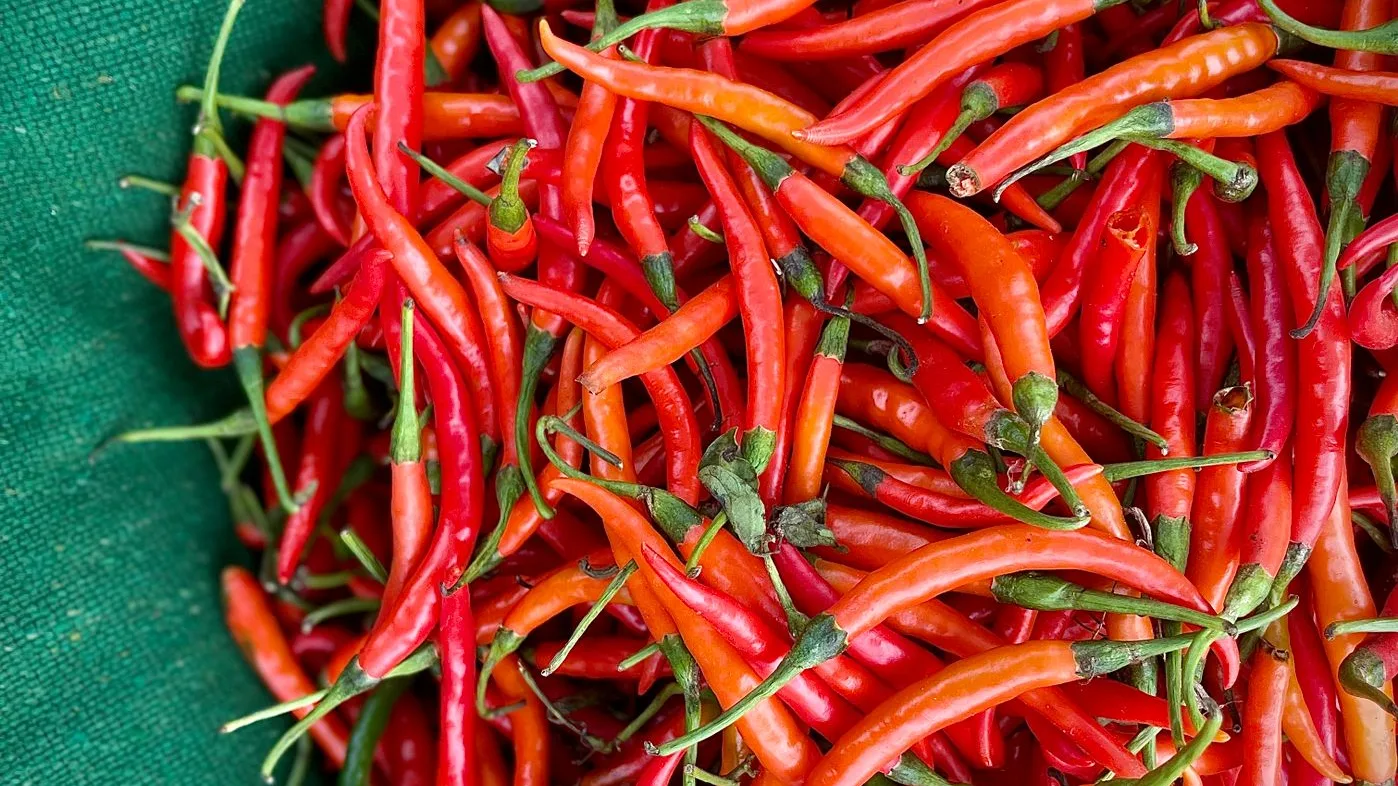
The rainy season has passed, and along every row in the pepper patch, red chilies are ripening one by one. The green peppers picked in the morning get dipped in doenjang (fermented soybean paste); whatever's left goes out on a flat basket to dry. In a household with a garden, a summer table without peppers is a rare thing.
Now a study has looked at those same peppers and their relationship to cancers of the digestive tract. Our affection for what we grow with our own hands is one thing — but it's worth sitting down calmly and hearing what the research actually says.
What Makes Heat Hot
A chili's heat comes from capsaicin. It's concentrated most heavily in the pale pith the seeds cling to, and thins out toward the flesh. Capsaicin binds to the temperature-sensing receptors in the lining of your mouth and esophagus, so you feel heat even though nothing has actually gotten warmer. That's also why spicy food brings on saliva and stomach acid and wakes up your appetite.
Heat varies enormously from one variety to the next. Oi-gochu (cucumber peppers) and kkwari-gochu (shishito-type peppers) carry little capsaicin and are pleasant raw; cheongyang peppers are more than ten times hotter. The redder a pepper ripens, the more beta-carotene it holds, while green peppers are richer in vitamin C. As for ordinary eating amounts, no evidence to date suggests they do any harm.
What the Esophageal Cancer Research Found
A large paper pooling observational studies from several countries found that the group eating the most chili peppers had a clearly higher incidence of esophageal cancer than the group eating the least. For stomach and colorectal cancer, results conflicted from study to study, making any connection hard to claim.
Here's the part worth pausing on. The finding means esophageal cancer was observed more often among people who eat a lot of chili — not that chili was shown to cause cancer. In regions where peppers are eaten at serious heat, people also tend to favor scalding-hot broths and to drink and smoke more often, which makes it genuinely difficult to separate out which factor is doing the damage. The researchers themselves noted that whether the same risk applies at moderate intake still needs confirming.
That said, multiple studies do observe that when the lining of the esophagus is repeatedly exposed to intense heat — both kinds — it cycles through injury and repair over and over. The strain on that tissue is understood to grow when spicy food and the habit of gulping it down piping hot arrive together.
How to Enjoy Your Garden Peppers
None of this is reason to take peppers off the table. It's the eating that needs a little adjusting. Try these starting with tonight's dinner.
- Take stews and soups off the heat and let them cool a bit before eating. Swallowing while the steam is still rising is what puts the most strain on your esophagus.
- Rather than loading a single meal with cheongyang peppers, spread them across several days. Mixing in oi-gochu or kkwari-gochu softens the heat.
- Cut back on evenings that pair spicy dishes with drinks. Alcohol compounds the damage to that lining.
- If spicy food leaves you with lasting heartburn or a catch when you swallow, cut back and see a doctor.
Forms you keep around and use a little at a time — kimchi made with chili flakes, dried peppers — deliver only a small amount at any one sitting. Dry your summer harvest well and it will stretch across the table all the way into winter.
Turn off the heat under tonight's stew and give it three minutes before you ladle it out. The flavor of your garden peppers stays exactly where it is; only the heat your esophagus takes goes down.
Reference — a systematic review and meta-analysis by an international research team on chili pepper consumption and digestive-system cancer risk