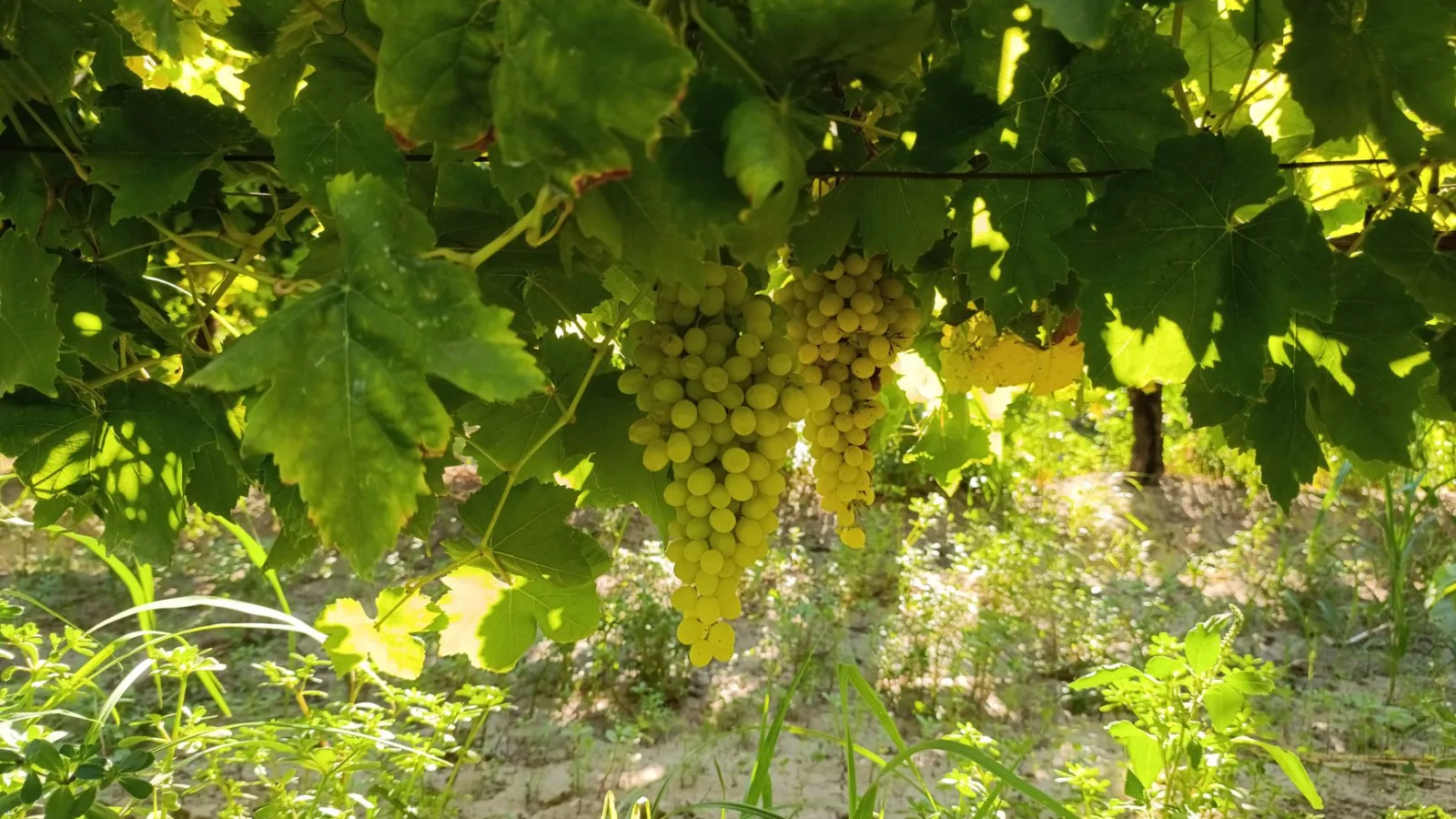
In early fall, clusters of grapes turn a deep, dusky red on the vines climbing the garden fence. Once you plant a grapevine, it gives you fruit year after year, so it's a crop that stays with you for a long time. In the northern highlands of Ethiopia, in northeast Africa, some grapevines have lasted a very long time and are still growing today. Researchers studied both the genetics and the history of these vines, and they say the vines are worth protecting.
Grapes in the Highlands Where Teff Began
Ethiopia's northern highlands are among the oldest farmlands in Africa. Several legumes and grains now eaten around the world were first grown here. So was teff, a grain with tiny seeds that is used to bake the flatbread injera. Far fewer people know that grapevines have also grown for a long time in Tigray, a region in these same highlands.
Tigray has long dry seasons and frequent droughts. From 2020 to 2022, it also went through a war. For long stretches no one could tend the fields, yet some of the old vines are still alive. Local accounts say grapes were grown to make wine for church services. Written records don't confirm all of this, so it's best read as oral tradition.
What Old Vines Carry in Their Genes
The researchers examined the genetics of the vines still growing in Tigray and traced the history of grape growing in the region. They concluded that the vines are worth preserving, both as a genetic resource and as a record of the region's farming past.
Grapevines are usually grown from cuttings, not seed. Because no seed is involved, a single vine's traits can pass down unchanged for hundreds of years. A vine that has survived in a dry highland with little human care might have drought tolerance. As the climate changes, more grape-growing regions are facing summer droughts, and local grapes like these could become material for breeding new varieties. How strong that drought tolerance really is, though, still has to be tested by growing the vines in the field.
Eat the Skins, and the Leaves Too
A grape's deep red color comes from anthocyanins in the skin. The skin and seeds also contain polyphenols such as resveratrol. These compounds may help reduce oxidation in the body, and researchers continue to study them. It's still too early to say how much good they do when people eat them, though. Wash your grapes well and try eating them skin and all. You'll get more of these compounds than you would from the flesh alone.
Young grape leaves are edible too. Around the Mediterranean and in the Middle East, people love dolma, which is rice wrapped in blanched grape leaves and then cooked. It's much like Korean ssam, where you wrap rice in a leaf to eat it. If your garden grapevine hasn't been sprayed, pick a few tender leaves in spring and try blanching them.
Keeping a Garden Grapevine Going for Years
Grapevines like a spot with plenty of sun and good drainage. If you don't have ground to plant in, a wide, deep container works too. Train the vine up a wall or a fence. In the Northern Hemisphere, the vine is dormant in January and February. Prune it then by cutting last year's growth back to just two or three buds, and the vine will set fruit more evenly that year.
If there's an old grapevine in your neighborhood, ask the owner whether you can have some of the canes they cut off when they prune. Cut pencil-thick canes into pieces three or four buds long and push them into moist soil. Many of them will root by spring. Like the vines of Tigray, a grapevine that has grown in one neighborhood for years has already been through that area's weather.
This winter, when pruning season comes, ask a neighbor for a cane from their old grapevine and push it into a pot of soil.
Source: A research article on the genetic and historical value of old grapevines in the Tigray region of Ethiopia