
Tangaek — Decoctions · Herbs
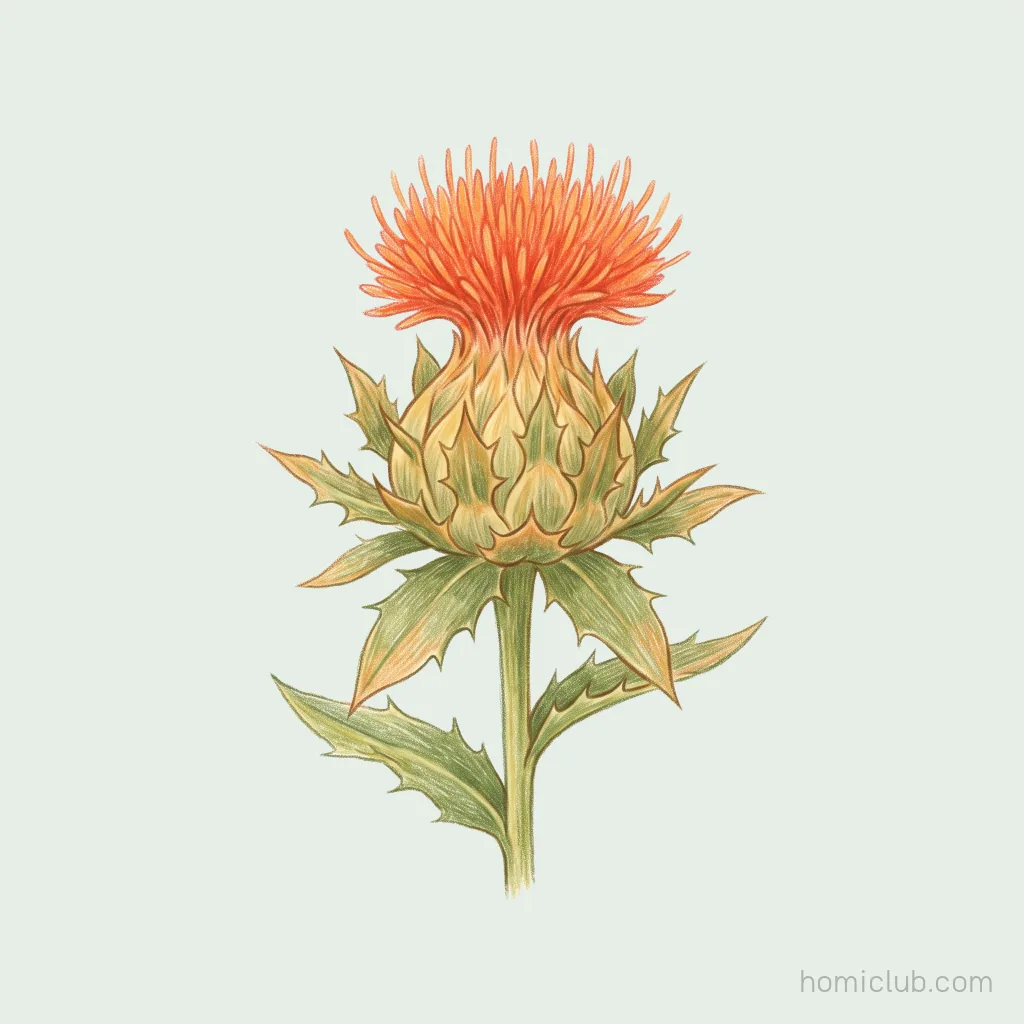
紅藍花 Safflower
 Related Crop · Safflower →
Itkkot is the red floret of safflower, an annual in the daisy family, the same itkkot in the crop guide. It was long grown as a dye for crimson cloth and for rouge, and today the seed is pressed for oil. Donguibogam notes that the character for indigo sits in its name because the leaves resemble indigo.
Original, read line by line 東醫寶鑑 · Tangaek — Decoctions vol. 3
-
性溫, 味辛, 無毒. 主産後血暈, 腹內惡血不盡絞痛, 胎死腹中.
Its nature is warm, its taste pungent, and it is non-toxic. It governs postpartum blood dizziness, wringing pain from bad blood not fully discharged from the abdomen, and a foetus that has died in the womb.
HomiclubHongnamhwa is the red flower of the safflower, an annual of the composite family. Its thistle-like heads open yellow and deepen to red; today the seed is pressed for safflower oil.
-
卽今紅花也. 以染眞紅, 及作臙脂. 葉似藍, 故有藍名. 《本草》
This is what is now called honghwa (紅花). With it one dyes true crimson and makes yeonji (臙脂, rouge). Its leaves resemble those of the indigo plant, and so the character nam (藍, indigo) appears in its name. 《Boncho (本草)》
HomiclubSafflower long served as a source of crimson dye. The petals were steeped to draw out the red pigment, which was then settled and dried into rouge.
-
紅花入藥只二分, 則入心養血, 多用則破血. 又云, 多用破血, 少用養血. 《丹心》
When honghwa is put into a formula at just two bun, it enters the sim (心, heart) and nourishes the blood; used in quantity it breaks up blood. It is also said that a large dose breaks up blood while a small dose nourishes it. 《Dansim (丹心)》
Related Crop
Safflower →
Herbs — more entries
This is a cultural and historical record from a classical text, not a claim about any food’s effects. Nothing here is a health supplement or intended to prevent or treat disease. Consult a medical professional about health concerns. · Text: Korean Medicine Classics DB · Reading: Homiclub