
Tangaek — Decoctions · Herbs
大黃 Daehwang (대황)

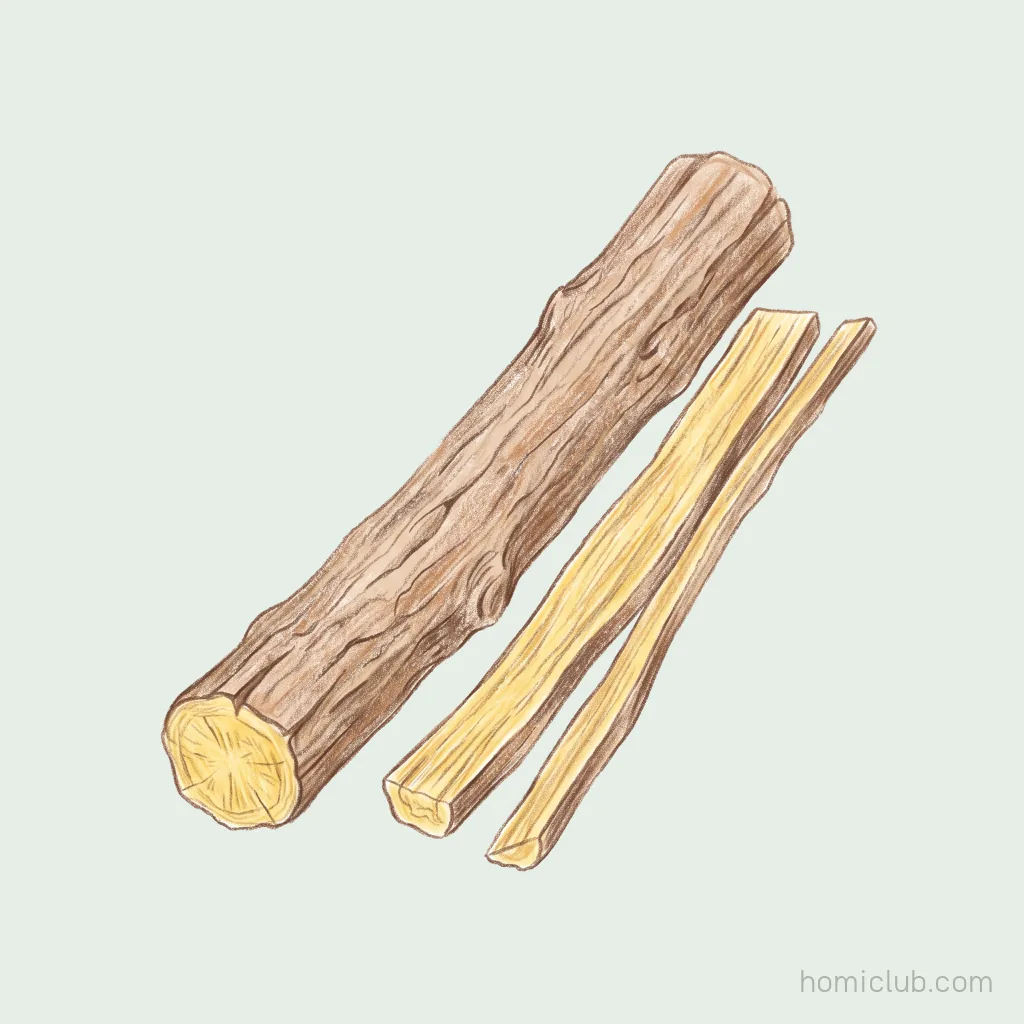
Daehwang is the dried rhizome of a perennial in the knotweed family. Garden rhubarb, whose leaf stalks are baked into pies and jam, belongs to the same group; for daehwang the root is used. The Dongui Bogam lists it in the herb section and rates roots with a silk-like grain highest.
Original, read line by line 東醫寶鑑 · Tangaek — Decoctions vol. 3
-
性大寒, 味苦, 無毒一云有毒.
Its nature is greatly cold, its taste bitter, and it is non-toxic (one account says toxic).
HomiclubWith rhubarb, a garden vegetable of the same genus as daehwang, only the leafstalks are eaten; the leaves contain oxalic acid, which harms the kidneys, and are not eaten. The current Chinese Pharmacopoeia (2020) accepts three species as daehwang: Rheum palmatum, R. tanguticum and R. officinale; their roots and rhizomes contain anthraquinones such as emodin and rhein.
-
主下瘀血血閉,
It chiefly drives out stagnant blood and unblocks suppressed menstruation.
-
破癥瘕積聚,
It breaks up hardened abdominal masses and long-accumulated lumps.
-
通利大小腸,
It clears and frees both the large and small intestines.
-
除溫瘴熱疾,
It dispels warm-epidemic and miasmic heat disorders.
-
療癰疽瘡癤毒腫,
It treats abscesses, boils, sores, and toxic swellings.
-
號爲將軍.
It is called janggun (將軍), the General.
HomiclubThe Korean name under the heading, jyanggunpeul, is the same name now borne by janggunpul (Rheum coreanum), a member of the knotweed family (Polygonaceae) endemic to Korea that grows among rocks on high mountains in Hamgyeong Province such as Chailbong, Gwanmobong and Baekdusan.
-
在處有之.
It grows commonly in many places.
-
二月八月採根, 去黑皮, 火乾, 錦紋者佳. 《本草》
Dig the root in the second or eighth month, peel off the black skin, and dry it over fire; pieces with brocade-like patterning are best. 《Boncho (本草)》
-
蕩滌實熱, 推陳致新,
It washes away excess heat, pushing out the old and ushering in the new.
-
謂如戡定禍亂, 以致太平,
It is likened to quelling chaos and bringing about peace.
-
所以有將軍之名. 《湯液》
Hence the name “General.” 《Tangaek (湯液)》
-
入手足陽明經,
It enters the hand and foot yangmyeong channels.
-
酒浸入太陽,
Soaked in wine, it enters the taeyang channel.
-
酒洗入陽明,
Rinsed with wine, it enters the yangmyeong channel.
-
餘經不用酒.
For the other channels, wine is not used.
-
盖酒浸良久, 稍薄其味,
Long wine-soaking slightly tempers its bitter flavor.
-
而借酒力上升至高之分,
Borrowing the lifting power of wine, the medicine rises to the body’s uppermost regions.
-
酒洗亦不至峻下.
Wine-rinsing also keeps its purgative force from being too violent.
-
故承氣湯俱用酒浸,
For this reason the seunggitang (承氣湯) formulas all use wine-soaked rhubarb.
-
惟小承氣生用,
Only in soseunggi (小承氣) is it used raw.
-
或麪裹煨熟,
Sometimes it is wrapped in dough and roasted in embers until cooked.
-
或酒浸蒸熟,
Or it is wine-soaked and then steamed until done.
-
量虛實用. 《入門》
Use it according to whether the patient’s condition is deficient or excess. 《Immun (入門)》
-
酒炒上達頭頂,
Stir-fried with wine, it ascends all the way to the crown of the head.
-
酒洗中至胃脘,
Wine-rinsed, it reaches the middle, down to the stomach.
-
生用則下行. 《回春》
Used raw, it travels downward. 《Hoechun (回春)》
Herbs — more entries
This is a cultural and historical record from a classical text, not a claim about any food’s effects. Nothing here is a health supplement or intended to prevent or treat disease. Consult a medical professional about health concerns. · Text: Korean Medicine Classics DB, collated with the Jangseogak copy of the 1613 wooden movable-type edition · Reading: Homiclub