
Tangaek — Decoctions · Trees
秦椒 Sancho (Shiny-leaf Prickly Ash)
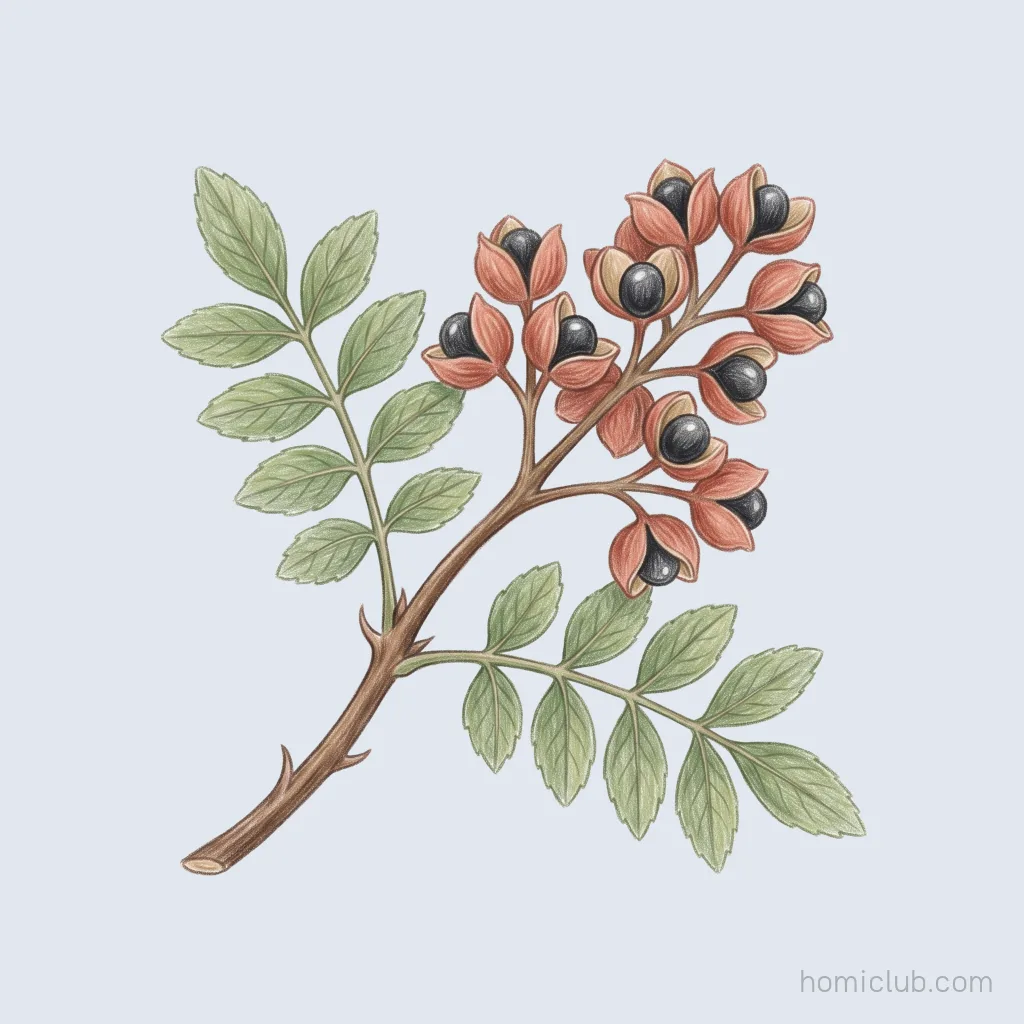 Related Crop · Sancho (Shiny-leaf Prickly Ash) →
Jincho is the fruit of a prickly ash, the same sancho in the crop guide. Old Korean called it bundi yeoreum; today the seed is pressed for sancho oil and the dried fruit is ground as a spice. Donguibogam separates chokcho of Sichuan from jincho of Guanzhong and Shaanxi.
Original, read line by line 東醫寶鑑 · Tangaek — Decoctions vol. 3
-
性溫, 味辛一云苦, 有毒. 主大風㿏痺. 堅齒髮, 明目, 療腹中冷痛, 止痢.
Its nature is warm and its taste pungent, though one account calls it bitter, and it is toxic. It chiefly treats the ulcerated numbness of daepung (大風, severe wind disorder). It firms the teeth and hair, brightens the eyes, treats cold pain in the abdomen, and stops dysentery.
HomiclubJincho is the fruit of the sancho tree. It is the plant the vernacular gloss calls bundi yeoreum, and both sancho oil pressed from the fruit and the ground spice come from it.
-
秦地所出者, 故言秦椒. 樹葉及莖子, 都似蜀椒, 但味短實細色黃黑. 八九月採. 《本草》
It is called jincho because it comes from the land of Jin (秦). Its tree, leaves, stem, and fruit all resemble chokcho, only its taste is shorter, its fruit finer, and its color yellow-black. Gather it in the eighth or ninth month. 《Boncho (本草)》
-
出四川, 謂之蜀椒ㆍ川椒, 出關陝, 謂之秦椒. 《入門》
What comes from Sacheon (四川, Sichuan) is called chokcho and cheoncho, and what comes from Gwanjung and Seomseo (關陝, Shaanxi) is called jincho. 《Immun (入門)》
HomiclubSancho and chopi are two different trees in the same genus. Sancho bears its thorns alternately and flowers in late summer, while chopi bears its thorns in opposite pairs and flowers in early spring.
Related Crop
Sancho (Shiny-leaf Prickly Ash) →
Trees — more entries
This is a cultural and historical record from a classical text, not a claim about any food’s effects. Nothing here is a health supplement or intended to prevent or treat disease. Consult a medical professional about health concerns. · Text: Korean Medicine Classics DB · Reading: Homiclub