
Tangaek — Decoctions · Trees
檳榔 Billang (빈랑)
Binang is the nut of the areca palm. It is still chewed wrapped in betel leaf across South and Southeast Asia, though the IARC classifies that habit as a Group 1 carcinogen. Donguibogam marked it 【唐】, an import brought in through China, and covered the husk, daebokpi, in the same entry.
Original, read line by line 東醫寶鑑 · Tangaek — Decoctions vol. 3
-
性溫一云寒, 味辛, 無毒.
Its nature is warm, though one account calls it cold; its taste is pungent, and it is non-toxic.
HomiclubBinang is the seed of the areca palm. In South and Southeast Asia it is still chewed wrapped in a leaf, and the International Agency for Research on Cancer classifies that chewing habit as a Group 1 carcinogen.
-
除一切風, 下一切氣, 通關節, 利九竅, 消穀, 逐水, 除痰癖, 下水腫, 破癥結, 宣利五藏六府壅滯氣.
It dispels every kind of wind and brings down every kind of qi, frees the joints and opens the nine orifices (九竅), digests grain and drives out water, removes dam-byeok (痰癖, phlegm accumulation), reduces water swelling, breaks up jeong-gyeol (癥結, fixed masses), and disperses stagnant qi blocked in the five viscera and six bowels.
-
生嶺南, 人啖之以當果實. 云, 南方地溫, 不食此, 無以禦瘴癘.
It grows in Yeongnam (嶺南) and people chew it in place of fruit. It is said that in the south the land is warm, and without eating this there is no way to ward off jangnyeo (瘴癘, miasmic pestilence).
HomiclubThe Yeongnam of the text is an old name for the far south of China, the Guangdong and Guangxi region. It is a different place from the Yeongnam province of Korea, sharing only the name.
-
其實春生, 至夏乃熟, 然其肉極易爛, 先以灰汁煮熟, 因火焙乾, 始堪停久.
Its fruit forms in spring and ripens by summer, but the flesh spoils very easily, so it is first boiled in lye water and then dried over a fire, after which it can at last be kept for a long time.
-
小而味甘, 名山檳榔, 大而味澁, 名猪檳榔. 最小者, 名蒳子, 土人呼爲檳榔孫.
The small, sweet-tasting kind is called sanbinang, and the large, astringent kind jeobinang. The smallest is called napja, which the local people call binangson.
-
尖長而有紫文者, 名曰檳, 圓而矮者, 名曰榔. 今不復細分.
The kind that is pointed and long with purple markings is called bin, and the round, squat kind is called nang. They are no longer finely distinguished.
-
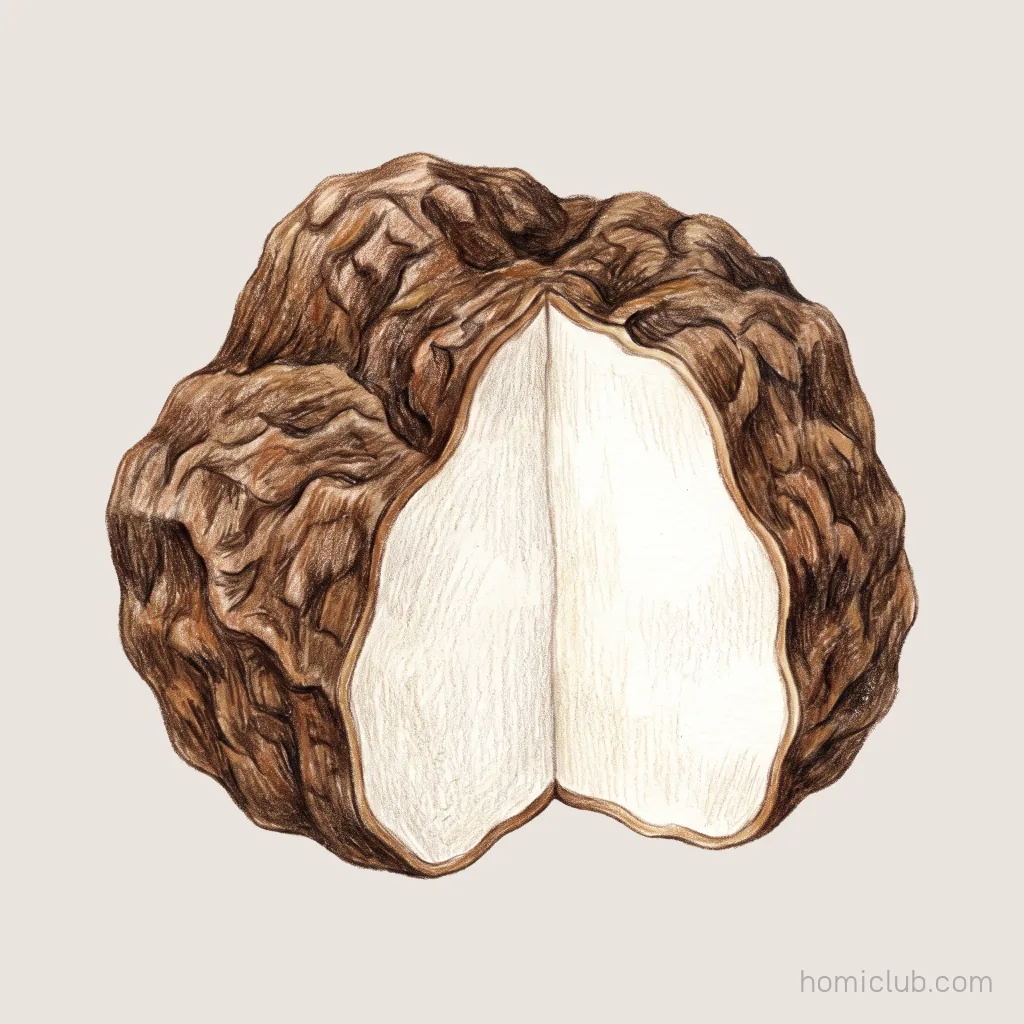
但取如雞心狀, 存坐正穩, 心不空, 破之作錦文者爲佳.
Only those shaped like a chicken's heart, sitting upright and steady when set down, not hollow at the core, and showing a brocade pattern when split, are counted fine.
-
取尖長者, 取其快銳速效之意. 《本草》
Choosing the pointed and long ones takes the sense of their being sharp and swift. 《Boncho (本草)》
-
向陽者, 爲檳榔, 向陰者, 爲大腹子, 性沈有若鐵石之重.
Those facing the sun become binang and those facing the shade become daebokja, whose nature sinks and has the heaviness of iron and stone.
-
白者味辛多散氣, 赤者味苦澁殺蟲. 《入門》
The white kind is pungent in taste and disperses qi strongly; the red kind is bitter and astringent and kills worms. 《Immun (入門)》
-
刀刮去底, 細切. 急治則生用, 經火則無力, 緩治則略炒或醋煮過. 《入門》
Scrape off the base with a knife and slice it fine. For urgent work use it raw, since it loses strength once it passes through fire; for slow work, roast it lightly or boil it in vinegar. 《Immun (入門)》
HomiclubScraping off the base means removing the hard spot where the seed was joined to the fruit stalk. Herb markets list the thin slices cut from the dried seed separately, under the name binangpyeon.
Trees — more entries
This is a cultural and historical record from a classical text, not a claim about any food’s effects. Nothing here is a health supplement or intended to prevent or treat disease. Consult a medical professional about health concerns. · Text: Korean Medicine Classics DB · Reading: Homiclub