
Tangaek — Decoctions · Trees
丁香 Clove
 Related Crop · Clove →
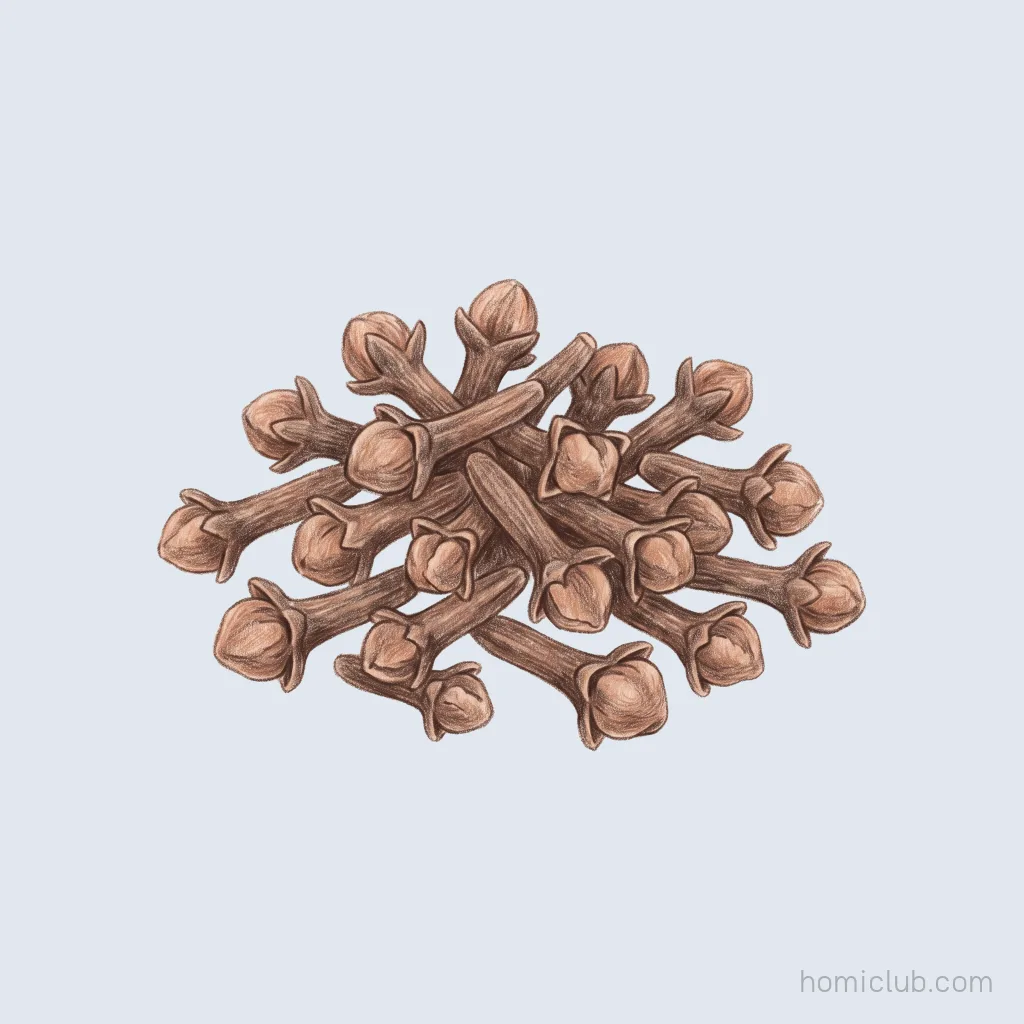
Jeonghyang is the dried flower bud of the clove tree, the spice sold today as clove. The name comes from its nail-like shape, and the plumper buds were called mojeonghyang. Donguibogam marked it 【唐】, meaning it arrived by way of China.
Original, read line by line 東醫寶鑑 · Tangaek — Decoctions vol. 3
-
性溫, 味辛, 無毒. 溫脾胃, 止霍亂, 及腎氣, 奔豚氣, 冷氣腹痛, 陰痛.
Its nature is warm, its taste pungent, and it is non-toxic. It warms the biwi (脾胃, spleen and stomach), halts gwallan (霍亂, sudden turmoil), and is used for singi (腎氣, kidney qi), bundongi (奔豚氣, running-piglet qi), abdominal pain from cold qi, and pain in the genitals.
HomiclubJeonghyang is the dried unopened flower bud of the clove tree, the spice known in the West as clove. The Moluccas of Indonesia are its original home.
-
壯陽, 煖腰膝, 療反胃, 殺酒毒, 消風毒諸腫, 除齒疳䘌, 能發諸香.
It fortifies yang, warms the lower back and knees, addresses banwi (反胃, stomach reflux), destroys the toxin of wine, disperses the swellings of pungdok (風毒, wind toxin), removes chigamnik (齒疳䘌, gum erosion), and can bring out every other fragrance.
-
有雌雄, 雄顆小, 雌顆大. 若欲使雄, 須去丁盖, 免發背癰也.
There are male and female forms: the male grain is small, the female large. If the male is to be used, the jeonggae (丁盖, nail cap) must be removed to avoid raising a carbuncle on the back.
HomiclubThe jeonggae is the rounded head at the tip of the bud. The clove takes the character jeong (丁, nail) in its name from its nail-like shape, and the jeonggae is the part answering to the nail's head.
-
丁香中有麄大如山茱萸者, 俗呼爲母丁香, 氣味尤佳. 《本草》
Among cloves there are some as coarse and large as a cornelian cherry; these are commonly called mojeonghyang (母丁香), and their qi and flavour are finer still. 《Boncho (本草)》
HomiclubMojeonghyang is the dried fruit rather than the bud. It is thicker and more elongated than a bud, so the two are told apart at a glance.
-
形似釘, 入手太陰ㆍ足陽明ㆍ少陰經.
Its form resembles a nail, and it enters the hand taeeum, foot yangmyeong, and soeum channels.
-
與五味子ㆍ蓬朮同用, 治奔豚之氣. 《湯液》
Used together with schisandra and zedoary, it addresses the qi of bundon (奔豚, running piglet). 《Tangaek (湯液)》
Related Crop
Clove →
Trees — more entries
This is a cultural and historical record from a classical text, not a claim about any food’s effects. Nothing here is a health supplement or intended to prevent or treat disease. Consult a medical professional about health concerns. · Text: Korean Medicine Classics DB · Reading: Homiclub