
Tangaek — Decoctions · Herbs
蘆薈 Aloe
 Related Crop · Aloe →
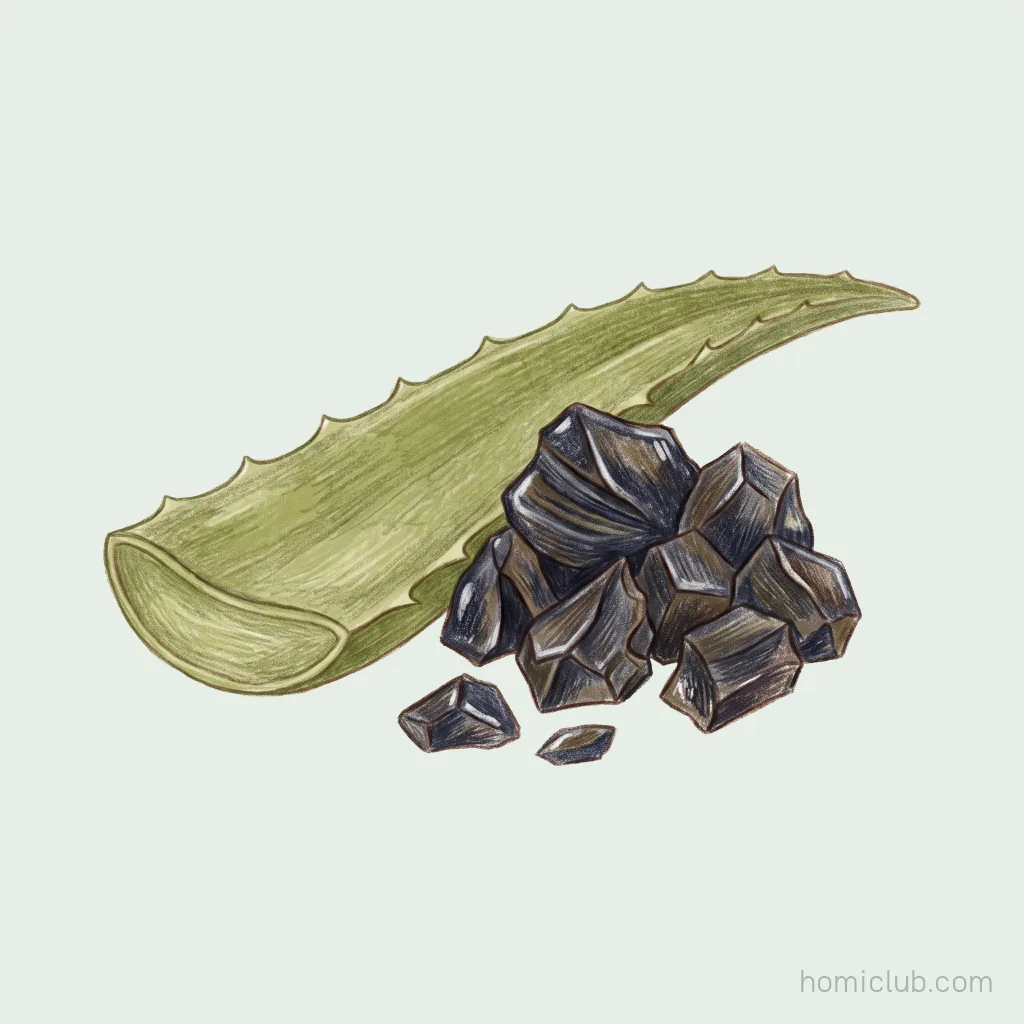
Nohoe is aloe, the plant's bitter juice boiled down and left to set. It is the same aloe now in cosmetics and drinks, though here it appears as a black cake hard as taffy. Donguibogam marked it 【唐】 and traced it to Persia; genuine pieces were said to melt in water and then knit back together.
Original, read line by line 東醫寶鑑 · Tangaek — Decoctions vol. 3
-
性寒, 味苦, 無毒. 療小兒五疳, 殺三蟲及痔瘻疥癬. 亦主小兒熱驚. 《本草》
Its nature is cold, its taste bitter, and it is non-toxic. It treats the five gam (五疳, childhood malnutrition patterns), kills the three worms, and addresses fistulous piles and scabby skin disorders. It also governs febrile fright in small children. 《Boncho (本草)》
HomiclubNohoe is the sap of aloe leaves boiled down until it hardens into a lump. It comes from the same aloe used today in cosmetics and drinks: cut a leaf and a yellow juice seeps from just inside the rind while a clear gel sits at the centre.
-
生波斯國, 木之脂液凝成, 色黑如餳.
It comes from Pasaguk (波斯國, Persia) and is formed from the congealed sap of the plant; its colour is black like malt candy.
HomiclubPasaguk was the old East Asian name for Persia, roughly present-day Iran. Aloe is native to Africa and the Arabian Peninsula; in Korea it is raised in pots and greenhouses.
-
用數塊, 散至水中, 化則自合者, 爲眞. 另硏用之. 《入門》
Scatter a few lumps into water; those that dissolve and then join together again of themselves are genuine. It is ground separately for use. 《Immun (入門)》
Related Crop
Aloe →
Reading on Aloe
Herbs — more entries
This is a cultural and historical record from a classical text, not a claim about any food’s effects. Nothing here is a health supplement or intended to prevent or treat disease. Consult a medical professional about health concerns. · Text: Korean Medicine Classics DB · Reading: Homiclub