
Tangaek — Decoctions · Herbs
人參 Korean ginseng
 Related Crop · Korean ginseng →
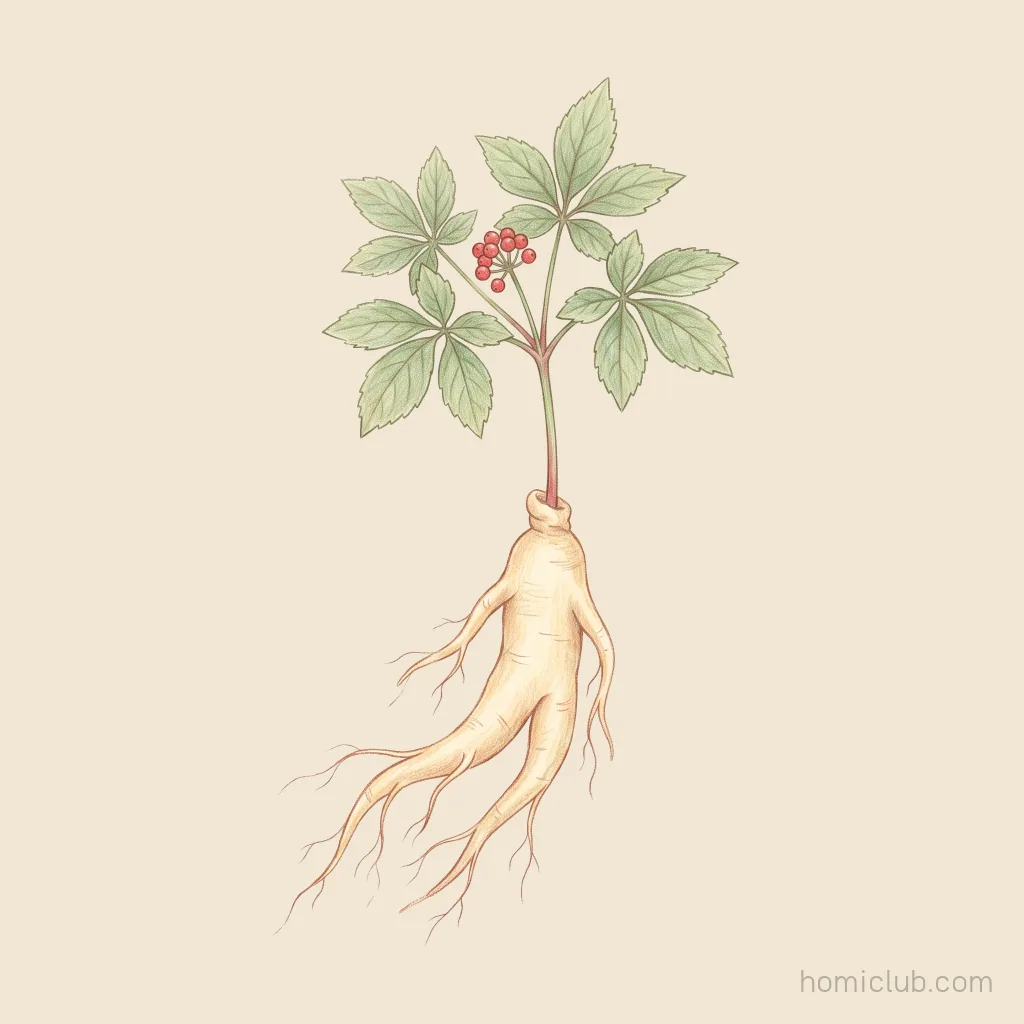
Insam is the root of a perennial in the ivy family; its old Korean name was simply sim. It is the ginseng sold today fresh, steamed red, or steeped in samgyetang. The text describes three branches and five leaflets, and says the root crown was cut away before use.
Original, read line by line 東醫寶鑑 · Tangaek — Decoctions vol. 2
-
性微溫一云溫, 味甘一云微苦, 無毒. 主五藏氣不足.
Its nature is slightly warm, though one account calls it warm; its taste is sweet, though one account calls it slightly bitter; and it is non-toxic. It governs insufficiency of qi in the ojang (五藏, five viscera).
HomiclubInsam is the root of a perennial in the ginseng family, and its old Korean name was simply 'sim'. It is the same root sold today as fresh susam, dried baeksam and steamed hongsam.
-
安精神, 定魂魄, 明目, 開心益智, 療虛損, 止霍亂嘔噦, 治肺痿吐膿, 消痰.
It settles the spirit, steadies the hon and baek (魂魄, ethereal and corporeal souls), brightens the eyes, opens the heart and increases the wits, treats heoson (虛損, depletion damage), stops the vomiting and retching of gwallan (霍亂, sudden vomiting and diarrhoea), treats pyewi (肺痿, lung wilting) with the spitting of pus, and dissolves dam (痰, phlegm).
-
讚曰, 三椏五葉, 背陽向陰, 欲來求我, 檟樹相尋. 一名神草, 如人形者有神.
A verse in its praise says: three prongs and five leaves, turning its back on the sun and facing the shade; if you would come seeking me, look along the ga (檟) trees. One name for it is sincho (神草, spirit herb), and those shaped like a human figure are held to carry that spirit.
Homiclub'Three prongs and five leaves' is the old formula for the arrangement of ginseng foliage. The graph in (人, person) entered the name because the root can take a human shape.
-
此物多, 生於深山中背陰, 近檟漆樹下濕潤處. 中心生一莖, 與桔梗相似. 三四月開花, 秋後結子.
This thing mostly grows in the shaded depths of the mountains, in the moist places under ga and lacquer trees. A single stem rises from its centre, much like that of the balloon flower. It blooms in the third and fourth months and sets seed after autumn.
-
二月四月八月上旬, 採根, 竹刀刮, 暴乾.
In the first ten days of the second, fourth and eighth months the root is dug, scraped with a bamboo knife, and dried in the sun.
HomiclubScraping with a bamboo knife rather than an iron one reflects the old avoidance of contact with metal. Ginseng skin is still rubbed off with bamboo or plastic tools rather than steel.
-
此物易蛀, 惟納器中密封口, 可經年不壞. 和細辛密封, 亦久不壞.
This thing is easily eaten by insects; only if it is put in a vessel with the mouth tightly sealed will it keep a year without spoiling. Sealed up together with sesin (細辛, wild ginger), it likewise keeps long without spoiling.
-
用時, 去其蘆頭, 不去則吐人. 《本草》
When it is used, its nodu (蘆頭, the rhizome head) is removed; if it is not removed it makes a person vomit. 《Boncho (本草)》
-
人參動肺火, 凡吐血久嗽, 面黑氣實, 血虛陰虛之人, 勿用. 代以沙參, 可也. 《丹心》
Insam stirs the fire of the lung, so it is not used for anyone who vomits blood, coughs long, has a dark complexion with repletion of qi, or is depleted in blood and yin. Substituting sasam (沙參, adenophora root) will serve. 《Dansim (丹心)》
-
人參, 苦微溫, 補五藏之陽, 沙參, 苦微寒, 補五藏之陰也. 《丹心》
Insam is bitter and slightly warm and supplements the yang of the five viscera; sasam is bitter and slightly cold and supplements their yin. 《Dansim (丹心)》
-
夏月少使, 發心痃之患也. 《本草》
In the summer months it is used sparingly, for it brings on the trouble of simhyeon (心痃, a knotted tension below the heart). 《Boncho (本草)》
-
夏月多服, 發心痃. 《丹心》
Taken much in the summer months, it brings on simhyeon. 《Dansim (丹心)》
-
入手太陰經. 《湯液》
It enters the hand taeeum channel. 《Tangaek (湯液)》
Related Crop
Korean ginseng →
Reading on Korean ginseng
Herbs — more entries
This is a cultural and historical record from a classical text, not a claim about any food’s effects. Nothing here is a health supplement or intended to prevent or treat disease. Consult a medical professional about health concerns. · Text: Korean Medicine Classics DB · Reading: Homiclub