
Tangaek — Decoctions · Herbs
菥蓂子 Field pennycress
 Related Crop · Field pennycress →
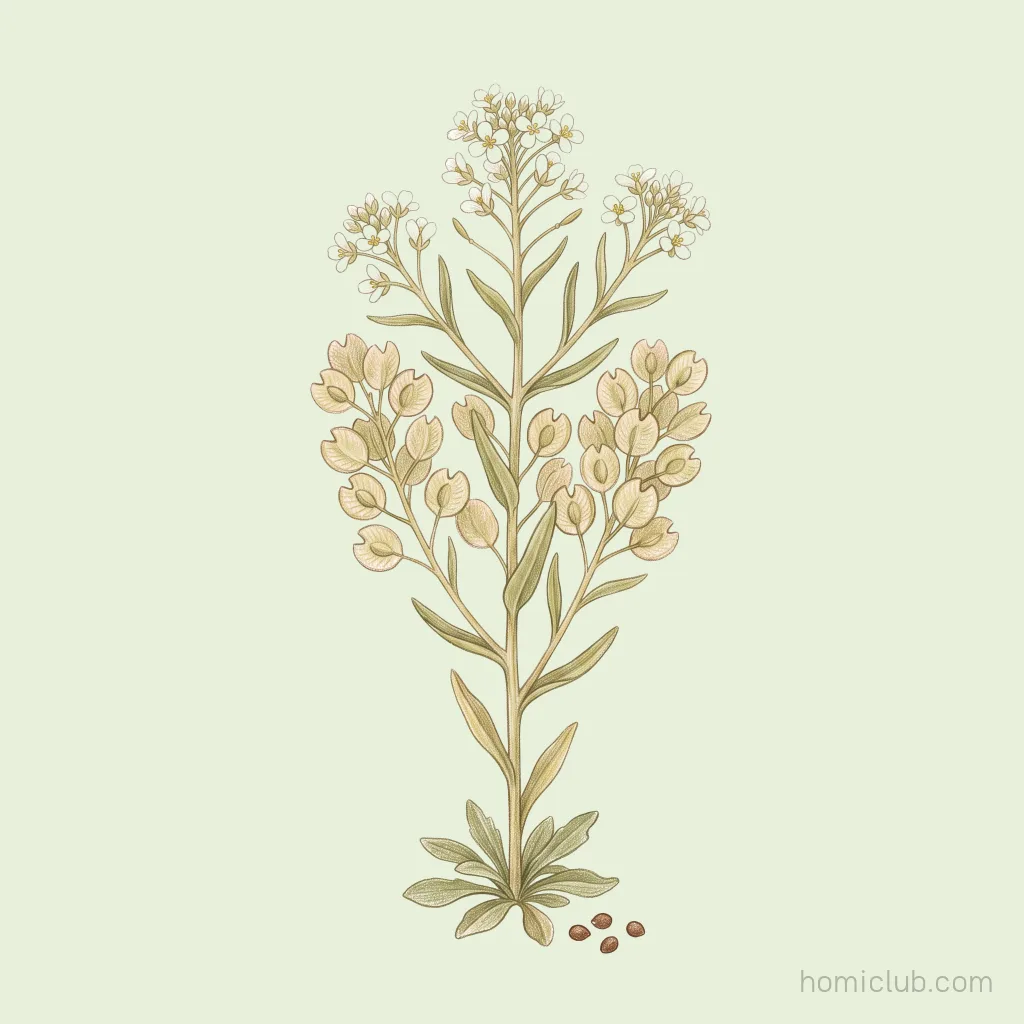
Seongmyeongja is the seed of a large shepherd's-purse relative, written 'gulgeun nai ssi' in old Korean. Common everywhere, its pods are picked in the fourth and fifth months and sun-dried. The field plant known today as pennycress is taken to be the same group.
Original, read line by line 東醫寶鑑 · Tangaek — Decoctions vol. 2
-
性微溫, 味辛, 無毒.
Its nature is slightly warm, its taste pungent, and it is non-toxic.
HomiclubSeongmyeongja is the seed of a large shepherd's-purse type plant, which is just what the old Korean name in the heading, gulgeunnai ssi ("thick naengi seed"), says. The plant known today as malnaengi, a biennial in the mustard family, is taken to be of this group.
-
主明目, 目痛淚出, 能治肝家積熱, 眼目赤痛, 益精光.
It chiefly brightens the eyes and treats eye pain with tearing; it can treat heat accumulated in the gan (肝, liver) and red, painful eyes, and it augments the eyes' clarity of light.
-
處處有之, 是大薺子也. 四月五月採實, 暴乾. 《本草》
It is found everywhere; this is the seed of the large shepherd's purse. Gather the seeds in the fourth and fifth months and dry them in the sun. 《Boncho (本草)》
HomiclubMalnaengi flowers white in spring and sets flat, coin-round pods edged with a wing, which tells it apart at a glance from the heart-shaped pods of common shepherd's purse. It is common on field banks and roadside waste ground.
Related Crop
Field pennycress →
Reading on Field pennycress
Herbs — more entries
This is a cultural and historical record from a classical text, not a claim about any food’s effects. Nothing here is a health supplement or intended to prevent or treat disease. Consult a medical professional about health concerns. · Text: Korean Medicine Classics DB · Reading: Homiclub