
Tangaek — Decoctions · Herbs
忍冬 Japanese Honeysuckle
 Related Crop · Japanese Honeysuckle →
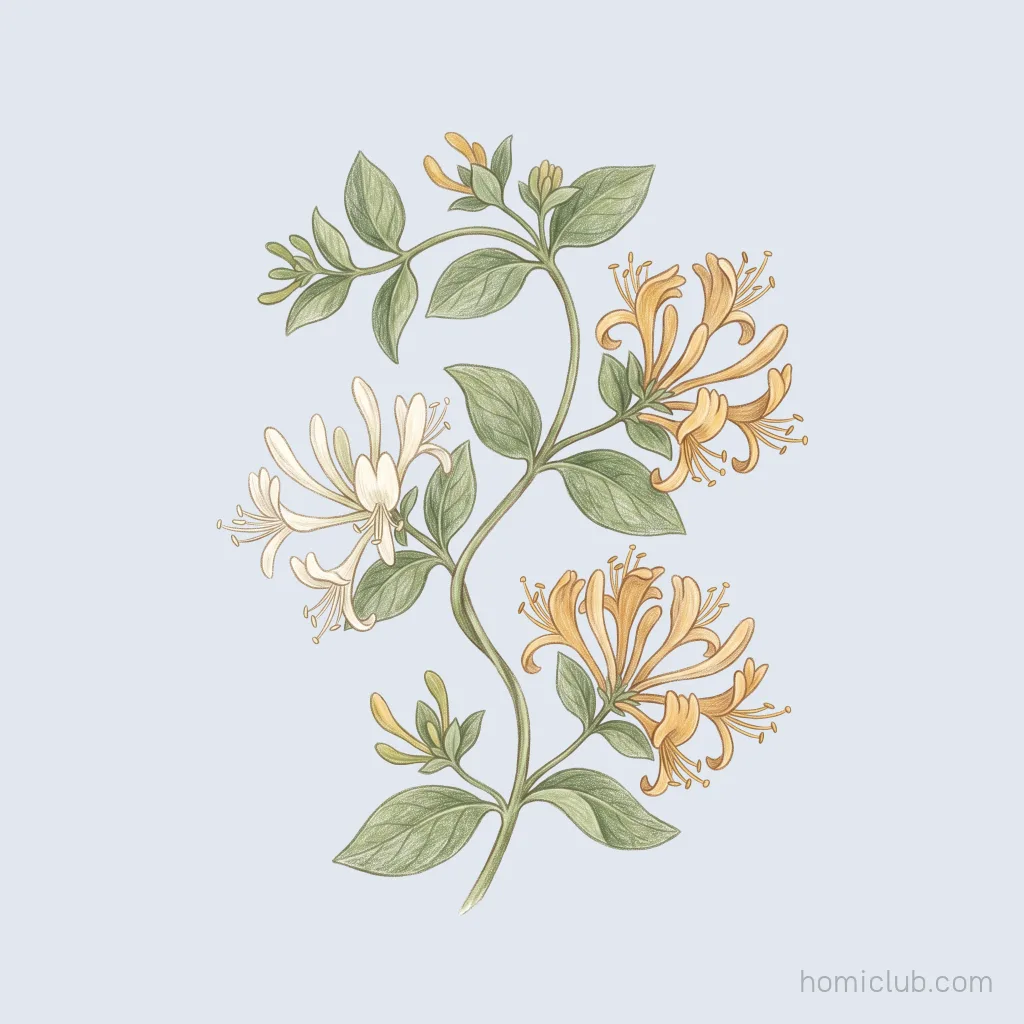
Indong is the stem and leaf of the honeysuckle vine. The name means enduring the winter, since the vine stays green through the cold, and because white and yellow blossoms hang on the same plant it is also called geumeunhwa, gold-and-silver flower. Twining leftward up old trees earned it a third name, jwajeondeung.
Original, read line by line 東醫寶鑑 · Tangaek — Decoctions vol. 2
-
性微寒, 味甘, 無毒. 主寒熱身腫, 熱毒血痢. 療五尸.
Its nature is slightly cold, its taste sweet, and it is non-toxic. It chiefly addresses alternating chills and fever with swelling of the body, and bloody dysentery from heat toxin. It addresses osi (五尸, the five corpse disorders).
HomiclubIndong is the stem and leaf of the honeysuckle vine. A woody climber found throughout Korean hills and fields, it keeps some of its leaves through winter, which is the source of the name indong, "enduring the winter."
-
處處有之. 莖赤紫色, 宿者有薄白皮膜, 其嫩莖有毛. 花白蘂紫. 十二月採, 陰乾. 《本草》
It is found everywhere. Its stem is reddish purple, older stems carry a thin white papery skin, and young stems are hairy. Its flowers are white with purple stamens. Gather it in the twelfth month and dry it in the shade. 《Boncho (本草)》
-
此草藤生蔓, 繞古木上, 其藤左纏附木, 故名爲左纏藤. 凌冬不凋, 故又名忍冬草. 花有黃白二色, 故又名金銀花. 《入門》
This plant sends out runners that wind up old trees, and because the vine twines leftward as it clings, it is called jwajeondeung (左纏藤, left-twining vine). Because it endures winter without withering, it is also called indongcho. Because its flowers come in two colors, yellow and white, it is also called geumeunhwa (金銀花, gold-and-silver flower). 《Ipmun (入門)》
HomiclubThe flowers open white and turn yellow after a few days, so white and yellow blooms hang on the same vine at once. The name geumeunhwa, gold-and-silver flower, comes from that sight.
-
一名老翁鬚草, 一名鷺鷥藤, 又名水楊藤. 其藤左纏, 花五出而白, 微香, 體帶紅色, 野生蔓延. 《直指》
It is also called noongsucho (老翁鬚草, old man's beard herb), nosadeung (鷺鷥藤, egret vine), and suyangdeung (水楊藤, water willow vine). Its vine twines leftward, its flower parts in five and is white with a faint scent, its body carries a reddish tint, and it grows wild and spreads in the fields. 《Jikji (直指》
-
今人用此, 以治癰疽熱盛煩渴, 及感寒發表, 皆有功. 《俗方》
People today use it to treat abscesses with exuberant heat, vexation, and thirst, and to release cold contraction through the exterior, with merit in both. 《Sokbang (俗方)》
Related Crop
Japanese Honeysuckle →
Herbs — more entries
This is a cultural and historical record from a classical text, not a claim about any food’s effects. Nothing here is a health supplement or intended to prevent or treat disease. Consult a medical professional about health concerns. · Text: Korean Medicine Classics DB · Reading: Homiclub