
Tangaek — Decoctions · Herbs
薯蕷 Chinese Yam (Ma / Sanyak)
 Related Crop · Chinese Yam (Ma / Sanyak) →
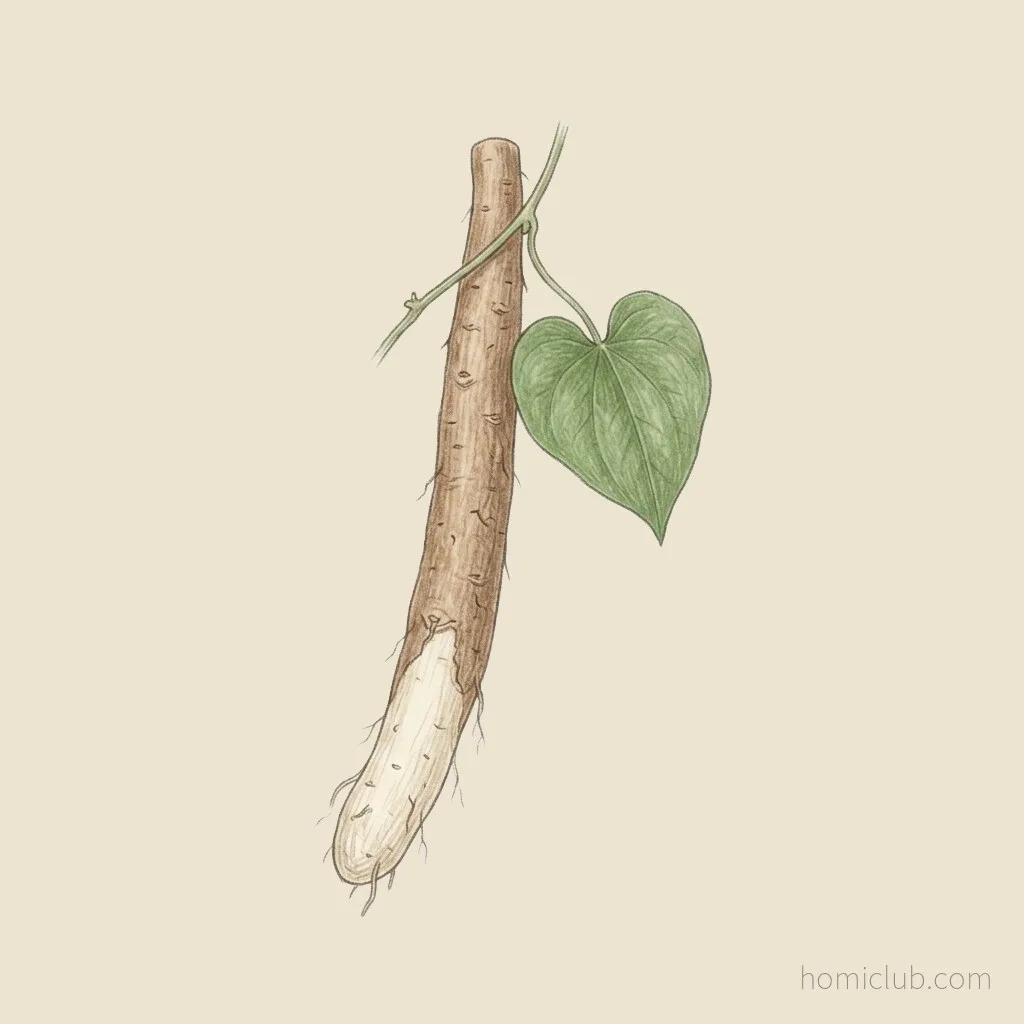
Sanyak is the root of Chinese yam, the same plant as the ma in the crop guide. Dug in the second and eighth months, it is scraped of yellow skin, steeped overnight in alum water, rinsed, and dried. Older names are sanu and ogyeon; Song-era name avoidance produced 'sanyak.'
Original, read line by line 東醫寶鑑 · Tangaek — Decoctions vol. 2
-
性溫一云平, 味甘, 無毒.
Its nature is warm, though one account calls it neutral; its taste is sweet, and it is non-toxic.
HomiclubSanyak is the root of ma, the Korean yam. It is a climbing vine that comes up on hill slopes and field banks, bearing small bulbils in the leaf axils and sending a long root deep into the ground. It is the same yam whose cut surface runs with slippery mucilage.
-
補虛勞羸瘦, 充五藏, 益氣力, 長肌肉, 强筋骨, 開達心孔, 安神長志.
It supplements emaciation from taxation depletion, fills the five viscera, augments strength, builds flesh, strengthens sinew and bone, opens and clears the orifices of the heart, settles the sin (神, spirit), and nurtures the will.
-
處處有之, 一名山芋, 一名玉延. 宋時避諱, 又號爲山藥.
It is found everywhere; one of its names is sanu (山芋) and another okyeon (玉延). In the Song dynasty, to avoid a taboo name, it came to be called sanyak instead.
HomiclubPihwi was the old practice of replacing a character that clashed with a ruler's given name. The characters of the original name seoyeo (薯蕷) collided with a Song emperor's name and were changed to sanyak — and that replacement name is the one still used for the material today.
-
二月八月採根, 刮之, 白色者爲上, 靑黑者不堪.
Dig the roots in the second and eighth months and scrape them; the white ones are of the first grade, and the greenish-black ones are unusable.
-
此物貴生乾, 方入藥. 生濕則滑, 只消腫核, 不可入藥. 熟則只堪啖, 亦滯氣.
This material is valued when raw and dried, and only then is it put into medicine. Raw and moist it is slippery and merely disperses swollen lumps, so it cannot be put into medicine. Cooked, it is only fit for eating and also causes qi to stagnate.
-
乾法, 取肥大者, 刮去黃皮, 以水浸, 末白礬少許摻水中, 經宿, 取洗去涎, 焙乾. 《本草》
The drying method: choose plump, large roots, scrape off the yellow skin, and soak them in water into which a little powdered alum has been stirred. After a night, take them out, wash away the slime, and dry them over gentle heat. 《Boncho (本草)》
-
山藥, 手太陰肺經藥也. 《入門》
Sanyak is a medicine of the hand taeeum lung channel. 《Immun (入門)》
Related Crop
Chinese Yam (Ma / Sanyak) →
Reading on Chinese Yam (Ma / Sanyak)
Herbs — more entries
This is a cultural and historical record from a classical text, not a claim about any food’s effects. Nothing here is a health supplement or intended to prevent or treat disease. Consult a medical professional about health concerns. · Text: Korean Medicine Classics DB · Reading: Homiclub