
Tangaek — Decoctions · Trees
苦茶 Tea Plant
 Related Crop · Tea Plant →
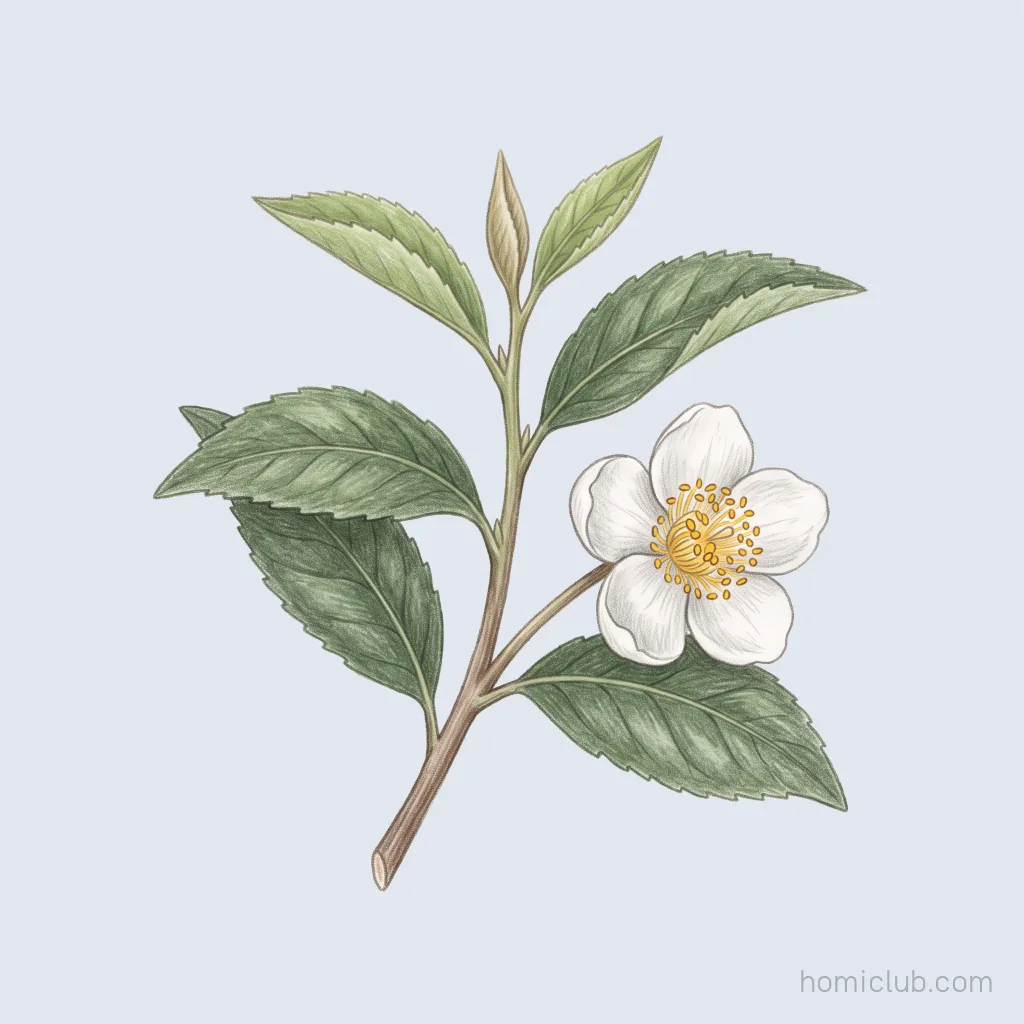
Jakseolcha is the young leaf of the tea bush, the same leaf brewed as green tea today and the same plant as the tea bush in the crop guide. Early-picked leaves were called da, late-picked ones myeong, and the tender bud earned the name jakseol, sparrow's tongue.
Original, read line by line 東醫寶鑑 · Tangaek — Decoctions vol. 3
-
性微寒一云冷, 味甘苦, 無毒.
Its nature is slightly cold (one source says cold), its taste sweet and bitter, and it is without toxicity.
-
下氣, 消宿食, 淸頭目, 利小便, 止消渴, 令人少睡.
It sends qi downward, disperses lodged food, clears the head and eyes, frees urination, stops wasting-thirst, and makes one sleep less.
-
又解炙炒毒.
It also resolves the toxin of roasted and stir-fried food.
-
樹小似梔子.
The tree is small and resembles the gardenia.
-
冬生葉, 早採爲茶, 晩採爲茗.
It puts out leaves even in winter; picked early it is cha, picked late it is ming.
-
其名有五, 一曰茶, 二曰檟, 三曰蔎, 四曰茗, 五曰荈.
It has five names: first cha, second jia, third she, fourth ming, fifth chuan.
-
古人謂其芽, 爲雀舌麥顆, 言其至嫩, 卽臘茶是也.
The ancients called its buds queshe, sparrow tongue, or maike, barley grain, meaning they are utterly tender; this is what lacha, waxed tea, refers to.
HomiclubJakseol, sparrow tongue, names the tender first bud. Growers in Hadong and Boseong still call the first flush, picked around Gogu in late April, jakseolcha.
-
採嫩芽搗作餠, 幷得火良.
The tender buds are picked and pounded into cakes, and they are all the better for being fired.
HomiclubThis is tteokcha, cake tea, made by steaming, pounding and pressing the leaf. Cheongtaejeon in Jangheung, South Jeolla, carries the method on today.
-
茗或曰荈, 葉老者也. 《本草》
Ming is also called chuan, meaning the older leaves. 《Bencao》
-
入手足厥陰經.
It enters the hand and foot jueyin channels.
-
飮之宜熱, 冷則聚痰.
It should be drunk hot; drunk cold it gathers phlegm.
-
久服去人脂, 令人瘦. 《入門》
Taken over a long time it strips a person's fat and makes one thin. 《Rumen》
-
蒙山茶, 性溫, 治病最好.
Mengshan tea is warm in nature and is best for treating illness.
-
宜興茶ㆍ陸安茶ㆍ東白山茶ㆍ神華山茶ㆍ龍井茶ㆍ閩臘茶ㆍ蜀苦茶ㆍ寶慶茶ㆍ廬山雲霧茶, 俱以味佳得名.
Yixing, Lu'an, Dongbaishan, Shenhuashan, Longjing, Minla, Shuku, Baoqing and Lushan Yunwu teas all won their names by fine flavor.
HomiclubEvery name listed is taken from a Chinese growing region. Longjing and Lushan Yunwu are still sold under those same names.
-
一人好食燒鵝不輟, 醫者謂其必生內癰, 後卒不病.
A man never stopped eating roast goose, and a physician said he would surely develop an internal abscess, yet in the end he did not fall ill.
-
訪知此人, 每夜必啜涼茶一椀, 此其解毒. 《食物》
On inquiry it emerged that every night he drank a bowl of cooled tea, and this is what resolved the toxin. 《Shiwu》
Related Crop
Tea Plant →
Trees — more entries
This is a cultural and historical record from a classical text, not a claim about any food’s effects. Nothing here is a health supplement or intended to prevent or treat disease. Consult a medical professional about health concerns. · Text: Korean Medicine Classics DB · Reading: Homiclub