
Tangaek — Decoctions · Vegetables
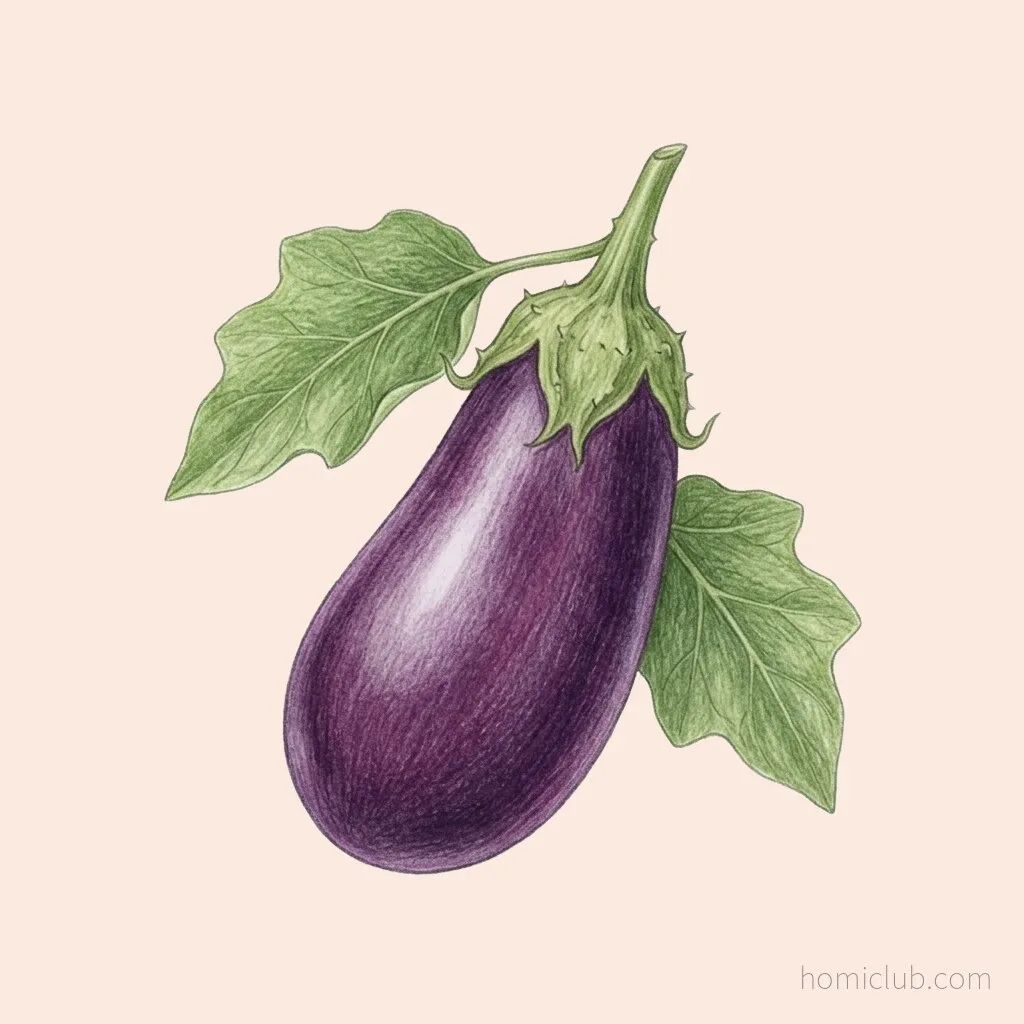
茄子 Eggplant
 Related Crop · Eggplant →
Ga is the old name for the eggplant, the same plant as the field guide's gaji. It also went by nakso and came in purple, yellow, green and white kinds. Donguibogam preserved a note that a long-stemmed, sweet-tasting eggplant out of Silla had spread across China.
Original, read line by line 東醫寶鑑 · Tangaek — Decoctions vol. 2
-
性寒, 味甘, 無毒.
Its nature is cold, its taste is sweet, and it is non-toxic.
HomiclubGa is the eggplant, an annual in the nightshade family alongside the potato and the chili, which spread to East Asia from India. Korean cooks steam and tear it for seasoned dishes or fry it in oil.
-
主寒熱, 五藏勞, 及傳尸勞氣.
It chiefly treats chills and fever, taxation of the ojang (五藏, five viscera), and nogi (勞氣, taxation qi) of jeonsi (傳尸, corpse-transmitted consumption).
-
圃中人種而食者, 一名落蘇. 不可多食, 動氣發痼疾.
It is what people plant in garden plots and eat, and it is also called nakso (落蘇). It should not be eaten in quantity, for it stirs the qi and brings on chronic ailments.
-
茄類有紫茄ㆍ黃茄, 南北通有, 靑水茄ㆍ白茄, 北土多有. 入藥多用黃茄, 其餘惟作菜茹耳. 《本草》
Among eggplants there are jaga (紫茄, purple) and hwangga (黃茄, yellow), found throughout north and south, while cheongsuga (靑水茄, green) and baekga (白茄, white) are common in northern lands. For medicine hwangga is mostly used, and the rest are simply made into vegetable dishes. 《Boncho (本草)》
HomiclubThe split into purple, yellow, green, and white overlaps with the colors of eggplant varieties still grown around the world. Korea mainly plants the long deep-purple kind, while white and striped fruits are seen only occasionally.
-
新羅國出一種, 淡光微紫色, 蔕長味甘. 已遍中國, 惟此無益, 無所治. 《入門》
One kind comes from the land of Silla, pale in sheen with a faint purple cast, long in the calyx and sweet in taste. It has already spread throughout China, yet this one alone brings no benefit and treats nothing. 《Ipmun (入門)》
HomiclubThis record of a Silla eggplant spreading through China is cited as an early case of a crop from the Korean peninsula travelling outward. The pale sheen and long calyx are the clues to its appearance.
Related Crop
Eggplant →
Reading on Eggplant
Vegetables — more entries
This is a cultural and historical record from a classical text, not a claim about any food’s effects. Nothing here is a health supplement or intended to prevent or treat disease. Consult a medical professional about health concerns. · Text: Korean Medicine Classics DB · Reading: Homiclub