
Tangaek — Decoctions · Herbs
甘草 Licorice
 Related Crop · Licorice →
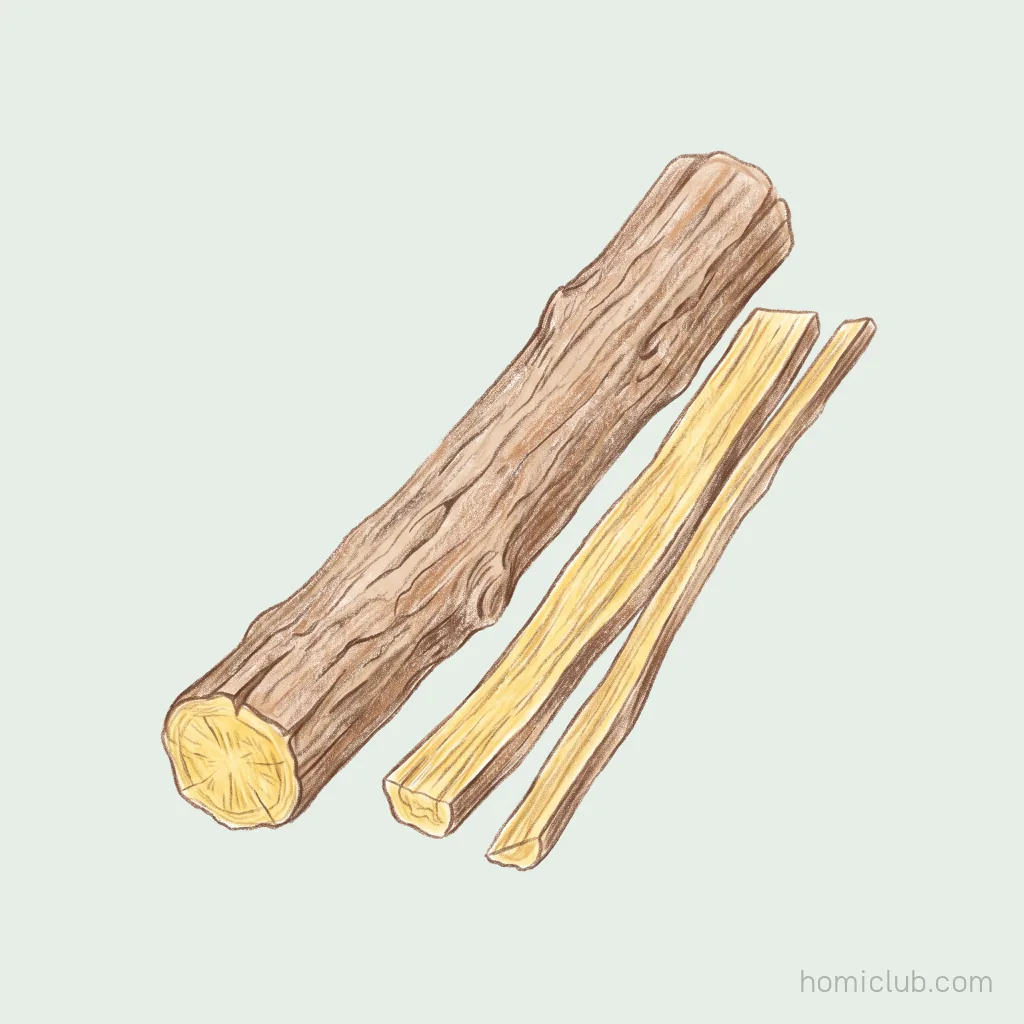
Gamcho is the root of a leguminous perennial, the same root sold today as licorice and used to sweeten confectionery and drinks. Donguibogam recorded its nicknames gukro and buncho, and noted that among the Korean-grown crop the roots from Hamgyeongbuk-do were rated highest.
Original, read line by line 東醫寶鑑 · Tangaek — Decoctions vol. 2
-
性平, 味甘, 無毒. 解百藥毒.
Its nature is neutral, its taste sweet, and it is non-toxic. It resolves the toxins of the hundred medicines.
HomiclubGamcho is the root of a perennial legume — the same root the West calls liquorice. Its deep sweetness also serves as a flavouring in confectionery and drinks.
-
爲九土之精, 安和七十二種石, 一千二百種草. 調和諸藥, 使有功, 故號爲國老.
It is the essence of the nine soils, settling and harmonizing seventy-two kinds of mineral and twelve hundred kinds of herb. Because it harmonizes the many medicines and makes them effective, it is styled gungno (國老, elder statesman).
-
主五藏六府寒熱邪氣. 通九竅, 利百脉, 堅筋骨, 長肌肉.
It governs cold, heat and evil qi in the five viscera and six bowels. It frees the nine orifices, benefits the hundred vessels, firms sinew and bone, and builds flesh.
-
二月八月除日採根, 暴乾, 以堅實斷理者, 爲佳. 折之則粉出, 故號爲粉草. 《本草》
The root is dug on the je (除) days of the second and eighth months and dried in the sun; those that are firm, solid and even in the grain of the break are held good. Snapped, it gives off a powder, and so it is styled buncho (粉草, powder herb). 《Boncho (本草)》
HomiclubThe powder that rises when it snaps comes from the loose fibre of the root. Buyers still look for a yellow cut face with a straight, even grain.
-
入足三陰經, 灸則和中, 生則瀉火. 《湯液》
It enters the three foot yin channels; roasted it harmonizes the centre, raw it drains fire. 《Tangaek (湯液)》
-
嘔吐中滿嗜酒之人, 不可久服多服. 《正傳》
Those who vomit, whose centre is full, or who are fond of liquor must not take it long or in quantity. 《Jeongjeon (正傳)》
-
自中原, 移植於諸道各邑, 而不爲繁殖. 惟咸鏡北道所産最好. 《俗方》
It was brought from the Central Plain and planted out in the counties of every province, but it did not thrive. Only what is produced in North Hamgyeong Province is best. 《Sokbang (俗方)》
Related Crop
Licorice →
Reading on Licorice
Herbs — more entries
This is a cultural and historical record from a classical text, not a claim about any food’s effects. Nothing here is a health supplement or intended to prevent or treat disease. Consult a medical professional about health concerns. · Text: Korean Medicine Classics DB · Reading: Homiclub