
Tangaek — Decoctions · Grains
粟米 Foxtail Millet
 Related Crop · Foxtail Millet →
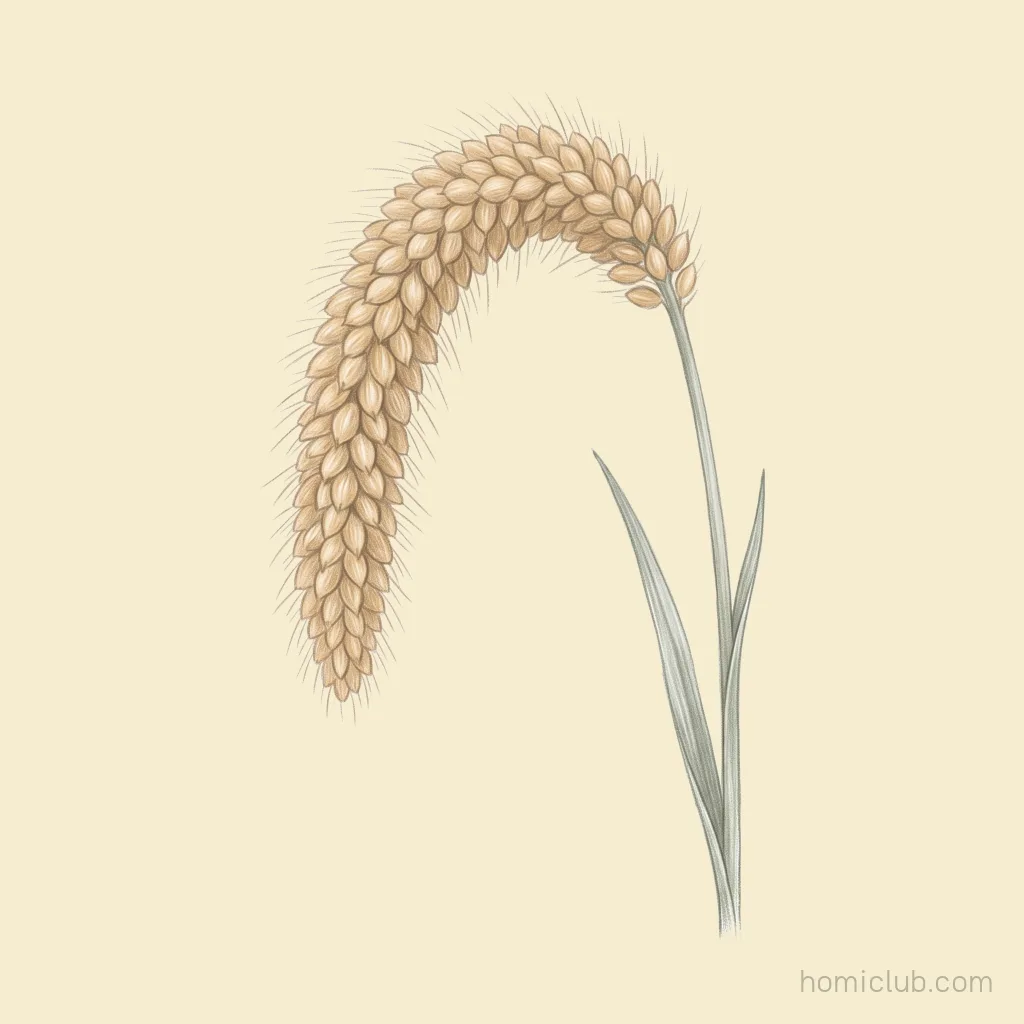
Songmi is the grain of foxtail millet — jopssal, the small yellow millet, and the same crop as the millet in the guide. Old texts split it from the coarser yangmi by grain size, giving the finer one the name songmi. It also appears as gyeongsok, hard millet, the firmest of the five grains.
Original, read line by line 東醫寶鑑 · Tangaek — Decoctions vol. 1
-
性微寒, 味酸, 無毒. 養腎氣, 去脾胃中熱, 益氣, 利小便, 益脾胃. 《本草》
Its nature is slightly cold, its taste sour, and it is non-toxic. It nourishes singi (腎氣, kidney qi), dispels heat within the biwi (脾胃, spleen and stomach), augments qi, promotes urination, and augments the spleen and stomach. 《Boncho (本草)》
HomiclubSokmi is the grain of foxtail millet, jopssal. Millet is a drought-hardy annual cereal, still present around us as millet rice, grain syrup, and birdseed.
-
粟米細於粱米, 顆粒小者是粟, 麄大者是粱. 《本草》
Sokmi is finer than yangmi (粱米): the grain that is small is sok (粟) and the coarse, large one is yang (粱). 《Boncho (本草)》
-
粟從𠧪從米, 象形也, 卽今之小米也. 五穀中最硬, 故謂之硬粟. 《入門》
The character sok (粟) is composed of yu (𠧪) above mi (米), a pictograph, and it is today's somi (小米, small grain). Among the five grains it is the hardest, hence it is called gyeongsok (硬粟, hard millet). 《Ipmun (入門)》
HomiclubSomi remains the ordinary Chinese word for foxtail millet. It pairs with dami (大米), the word for husked rice.
-
黍, 稷, 稻, 粱, 禾, 麻, 菽, 麥, 乃八穀也. 陶隱居以禾爲粟. 朱子詩註明言, 禾者, 穀連藁秸之總名. 盖八穀有粟, 則是盖言粱則包粟在中. 《入門》
Millet, panicled millet, rice, yang, hwa (禾), ma (麻, hemp), pulse, and barley are the eight grains. Do Eun-geo (陶隱居, Tao Hongjing) took hwa to mean sok. Zhu Xi's commentary on the Odes states plainly that hwa is the general name for grain still joined to its straw and stalk. Since the eight grains include sok, this means that to speak of yang is to enclose sok within it. 《Ipmun (入門)》
Related Crop
Foxtail Millet →
Grains — more entries
This is a cultural and historical record from a classical text, not a claim about any food’s effects. Nothing here is a health supplement or intended to prevent or treat disease. Consult a medical professional about health concerns. · Text: Korean Medicine Classics DB · Reading: Homiclub