
Tangaek — Decoctions · Grains
穬麥 Geotbori (것보리)
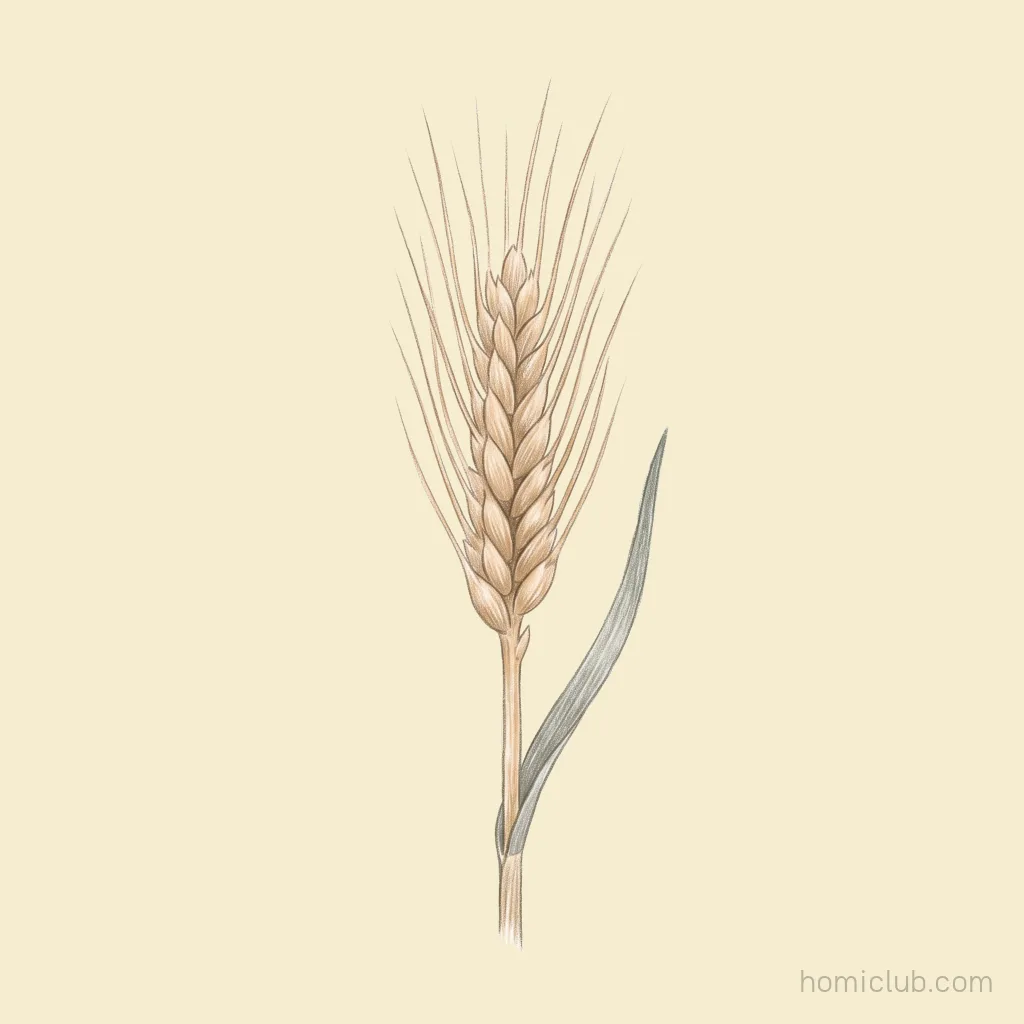
Geotbori is hulled barley, the kind whose husk clings to the grain. The Grain section sets it beside naked barley (靑顆麥), which sheds its husk on its own, barley flour, and malted barley (大麥糵). That malt is still what Korean sikhye and grain syrup are made from.
Original, read line by line 東醫寶鑑 · Tangaek — Decoctions vol. 1
-
性微寒, 味甘, 無毒. 主輕身補中, 除熱, 不動疾.
Its nature is slightly cold, its taste sweet, and it is non-toxic. It governs lightening the body, supplementing the middle, removing heat, and not stirring illness.
HomiclubGwangmaek is barley whose hull clings tightly to the kernel — geot-bori, hulled barley. It pairs with ssal-bori, the naked barley whose hull falls away, and goes mainly into malt and roasted barley tea.
-
久服令人多力健行. 《本草》
Taken long it gives a person much strength and a sturdy stride. 《Boncho (本草)》
-
大麥ㆍ穬麥, 本經兩出, 有如一稻二米.
Daemaek and gwangmaek appear as two separate entries in the 《Bongyeong (本經)》, as though one rice plant yielded two grains.
-
盖稻是穀之通名, 則穬是麥之皮號, 麥之穬, 猶米之與稻也.
Since do (稻) is a general name for grain, gwang (穬) is the name for barley in its husk; barley stands to gwang as hulled rice stands to the rice plant.
-
然則大麥是麥米, 穬麥是麥穀, 明矣. 《本草》
Thus it is clear that daemaek is the hulled kernel of barley and gwangmaek is barley in the husk. 《Boncho (本草)》
-
大麥比小麥差大, 故謂之大麥.
Barley is somewhat larger than wheat, and so it is called daemaek (大麥, greater maek).
-
其皮礦脆, 宜謂之穬麥. 《本草》
Its husk is coarse and brittle, so it is fitting to call it gwangmaek. 《Boncho (本草)》
Grains — more entries
This is a cultural and historical record from a classical text, not a claim about any food’s effects. Nothing here is a health supplement or intended to prevent or treat disease. Consult a medical professional about health concerns. · Text: Korean Medicine Classics DB · Reading: Homiclub