
Tangaek — Decoctions · Grains
菉豆 Mung bean
 Related Crop · Mung bean →
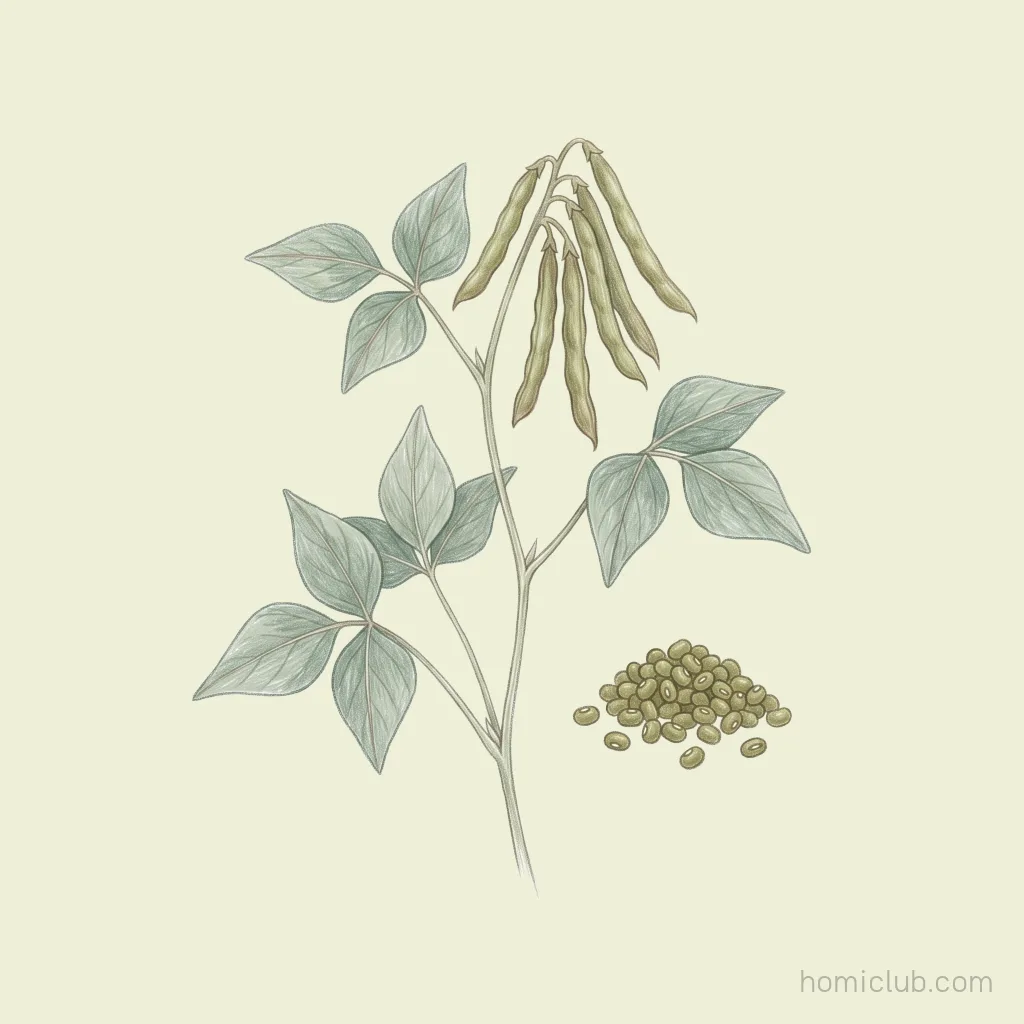
Nokdu is the small green seed of an annual legume, the mung bean sprouted for sukju and ground for muk jelly and bindaetteok, the same crop as nokdu in the guide. Ground in water and settled, its dried starch is listed separately as nokdubun.
Original, read line by line 東醫寶鑑 · Tangaek — Decoctions vol. 1
-
性寒一云平, 一云冷, 味甘, 無毒.
Its nature is cold, though one account calls it neutral and another chilly; its taste is sweet, and it is non-toxic.
HomiclubNokdu is the small green seed of an annual legume — the bean sprouted for sukju namul and ground for cheongpomuk jelly and bindaetteok pancakes. In the West it is called the mung bean.
-
主一切丹毒, 煩熱, 風疹, 藥石發動.
It governs every kind of dandok (丹毒, erysipelas), beonyeol (煩熱, vexing heat), pungjin (風疹, wind rash), and the stirring up of drug and mineral medicines.
-
壓熱, 消腫, 下氣, 止消渴. 《本草》
It presses down heat, disperses swelling, sends qi downward, and stops sogal (消渴, wasting-thirst). 《Boncho (本草)》
-
和五藏, 安精神, 行十二經脉, 此最爲良. 《本草》
It harmonizes the five viscera, calms the spirit, and moves the twelve channels; in this it stands first of all. 《Boncho (本草)》
-
作枕, 明目, 治頭風頭痛. 《本草》
Made into a pillow it brightens the eyes and treats dupung (頭風, head wind) and headache. 《Boncho (本草)》
HomiclubPillows filled with mung beans are still sold in Korea as nokdu-begae. The small hard seeds shift to hold the shape of the head, much as buckwheat hulls do.
-
若欲去病, 須勿去皮. 盖皮寒肉平爾. 《食物》
If one means to drive off illness, the skin must not be removed, for the skin is cold while the flesh is merely neutral. 《Singmul (食物)》
-
色綠圓小者佳. 入藥, 須帶皮用, 去皮則少有壅氣. 《入門》
Those green, round, and small are the better sort. For medicine it must be used with the skin on; skinned, it slightly obstructs the qi. 《Immun (入門)》
Related Crop
Mung bean →
Reading on Mung bean
Grains — more entries
This is a cultural and historical record from a classical text, not a claim about any food’s effects. Nothing here is a health supplement or intended to prevent or treat disease. Consult a medical professional about health concerns. · Text: Korean Medicine Classics DB · Reading: Homiclub