
Tangaek — Decoctions · Herbs
五味子 Schisandra
 Related Crop · Schisandra →
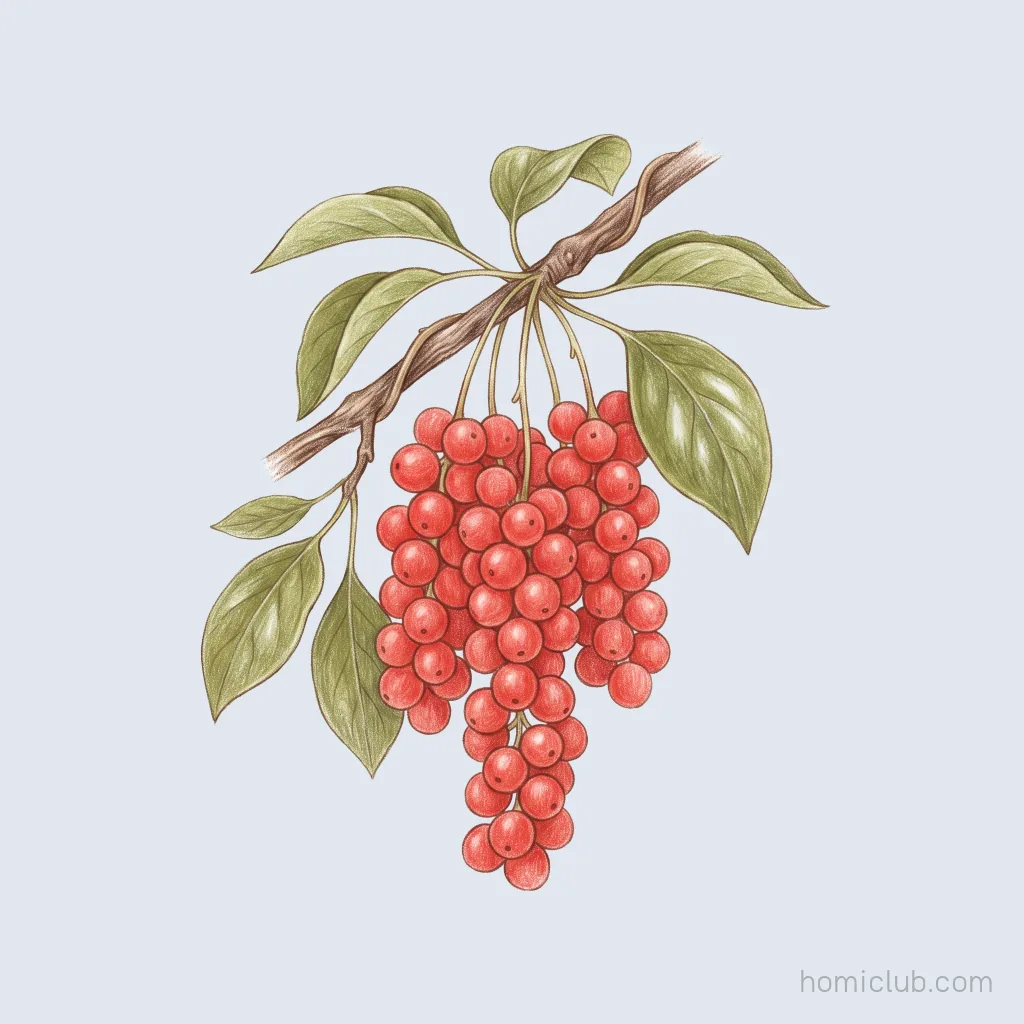
Omija is the red berry of the schisandra vine, the same omija in the crop guide. Skin and flesh are sweet and sour while the seed runs pungent and bitter, so the fruit was said to hold five tastes, which is where the name comes from. It is steeped today as omija cordial and tea; Donguibogam rated the berries of Hamgyeong and Pyeongan best.
Original, read line by line 東醫寶鑑 · Tangaek — Decoctions vol. 2
-
性溫, 味酸一云微苦, 無毒. 補虛勞羸瘦, 明目, 煖水藏, 强陰, 益男子精, 生陰中肌.
Its nature is warm, its taste sour, though one account calls it slightly bitter, and it is non-toxic. It supplements emaciation from taxation, brightens the eyes, warms the sujang (水藏, water viscus), strengthens eum (陰, yin), augments a man's essence, and raises flesh in the genital region.
HomiclubOmija is the red fruit of a woody vine, the same fruit Koreans steep into omija cordial and tea today. The vine belongs to the magnolia order, and in autumn its fruit hangs in grape-like clusters.
-
止消渴, 除煩熱, 解酒毒, 治咳嗽上氣.
It stops wasting thirst, removes vexing heat, resolves liquor toxin, and treats cough and upsurging qi.
-
生深山中. 莖赤色蔓生, 葉如杏葉, 花黃白. 子如豌豆許大, 叢生莖頭, 生靑熟紅紫. 味甘者佳. 八月採子, 日乾.
It grows deep in the mountains. Its stem is red and trailing, its leaves like apricot leaves, its flowers yellowish white. The fruits are about the size of garden peas, clustered at the stem tips, green when unripe and reddish purple when ripe. Those with a sweet taste are the fine ones. Gather the fruit in the eighth month and sun-dry it.
-
皮肉甘酸, 核中辛苦, 都有醎味, 此則五味具也. 故名爲五味子. 入藥, 生暴不去子. 《本草》
Skin and flesh are sweet and sour, the kernel pungent and bitter, and over all there is a salty taste, so the five tastes are complete in it. Hence it is named omija (五味子, five-taste seed). For medicinal use, sun-dry it raw without removing the seeds. 《Boncho (本草)》
HomiclubHere the text explains its own name. Chewing skin and seed together, one can still taste the sourness followed by pungency and bitterness.
-
孫眞人云, 夏月常服五味子, 以補五藏之氣. 在上則滋源, 在下則補腎, 故入手太陰ㆍ足少陰也. 《湯液》
Master Son (孫眞人) said that in the summer months one regularly takes omija to supplement the qi of the ojang (五藏, five viscera). Above it moistens the source, below it supplements the sin (腎, kidney), and so it enters the hand taeeum and foot soeum channels. 《Tangaek (湯液)》
-
我國生咸鏡道平安道, 最佳. 《俗方》
In Korea those grown in Hamgyeong and Pyeongan provinces are the finest. 《Sokbang (俗方)》
HomiclubThe northern uplands named here remain the kind of terrain where omija grows best. In the south, cool mountain districts such as Mungyeong and Muju are the well-known growing areas.
Related Crop
Schisandra →
Reading on Schisandra
Herbs — more entries
This is a cultural and historical record from a classical text, not a claim about any food’s effects. Nothing here is a health supplement or intended to prevent or treat disease. Consult a medical professional about health concerns. · Text: Korean Medicine Classics DB · Reading: Homiclub