
Tangaek — Decoctions · Grains
丹黍米 Proso Millet
 Related Crop · Proso Millet →
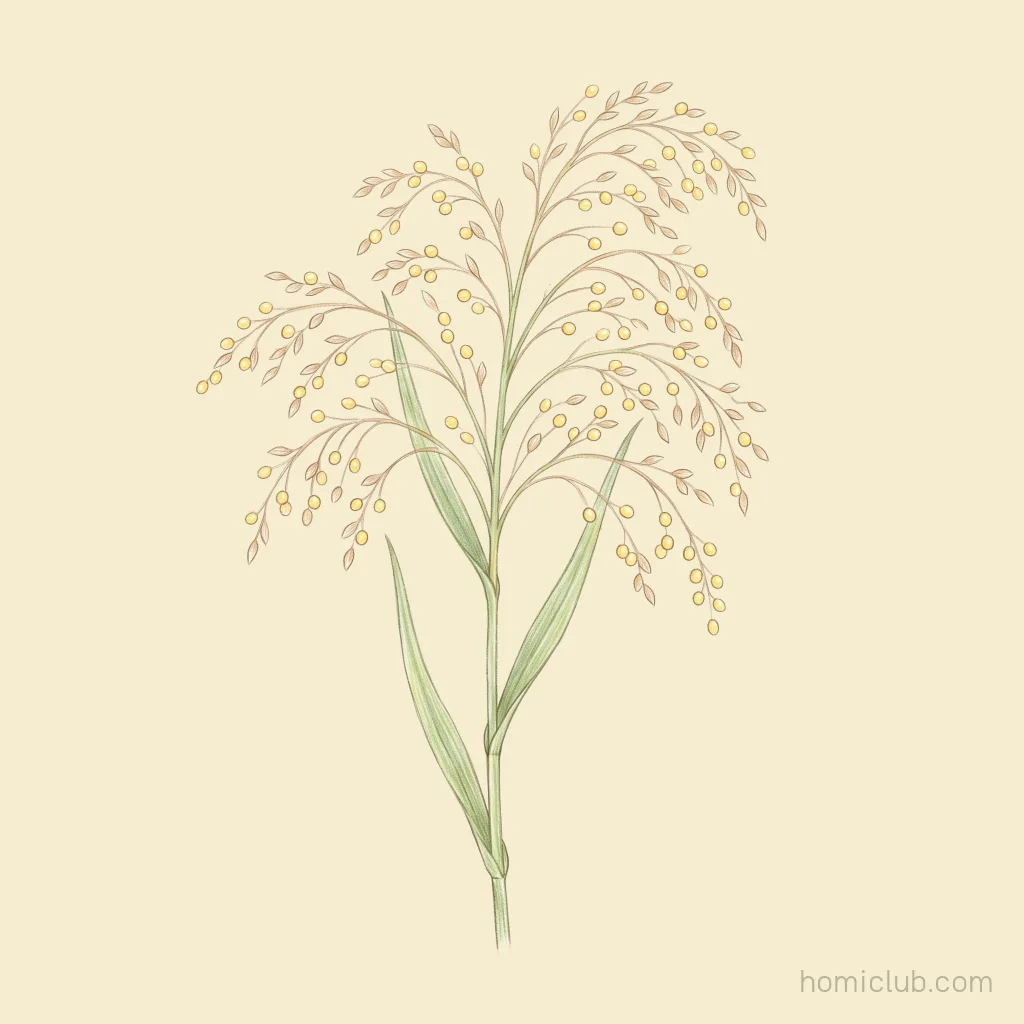
Danseomi is millet with a red husk and yellow grain, the same crop as millet in the guide. The text splits millet into sticky sul (秫), used for brewing, and non-sticky seo (黍), eaten as grain, comparing the divide to glutinous and ordinary rice.
Original, read line by line 東醫寶鑑 · Tangaek — Decoctions vol. 1
-
性溫, 味苦, 無毒. 主咳逆霍亂. 止泄, 止渴. 《本草》
Its nature is warm, its taste bitter, and it is non-toxic. It governs cough with counterflow and gwallan (霍亂). It stops diarrhoea and stops thirst. 《Boncho (本草)》
HomiclubDanseomi is proso millet with a red hull and a yellow kernel. Millet was long sorted into landraces by the colour of the hull.
-
此卽赤黍米也. 皮赤而米黃. 《本草》
This is jeokseomi (赤黍米, red proso millet). Its hull is red and its grain yellow. 《Boncho (本草)》
-
黍有二種米. 粘者爲秫, 可以釀酒, 不粘者爲黍, 可食之. 如稻之有粳糯耳. 《本草》
Millet yields two kinds of grain. The sticky one is chul (秫) and can be brewed into liquor; the non-sticky one is seo (黍) and can be eaten. It is just as rice has gaeng and na. 《Boncho (本草)》
Related Crop
Proso Millet →
Grains — more entries
This is a cultural and historical record from a classical text, not a claim about any food’s effects. Nothing here is a health supplement or intended to prevent or treat disease. Consult a medical professional about health concerns. · Text: Korean Medicine Classics DB · Reading: Homiclub