
Tangaek — Decoctions · Herbs
蒲公草 Dandelion
 Related Crop · Dandelion →
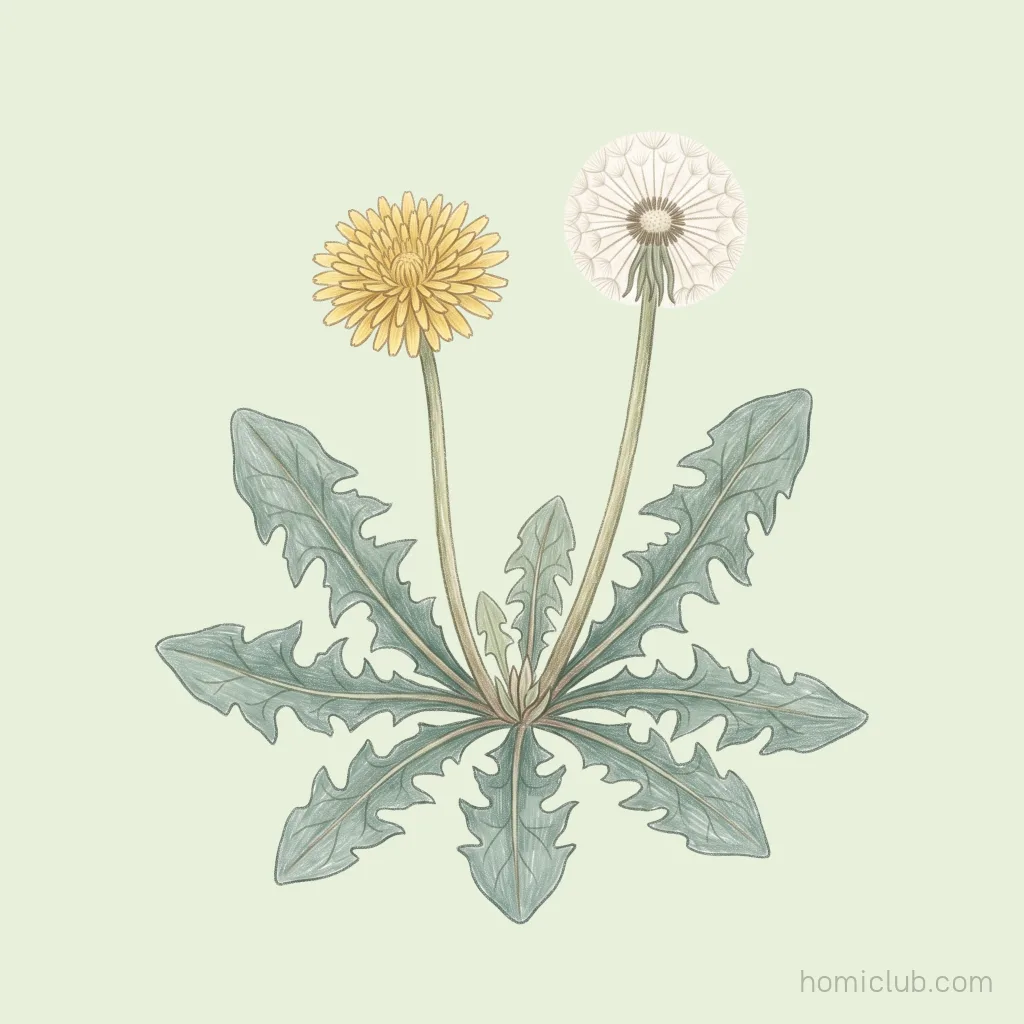
Pogongcho is the old name for the dandelion, the same plant in the crop guide. Its leaves resemble sow thistle, yellow chrysanthemum-like flowers open in spring, and a cut stem weeps white sap. It was commonly called pogongyeong, and the leaves were eaten as a green.
Original, read line by line 東醫寶鑑 · Tangaek — Decoctions vol. 3
-
性平, 味甘, 無毒. 主婦人乳癰腫.
Its nature is neutral, its taste sweet, and it is non-toxic. It chiefly treats yu-ongjong (breast abscess) in women.
-
處處有之. 葉如苦苣, 三四月開黃花似菊, 莖葉斷之有白汁出, 人皆啖之.
It is found everywhere. Its leaves are like gogeo, in the third and fourth months it opens yellow flowers resembling a chrysanthemum, and when the stalk or leaf is cut a white juice comes out; everyone eats it.
HomiclubThe white latex that oozes from a cut stem is the mark of the dandelion group. Gogeo (苦苣) refers to bitter composite greens such as ssumbagwi. Young leaves are blanched and dressed as namul, and the roots are roasted for tea.
-
俗呼爲蒲公英. 《本草》
In common speech it is called pogongyeong. 《Boncho》
HomiclubThe dandelion most often seen on Korean roadsides today is the introduced common dandelion. If the bracts under the flower head bend backward it is the introduced species; if they stay pressed to the head it is the native one.
-
化熱毒, 消惡腫, 散結核, 解食毒, 散滯氣, 有奇功. 可入陽明太陰經. 《入門》
It transforms heat toxin, disperses malignant swellings, scatters gyeolhaek (nodular lumps), resolves food poisoning, and scatters stagnant qi, with remarkable effect. It can enter the yangmyeong and taeeum channels. 《Ipmun》
-
一名地丁, 治疔腫, 最效. 《入門》
One name for it is jijeong, and it is most effective for treating jeongjong (deep-rooted boils). 《Ipmun》
Related Crop
Dandelion →
Reading on Dandelion
Herbs — more entries
This is a cultural and historical record from a classical text, not a claim about any food’s effects. Nothing here is a health supplement or intended to prevent or treat disease. Consult a medical professional about health concerns. · Text: Korean Medicine Classics DB · Reading: Homiclub