- Type
- Trees & Vines
- Difficulty
- Moderate
- Season
- Fall
- Sowing
- Plant a sapling
Trifoliate Orange
Poncirus trifoliata
Flavonoids and citrus oil · the fruit of a thorn hedge
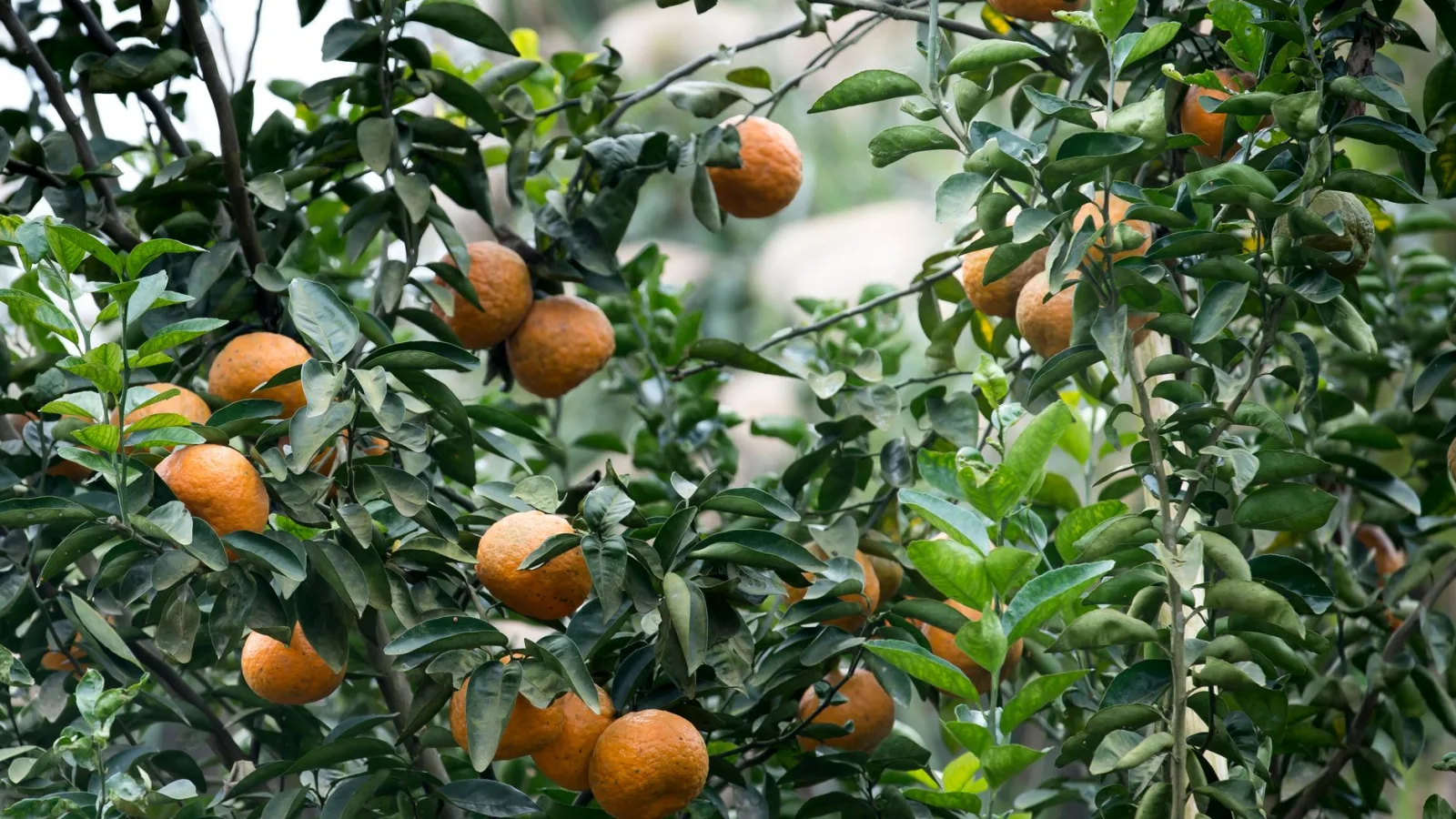
The trifoliate orange is a deciduous member of the citrus family, and its thick, crowded thorns made it a hedging plant for centuries. On Ganghwa Island old specimens survive where the tree was once planted around a fortress wall, and they carry natural monument status. White flowers open in spring ahead of the leaves, and by autumn fruit the size of a table-tennis ball turns yellow, giving off a sharp citrus scent from the rind. The flesh is too sour and bitter and too full of seed to bite into, so it goes into sugar-steeped syrup or is dried in slices and simmered as tea. The Donguibogam lists the dried unripe fruit in the Wood section as 枳實, describing a tree like a mandarin but smaller, with thorny foliage, white flowers in spring and fruit set in autumn. On the old saying that a mandarin crossing the Huai river becomes a trifoliate orange, the text is blunt: they were separate species to begin with, not one turning into the other. This is also the tree used as rootstock for mandarin nursery plants, precisely because it tolerates cold and poor ground. Picking the fruit puts thorns at arm height, so thick gloves and long sleeves are part of the job.
Year-Round Calendar
- 1
- 2
- 3
- 4
- 5
- 6
- 7
- 8
- 9
- 10
- 11
- 12
- 3
- 4
- 9
- 10
Where It Grows
- Origin Its natural range is the middle and lower Yangtze. The fruit is gathered there under the name zhi.
-
Major producer
It was planted as a hedge in central Korea and southward, and Ganghwa Island in Incheon is known as the northern limit of its growth. Harvest September, October
- 9
- 10
- Major producer It is called karatachi and is planted for hedges and as citrus rootstock.
It is native to the Yangtze basin in China and reached Korea and Japan long ago. Regions that harvest the fruit are limited to these three countries, but its cold hardiness has made it a common grafting rootstock for citrus in the growing regions of Florida in the United States, Brazil and the Mediterranean coast. The trees there are not planted for their fruit, so those areas are not counted as producing regions. In China, meanwhile, the material used as zhishi and zhiqiao (immature and mature medicinal fruit) is now officially taken from the bitter orange (Citrus aurantium), so the source plant differs from Korea, which uses trifoliate orange.
- Optimum
- 18~28℃
- Range
- 5~32℃
- Hardiness
- Hardy
Unusually cold-hardy for a citrus, it drops its leaves in winter and endures down to around −20℃. Because of this trait, it is used the world over as rootstock for citrus trees that otherwise grow only in warm places. It is not fussy about soil, but its roots rot where water collects.
Harvested 3–5 years after planting. Seedlings go in the ground in March–April and bear no fruit in their first year. From three or four years on, the fruit is picked in September–October, once it has ripened yellow.
In Korea Central Korea and south
It is planted in central Korea and southward. An old tree on Ganghwa Island in Incheon is known as the northern limit of its growth and has been designated a Natural Monument, and hedges of it survive around old fortresses and villages in North Jeolla, South Jeolla and South Gyeongsang.
How to grow
- Light
- Five or six hours of sun a day or more. In shade the fruit stays small
- Soil and depth
- Undemanding. It grows in poor ground as long as drainage is good; 40cm of depth or more
- Spacing
- 1m apart in a hedge line, 2 to 3m as a single tree. The thorns reach, so keep it a metre back from any path
- Watering
- Keep it from drying out through the first year only. Once rooted it carries itself on rainfall
- Feeding
- Work compost around the base between December and February after leaf fall. Rich feeding builds long shoots and fewer fruit
- Harvest
- September and October, when the fruit colours yellow and the scent rises. Cut with shears; twisting by hand puts your wrist among the thorns. The 枳實 of the original is the unripe fruit picked earlier, in the seventh or eighth lunar month
What makes the difference. Slice thin with the rind on for syrup. Thick slices push bitterness forward, and the seeds come out as you go
Why this one is harder. The thorns are long and heavy enough to make both pruning and picking hazardous. Work in thick gloves and long sleeves with long-handled shears, and site the tree away from paths from the start. Once grown, the deep root makes it hard to move
Common problems
- Swallowtail caterpillars You will see Young leaves stripped whole, with fat caterpillars sitting on the leaf stalks What to do They feed on citrus-family leaves, so they find this tree readily. A mature tree carries a few without trouble; on a young sapling, move them off by hand
- Aphids You will see New shoot tips curl and feel sticky What to do Wash off with a jet of water; if it recurs, use an egg-yolk oil spray. Ants running up and down the trunk mean aphids above
- Scale insects You will see Brown shell-like bumps on older branches, with leaves turning sticky What to do Brush them off in winter and thin the old wood to let in light and air
This page describes how a crop is grown and used. It does not claim health effects for any food, nor is it intended to prevent or treat disease. Component and study notes are references only and do not mean the same result occurs in people. Consult a medical professional about health concerns.
Health Benefits
The old record — jisil (枳實). The Donguibogam lists the material in the Wood section as 枳實. Its nature is set down as cold, with a note that some call it slightly cold; its taste as bitter and sour, with a note that some call it bitter and pungent; and it is described as having no toxicity. The tree is described as like a mandarin but smaller, with foliage like the bitter orange and many thorns, flowering white in spring and setting fruit in autumn, picked in the seventh and eighth lunar months and dried in the sun. It grades the material by form, favouring pieces turned out like the lip of a jar and preferring long-aged stock, and records the preparation: soaked in water with the pith removed, then roasted with wheat bran. What an old medical text wrote differs from how it is judged today.
Where the text separated two species. The original quotes the old saying that a mandarin crossing the Huai river becomes a trifoliate orange, along with the line that mandarins grow south of the river and trifoliate oranges north of it. It then observes that both now grow in the south while only the trifoliate orange grows in the north, and concludes that these were separate species from the start rather than one changing into the other. It is a passage where an old record set an inherited metaphor aside in favour of what could be seen.
Compounds reported in the fruit. Analyses report flavonoid glycosides such as poncirin and naringin in the fruit, along with the essential oil behind its citrus scent. The same work reports that the profile shifts with ripeness. These are compositional analyses and nothing beyond that.
Nutrition
- Flavonoids (in rind and flesh) — bitter glycosides such as poncirin and naringin
- Essential oil (released when the rind is scraped) — the volatile fraction behind the citrus scent
- Organic acids (the sourness of the juice) — citric acid among others
- Dietary fibre (in the flesh and pith) — fibre including pectin
Not eaten raw The fruit is too sour, too bitter and too full of seed to be bitten into like an apple. It goes into sugar-steeped syrup, into dried slices simmered as tea, or into an infused spirit. The seeds are strongly bitter and are picked out as the fruit is sliced.
The flavonoids behind the bitterness Analyses find flavonoid glycosides such as poncirin and naringin in the fruit. Naringin is the same compound known for the bitterness of grapefruit. This entry stays with the compositional record.
Scent in the rind Scraping or slicing the rind releases a strong citrus oil. That is why fruit for syrup is sliced thin with the rind left on. The rind also carries bitterness, though, so thick slices push that bitterness forward.
Unripe versus ripe fruit What the Donguibogam handles as 枳實 is the green unripe fruit picked in the seventh or eighth lunar month and dried; what goes into syrup and tea today is the yellow fruit of September and October. The same tree, but the picking date split the name and the use. Check which one a composition table or an old record means before comparing anything.
Pairings
○ Sugar-steeped syrup — Wash the fruit, dry it completely, slice it thin, remove the seeds and layer it with an equal weight of sugar. The thinner the slices, the less bitterness. Leave it somewhere cool for about ten days, then refrigerate.
○ Dried slices, simmered — Dry thin slices hard in the sun and keep them, then simmer a few in water over low heat. A long boil sharpens the bitterness, so lower the heat once it comes up. Add honey in the cup, not the pot.
○ Simmered with ginger and jujube — A few slices of ginger and some sliced jujube round off the sharp edge. It is a common winter combination. Put everything in from the start and simmer gently. Ginger
△ Thorns — gloves and long sleeves — The thorns run as long as a finger and are hard enough to tear skin on contact. Wear thick gloves and long sleeves and cut the fruit with shears. In a yard children use, plant it back from the path and clear the low branches.
△ Remove the seeds — Each fruit holds several strongly bitter seeds. Pick them out while slicing, whether for syrup or for tea. Left in, the bitterness leaches into the liquid over time.
△ Do not decoct the medicinal grades at will — The materials traded as jisil and jigak are dried unripe fruit used as herbal medicine, and they are put to different use from a jar of fruit syrup. Long daily decoctions on your own initiative are not advisable. If you are pregnant or take medication regularly, tell your clinician.
Varieties
- Native hedging stock (sapling) — The traditional hedge line, with long thick thorns and many small fruit
- Rootstock lines (sapling) — Grown as the understock for grafted mandarin nursery plants. Tolerant of cold and poor soil
- Dwarf lines (sapling) — Low-growing selections for pots and small yards
Source: Donguibogam, Wood Section 枳實 · Rural Development Administration (Nongsaro) · Korea National Arboretum