- Type
- Trees & Vines
- Difficulty
- Moderate
- Season
- Summer
- Sowing
- Plant a sapling
Longan
Dimocarpus longan
Sugars and vitamin C · a southern fruit and close cousin of the lychee
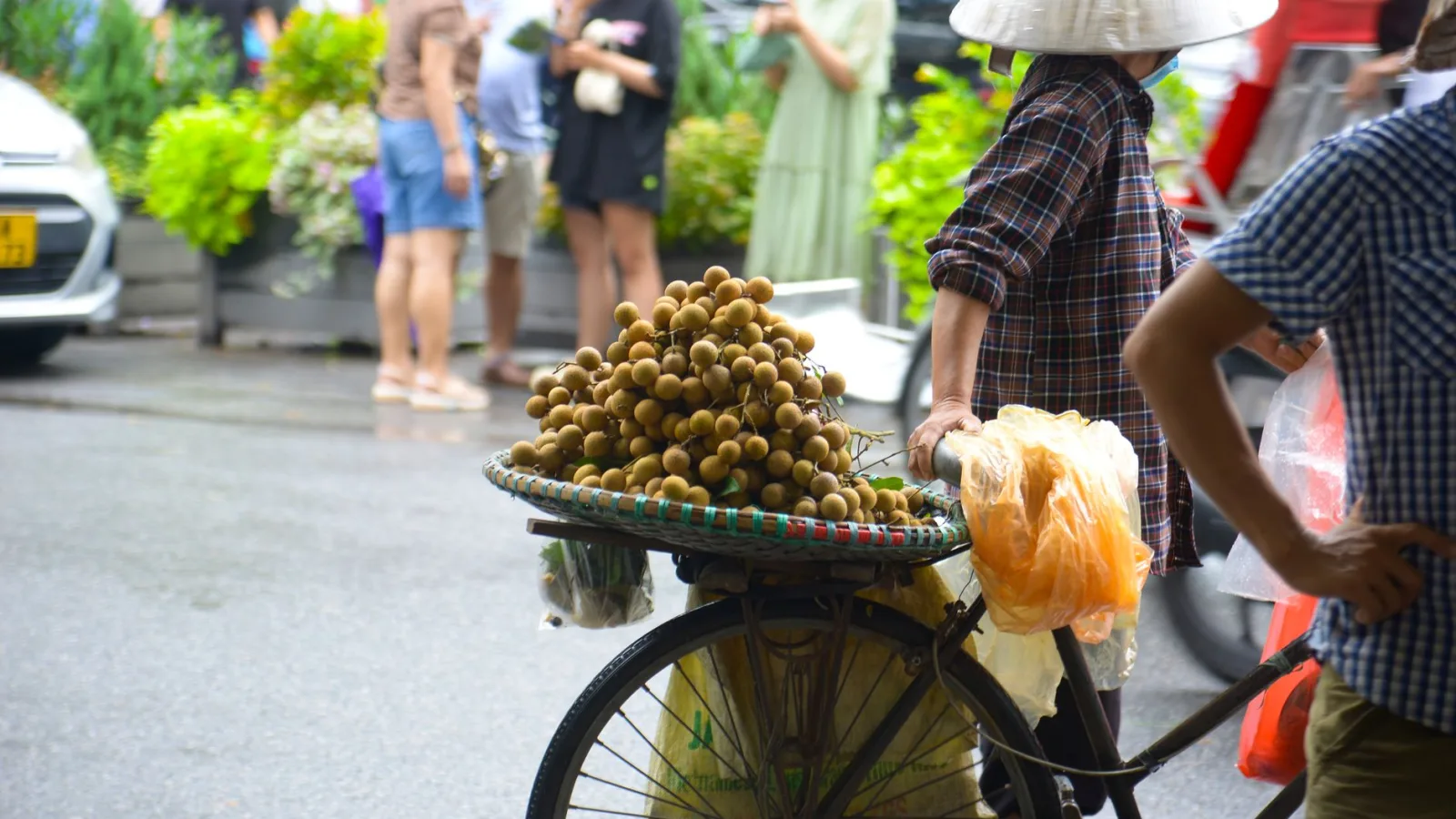
Longan is a southern fruit of the soapberry family and a close cousin of the lychee. The skin is thin and tan brown, and peeling it reveals translucent white flesh around a single round black seed — a look that gave the fruit its name, dragon eye. It cannot overwinter in Korea, so nobody grows it here; it arrives as dried longan flesh, as tinned fruit in syrup, and as imported fresh fruit for one stretch of summer. Drying pulls the water out until the flesh shrivels dark red and the sweetness concentrates, and those pieces go into a pot with jujube and ginger for tea. When buying fresh fruit, avoid split or damp skins, and reject any that rattles when shaken. The Donguibogam lists it in the Fruit section as 龍眼, giving it a neutral nature, a sweet taste and no toxicity, and saying it grows in the southwest alongside the lychee. It resembles the areca nut but smaller, the entry adds, with flesh thinner than the lychee, sweet and good to eat.
Year-Round Calendar
- 1
- 2
- 3
- 4
- 5
- 6
- 7
- 8
- 9
- 10
- 11
- 12
- 4
- 5
- 7
- 8
- 9
Where It Grows
-
Main producer
The world's largest producer. The subtropical hill country of Guangdong, Guangxi, Fujian and Hainan is the centre of it. Harvest July, August, September
- 7
- 8
- 9
-
Main producer
The leading exporter. Lamphun and Chiang Mai in the north are the centre, and growing methods that induce flowering out of season let the country produce in winter as well. Harvest July, August
- 7
- 8
-
Major producer
Hung Yen in the north and the Mekong Delta in the south are the growing regions. Harvest July, August, September
- 7
- 8
- 9
-
Major producer
Grown in the hills of the central and southern regions, and also sold as dried longan flesh. Harvest July, August, September
- 7
- 8
- 9
Its native range is the subtropical belt running from southern China to northern Myanmar, and because that cannot be pinned to a single country, no country-of-origin row has been given. It belongs to the same family as the lychee, the Sapindaceae, and the two share much of the same growing country. Since every producing region sits in the northern-hemisphere subtropics, the fresh-fruit season falls at much the same time everywhere, July to September, with Thailand filling the gap by putting out off-season volume. It is not grown in Korea, where it cannot get through the winter in open ground, so no domestic-cultivation field has been given.
- Optimum
- 20~30℃
- Range
- 10~35℃
- Hardiness
- Not hardy
- Day length
- Not applicable
A subtropical tree. It will take a brief dip below freezing, but it cannot survive a winter outdoors in Korea. What sets the timing of flower-bud initiation is not day length but how long the cool, dry weather of winter (15–22℃) holds; rain after that brings the tree into flower. This is why buds set more reliably along the northern edge of the subtropics than in the tropical lowlands.
How to grow
- Light
- A subtropical tree that cannot overwinter outdoors in Korea. In its home range it is planted where sun falls all day
- Soil and depth
- Not realistically a field crop here. A pot brought under glass for the winter is about the limit of what is possible in Korea
- Spacing
- Orchards in its home range set trees six to eight metres apart. It grows too large for a domestic yard
- Watering
- For a buyer, water enters at preparation. Rinse fresh fruit in the skin under running water; dried longan is used without washing
- Feeding
- No feeding. In Korea this is a fruit that is bought rather than grown
- Harvest
- For fresh fruit, choose taut, evenly tan-brown skins on fruit still attached to the cluster. Pass on anything that rattles or has split. For dried longan, choose even pieces that are not excessively damp
What makes the difference. Refrigerate fresh fruit and eat it within a few days. Keep dried longan sealed somewhere cool and dark, and refrigerate it in summer
Why this one is harder. It cannot overwinter outdoors in Korea, so it is not a tree to grow here. A greenhouse or an indoor pot will keep the foliage alive but rarely produces fruit, and this entry is aimed at choosing and keeping the bought fruit
Common problems
- Split skins You will see The skin of fresh fruit splits and juice weeps out What to do It has either dried out in storage or been crushed. Sort out the split fruit and eat the rest the same day
- A rattling seed You will see Shaken, the seed knocks around inside the skin What to do The flesh has dried and pulled away from the skin. Shake before buying and pass on anything that rattles
- White bloom and mould You will see A white powder settles on dried longan and the surface turns tacky What to do It has taken up moisture. Discard anything smelling sour or showing mould, and reseal the rest and refrigerate it
This page describes how a crop is grown and used. It does not claim health effects for any food, nor is it intended to prevent or treat disease. Component and study notes are references only and do not mean the same result occurs in people. Consult a medical professional about health concerns.
Health Benefits
The old record — yongan (龍眼). The Donguibogam lists the fruit in the Fruit section as 龍眼. It gives a neutral nature, a sweet taste and no toxicity. It says the fruit grows in the southwest, in the same places as the lychee, that it resembles the areca nut but smaller, and that the flesh is thinner than the lychee's, sweet and good to eat. It records that the fruit is called dragon eye because it looks like one, gives the alternative names 圓眼 and 益智, and notes that eaten fresh it does not match the lychee, whence the name 荔枝奴. This is a historical medical record and differs from modern medical judgment.
What drying does. Water loss during drying reduces weight and raises the proportion of sugar per unit weight, a change common to dried foods generally. It is why composition figures for fresh and dried longan diverge so far. This concerns cooking and storage behaviour.
Relation to the lychee. Longan and lychee belong to the same family. The Donguibogam recorded them as growing in the same region and compared the flesh, calling longan's the thinner of the two. This is a record of classification and form.
Nutrition
- Sugars (fructose, glucose, sucrose) (the sweetness of the flesh) — drying removes water and raises their share of the weight
- Vitamin C (present in the fresh fruit) — one of the water-soluble vitamins
- Polyphenols (reported highest in the skin and seed) — a group of phenolic compounds widespread in plants
What drying changes Drying pulls the water out of the flesh, cutting the weight sharply and concentrating the sweetness. The same 100g reads completely differently depending on whether the figures are for fresh or dried fruit. Dried longan is more often dropped a few pieces at a time into a pot than eaten by the handful.
Sugars The sweetness comes from fructose, glucose and sucrose. With the water gone, dried longan carries a higher share of sugar per unit weight. Anyone managing blood glucose is better off counting the dried and tinned forms separately.
Vitamin C and polyphenols The fresh fruit carries vitamin C, and analyses report polyphenols highest in the skin and the seed. Neither of those is an edible part, so the table figure does not translate into what actually gets eaten. This entry stays with the compositional record.
How it differs from lychee It shares the soapberry family with lychee, but the skin is thinner and smoother and the aroma fainter. The Donguibogam recorded the flesh as thinner than the lychee's. It also records the alternative name 荔枝奴, given because eaten fresh it does not match the lychee.
Pairings
○ Jujube and ginger — A few pieces of dried longan simmered with jujube and ginger draw out both sweetness and aroma. Long-boiled ginger pushes its heat forward, so add it at the end. Drop the heat once it boils and hold it at a gentle simmer. Ginger · Jujube
○ Glutinous rice porridge — Stir dried longan into glutinous rice porridge when it is nearly done and give it only a short boil. Cooked long it loses its shape and leaves only sweetness behind. No added sugar is needed.
○ Walnuts and pine nuts — Served alongside dry nuts such as walnut or pine nut, the sweetness and the richness separate cleanly. Stored together in one container they make each other damp, so combine them at the table. Korean Pine Nut · Walnut
△ Seed and skin — The round black seed and the thin skin are not edible parts. The seed is smooth and round enough to choke a child, so pit the fruit and split the flesh before serving it to young children. Tinned fruit occasionally holds a stray seed, so check as you spoon it out.
△ Dried longan by the handful — Drying concentrates the sweetness into a small piece. Eaten by the handful the quantity becomes impossible to track, so decant a few pieces and stop there. Anyone managing blood glucose is better off fixing the number that goes into the pot.
△ Mould and dampness — Dried longan that takes up moisture turns tacky and grows a white bloom or mould. Anything smelling sour or showing mould is discarded rather than rinsed. Keep it sealed somewhere cool and dark, and refrigerate it in summer.
Varieties
- Fresh fruit (form) — Imported for one stretch of summer. Sold on the branch in clusters
- Dried longan flesh (form) — The flesh alone, dried. Shrivelled dark red with concentrated sweetness
- Tinned in syrup (form) — Peeled and stoned flesh packed in syrup. Available all year
Source: Donguibogam, Fruit Section 龍眼