- Type
- Tubers & Storage Roots
- Difficulty
- Easy
- Season
- Spring·Fall
- Sowing
- Division
Liriope
Liriope platyphylla
Steroidal saponins and homoisoflavones · the ground cover under street trees
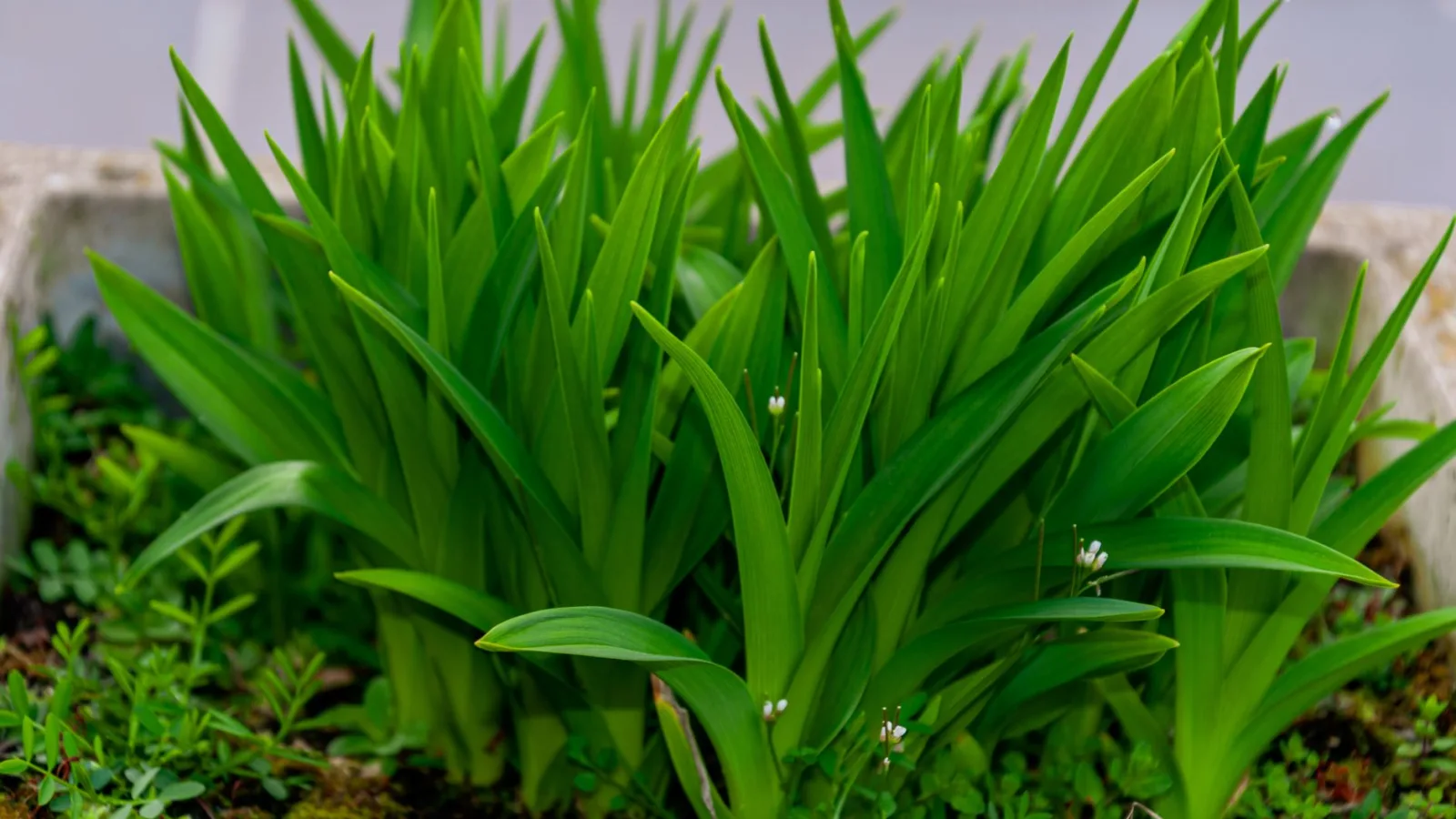
Liriope is the perennial that carpets the ground under trees and along the edges of borders. Those narrow strap leaves planted in rows beneath street trees are usually this plant, and in late summer an upright purple flower spike makes it easy to name. The leaves stay green through winter, which the Donguibogam recorded as not withering in any of the four seasons. Along the roots, swellings form at intervals like beads on a string, and because they resemble grains of hulled barley the plant took the name maekmundong, the barley-gate root. Herb markets and traditional markets sell those tubers dried, to be simmered as a tea or boiled up with jujube and pear. The long-standing practice is to draw out the fine core that runs lengthwise through each tuber before use. The Donguibogam notes that the plant grows in the Gyeongsang, Jeolla and Chungcheong provinces, on rich soil and on the islands.
Year-Round Calendar
- 1
- 2
- 3
- 4
- 5
- 6
- 7
- 8
- 9
- 10
- 11
- 12
- 3
- 4
- 9
- 10
- 10
- 11
Where It Grows
-
Main producer
Cheongyang and Buyeo in South Chungcheong and Miryang in South Gyeongsang are the centres of cultivation. In the wild it is found on forest floors from the central region southward. Harvest October, November
- 10
- 11
- Main producer Mianyang in Sichuan and Cixi in Zhejiang are the producing areas. Note, though, that what is most widely used as maekmundong in China is dwarf lilyturf (Ophiopogon japonicus), a plant of a different genus altogether, while material from the genus Liriope is set apart under the name shanmaidong (sanmaekdong).
- Wild population It grows on forest floors from Honshu southward and is planted in flower beds and under street trees.
Its range is the temperate forest of East Asia, across Korea, China and Japan. The thing to watch when shading it on a single map is that two plants share the name but differ at the level of genus. What we call maekmundong is in the genus Liriope (Liriope platyphylla), while the plant handled in bulk in China is in the genus Ophiopogon (Ophiopogon japonicus).
- Optimum
- 15~25℃
- Range
- 5~35℃
- Hardiness
- Hardy
An evergreen perennial that grows in the shade of the temperate deciduous forest floor. Its leaves do not wither in winter, and it withstands temperatures down to around −20℃. Because it grows even where light is scarce, it is used as cover beneath trees. Where water collects, the tubers rot.
Harvested 3–4 years after planting. After the clumps are divided and planted, it takes three or four years for the tubers to set, and they are dug in October to November. In the year of planting and the year after there is almost nothing to lift. If the clumps are divided and replanted as they are dug, the same ground carries on.
In Korea Central Korea and south
Both its wild habitat and its growing areas lie in the central region and southward. Cheongyang and Buyeo in South Chungcheong and Miryang in South Gyeongsang are the known areas. Purple flower spikes rise in late summer, and the tubers are dug in October to November.
How to grow
- Light
- It grows well in shade. Use it to fill the low-light ground under trees or on the north side of a building
- Soil and depth
- Free-draining soil at least 20cm deep. Tubers will not set if the ground packs hard
- Spacing
- 20 to 25cm between crowns. After a few years the clumps widen until they touch
- Watering
- Once established it carries itself on rainfall. Watch it only through the first summer drought after planting
- Feeding
- A thin layer of compost in early spring. Overfeed it and you get leaves without tubers
- Harvest
- Lift clumps three or four years after planting, in October or November. Take the whole clump up, strip the tubers off and divide the rest to replant. The Donguibogam records digging in the second and third and the ninth and tenth lunar months
What makes the difference. Wash the lifted tubers, blanch them briefly and dry them in the sun. Damp them to soften before pulling the central core out
Why this one is harder. It takes three or four years for tubers to set. There is almost nothing to lift in the first two years, so plant it as ground cover and treat the harvest as something to wait for
Common problems
- Anthracnose You will see Brown spots on the leaves, drying from the tips What to do It spreads when wet weather lingers. Cut off affected leaves and thin the clumps for airflow
- Root rot You will see The centre of the clump yellows and the roots pull up soft What to do Avoid spots where water sits and raise the bed. Dig out rotted clumps and do not replant in the same place
- Slugs You will see Holes in the new leaves and silver trails left overnight What to do Collect them by hand in the evening and clear fallen leaves from around the clump to remove hiding places
This page describes how a crop is grown and used. It does not claim health effects for any food, nor is it intended to prevent or treat disease. Component and study notes are references only and do not mean the same result occurs in people. Consult a medical professional about health concerns.
Health Benefits
The old record — maekmundong (麥門冬). The Donguibogam lists the plant in the Herb section as 麥門冬, with the vernacular gloss recorded in old Korean. It gives a slightly cold nature, notes that some call it neutral, and records a sweet taste and no toxicity. The leaves are green and resemble sedge, it says, and do not wither in any of the four seasons; the roots run like beads on a string and take their name from grains of hulled barley. Roots were dug in the second and third and in the ninth and tenth lunar months and dried in the shade, the plump firm ones counted best, and the fine core was drawn out after damping before use. Citing a folk source, it adds that the plant grows in the Gyeongsang, Jeolla and Chungcheong provinces, on rich soil and on the islands. This is a historical medical record and differs from modern medical judgment.
Saponin analyses in the liriope group. Ophiopogonin-type steroidal saponins have been isolated from the tubers of broadleaf liriope and dwarf mondo grass in repeated analyses. The same work also identifies compounds of the homoisoflavone class. These are compositional analyses and have nothing to do with preventing or treating disease.
An overlapping name. Liriope platyphylla and Ophiopogon japonicus belong to different genera yet change hands under the same market name. Overlaps in their composition are reported, but they are not treated as the same material. This is the ground for checking the botanical name at the point of purchase.
Nutrition
- Steroidal saponins (ophiopogonin type) (in the tubers) — steroidal glycosides reported across the liriope group
- Homoisoflavones (reported in the tubers) — flavonoid-type compounds isolated from the liriope group
- Polysaccharides (the mucilage of the tuber) — the component that softens the liquid during simmering
Why the core is drawn out A dried tuber holds a fine core running lengthwise through it. The long-standing practice is to damp the tuber, let it soften and pull that core out, and most of what reaches the market has already been cored. Left in, it leaves the simmered liquid dull. This is an old preparation habit rather than anything else.
Steroidal saponins Ophiopogonin-type steroidal saponins have been isolated from the tubers of the liriope group in repeated analyses. Saponins foam when they dissolve, which is where the froth on the surface of a simmering pot comes from. This entry stays with the compositional record.
Homoisoflavones Compounds of the homoisoflavone class are reported from both broadleaf liriope and dwarf mondo grass. The two belong to different genera but overlap in parts of their composition, which is one reason they change hands under the same market name. Checking the botanical name alongside the common one is worth the trouble.
Mucilage in the pot Simmered long enough, the liquid thickens a little. That is the tuber's polysaccharide content dissolving out. Boiling jujube or pear in alongside adds sweetness and makes it easier to drink, and the colour deepens the longer it runs.
Pairings
○ Jujube and pear — Boiling dried tubers with jujube and pear adds enough sweetness to make the drink easy. Cut the pear into large pieces with the skin on, and drop the heat once it reaches a boil for a long, slow simmer. Jujube · Asian Pear
○ Ginger and honey — Steep a few slices of ginger briefly in the finished liquid, lift them out and stir in a little honey to sharpen the aroma. Long-boiled ginger pushes its heat to the front, so add it at the end. Ginger
○ As an everyday drink — Simmered weak and cooled, it reaches a strength that drinks like water. That is a different use from a strong decoction, so reduce the quantity of tuber when brewing it that way. Barley
△ Digging plants out of public borders — Liriope under street trees and in park borders was planted for landscaping, so herbicide and insecticide may have been applied, and roadside soil accumulates exhaust and animal waste. What is to be eaten comes from a grower. Digging in someone else's border is a problem in its own right.
△ The berries — Black berries follow the late-summer flowers, but they are not an edible part. The only part this entry covers is the tuber, and in a border children use, the berries are best stripped in advance.
△ A strong decoction every day — Simmering dried root strong and drinking it daily is closer to a habit than to food. If you are taking medication, settle the amount and the timing with your doctor or pharmacist. During pregnancy, making a daily habit of a root that comes down through the old texts is best avoided.
Varieties
- Broadleaf liriope (division) — Wide leaves and a stout flower spike. The plant most often set under street trees and in borders
- Creeping liriope (division) — Finer leaves and smaller tubers, spreading by runners
- Dwarf mondo grass (division) — A different genus altogether. The leaves are far finer and read as turf
Source: Donguibogam, Herb Section 麥門冬 · Korea National Arboretum, Korea Biodiversity Information System