- Type
- Herbs & Aromatics
- Difficulty
- Hard
- Season
- Spring·Fall
- Sowing
- From seed
Astragalus
Astragalus membranaceus
Saponins and isoflavones · the legume root that goes into samgyetang
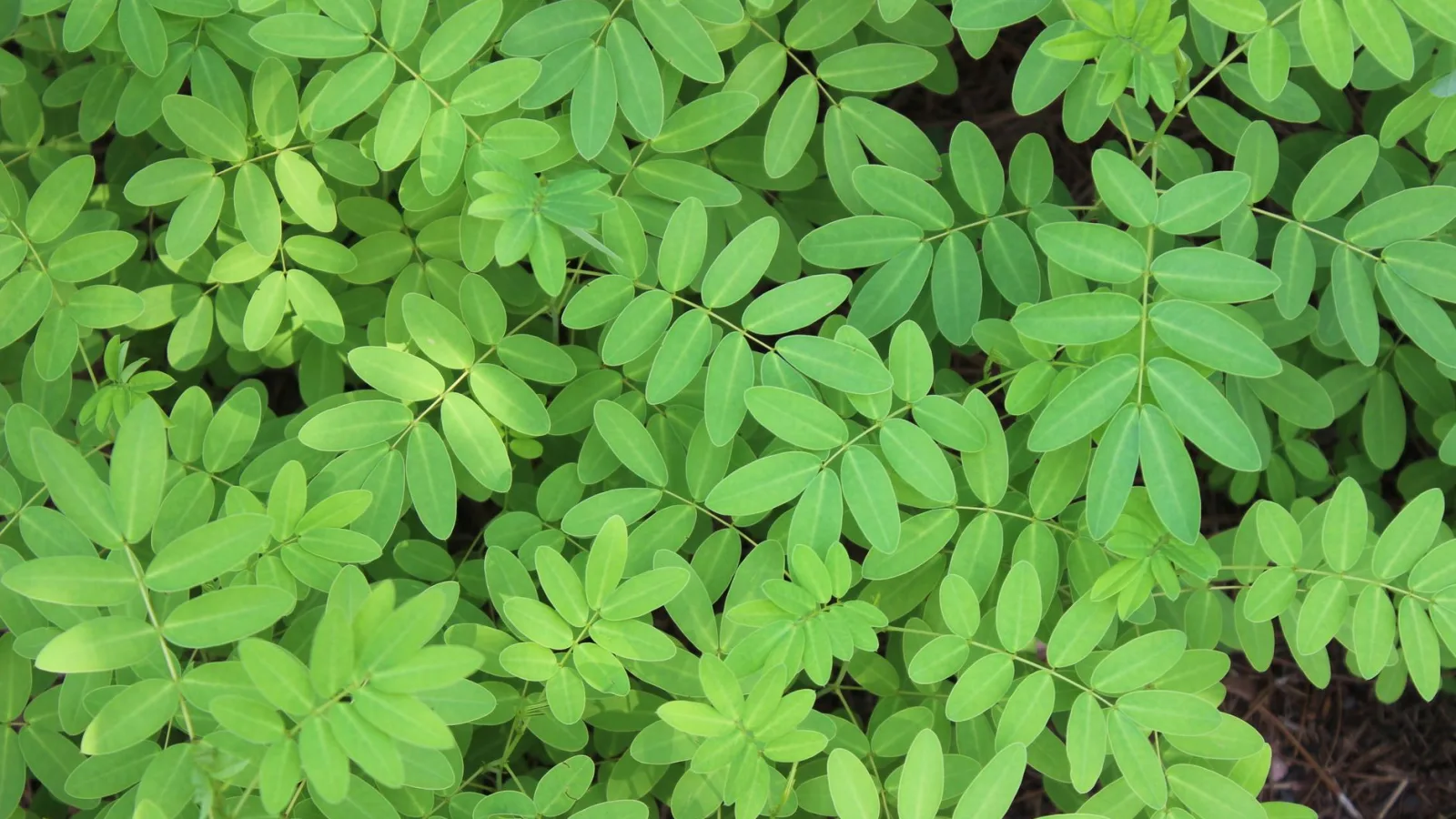
Astragalus is the dried root of a perennial in the pea family. Those flat, wood-chip-looking pieces dropped two or three at a time into a pot of samgyetang or baeksuk are this root. It drives straight down, so a bed has to be dug deep before planting, and stony ground splits the root. In Korea the growing districts best known for it are Jeongseon in Gangwon and Jecheon in North Chungcheong. The Donguibogam lists it in the Herb section under the hanja name Hwanggi and records the old Korean name as 'danneosam bulhwi', the root of danneosam. It sets the nature down as slightly warm, the taste as sweet, and free of toxicity, and says the plant grows in the open fields everywhere and that the root is dug in the second and tenth months by the lunar calendar and dried in the shade. It also keeps a line about choosing roots soft as cotton wool and straight as an arrow shaft. The pieces stay tough after simmering, so they are lifted out and only the broth is used.
Year-Round Calendar
- 1
- 2
- 3
- 4
- 5
- 6
- 7
- 8
- 9
- 10
- 11
- 12
- 4
- 10
- 11
Where It Grows
- Main producer Production centers on the dry steppe country of Inner Mongolia, Shanxi, and Gansu. Most of what is traded is Mongolian milkvetch (Astragalus mongholicus).
-
Main producer
It is grown where summers stay cool, around Jeongseon and Taebaek in Gangwon and the Jecheon area of North Chungcheong. Harvest October, November
- 10
- 11
- Wild population Wild plants occur on the steppes and lower mountain slopes.
- Wild population It is distributed across southern Siberia and the mountains of the Russian Far East.
It is native to the cold, dry continental belt stretching from the Mongolian Plateau through northern China and the Korean Peninsula to southern Siberia. What reaches the market comes in two lines, hwanggi (Astragalus membranaceus) and Mongolian milkvetch (A. mongholicus), and since the two are sometimes regarded as varieties of a single species, origin labels often get mixed.
- Optimum
- 15~22℃
- Range
- 5~30℃
- Hardiness
- Hardy
The roots grow thick in cool, sunny, dry ground. The plant is extremely cold-hardy, surviving winters of around -30℃ through its roots. It is, however, sensitive to moisture: standing water or a long rainy season will rot the roots.
Harvested 1–2 years after planting. Seed is usually sown in April and the roots dug the same year in October–November; left in the ground for another year, the roots grow thicker, but the woody core hardens.
In Korea Mountain areas
The best ground is the cool-summer, well-drained mountain country of the central-northern regions. Jeongseon, Taebaek, and Pyeongchang in Gangwon, Jecheon in North Chungcheong, and Yeongju in North Gyeongsang are the known growing areas.
How to grow
- Light
- Five or six hours of sun in an open spot. In shade the root never thickens
- Soil and depth
- Free-draining sandy loam, dug 40cm deep or more. Stony ground splits the root
- Spacing
- 20cm between plants, 40cm between rows. Crowded, the roots stay thin
- Watering
- Keep it from drying only until it roots. Once established, standing water is the worse problem
- Feeding
- Start with base compost and go easy afterwards. Heavy nitrogen builds leaf and forks the root
- Harvest
- Lift in October or November of the first year, once the leaves have yellowed. Wash the soil off and dry the roots in the shade. Left another year they thicken, but the woody tissue hardens with them
What makes the difference. Keep dried roots in a sealed container somewhere cool and dry. Damp brings mould, so move them to the refrigerator through the rainy season
Why this one is harder. The root drives straight down, so transplanting rarely takes. Sow directly where the crop will be lifted, and in a pot choose one at least 40cm deep
Common problems
- Aphids You will see Colonies on the growing tips, leaves turning sticky What to do Wash them off with a jet of water; if it recurs, use an egg-yolk oil spray. Clear the weeds around the bed first
- Powdery mildew You will see White dust settles on the upper leaf surface and the leaf yellows What to do It spreads when wet weather lingers after the rains. Thin the lower leaves for airflow and remove affected ones
- Root rot You will see A plant wilts suddenly in midsummer and the root is soft when pulled What to do Avoid spots where water sits and raise the bed. Dig out rotted plants and do not replant in the same place
This page describes how a crop is grown and used. It does not claim health effects for any food, nor is it intended to prevent or treat disease. Component and study notes are references only and do not mean the same result occurs in people. Consult a medical professional about health concerns.
Health Benefits
The old record — hwanggi (黃芪). The Donguibogam lists the root in the Herb section under the hanja name Hwanggi and records the old Korean name as 'danneosam bulhwi'. It sets down a slightly warm nature, a sweet taste and no toxicity. It says the plant grows in open fields everywhere, that the root is dug in the second and tenth months by the lunar calendar and dried in the shade, and that roots soft as cotton wool and straight as an arrow shaft were reckoned the good ones. What an old medical text wrote differs from how it is judged today.
Saponin analyses in the genus Astragalus. Astragaloside-type triterpene saponins have been isolated from Astragalus species in repeated analyses. The same work reports levels varying with the part of the root and the number of years it grew. These are compositional analyses and have nothing to do with preventing or treating disease.
What passes into the decoction. Analyses report that polysaccharides and sugars pass into the water first when the dried root is simmered, while glycosides are drawn out to different degrees by water and by alcohol. The pale gold colour and the body of the broth are discussed in connection with the same compounds. This is an analysis of cooking behaviour.
Nutrition
- Saponins (astragaloside type) (distributed through the root) — triterpene glycosides reported across the genus Astragalus
- Isoflavones (formononetin and others) (distributed through the root) — a flavonoid group common in the pea family
- Polysaccharides (drawn into the water during simmering) — high-molecular carbohydrates that thicken the broth
- Dietary fibre (most of the dried root) — fibre close to wood in character
The dried root and the broth Astragalus is not chewed; it is simmered and the liquid is what gets used. Most of the root is fibre close to wood, and it never softens however long it boils. What passes into the water is polysaccharide, sugar and a share of the glycosides. Lift the pieces out once the broth is made.
Saponin glycosides Repeated analyses report astragaloside-type triterpene saponins isolated from Astragalus species. They sit in the root, and the same work reports that water and alcohol draw them out to different degrees. This entry stays with the compositional record.
Isoflavones Isoflavone flavonoids common across the pea family are also found in astragalus root. Formononetin and its glycosides are the ones usually reported. This is what compositional analysis shows and nothing beyond it.
Sweetness in the broth The quiet sweetness of a pot with astragalus in it comes from sugars in the root passing into the water. The longer it simmers the deeper the colour and the fuller the body. Cooked alongside a fatty ingredient such as chicken or duck, that sweetness stands out more.
Pairings
○ Chicken and duck — Samgyetang and baeksuk are the familiar pairing. The quiet sweetness of the root settles onto a fatty broth and lengthens the finish. Add it with the first water and lower the heat once it comes to the boil.
○ Jujube and garlic — The sweetness of jujube and the pungency of garlic give the flat sweetness of astragalus an outline. Split the jujubes so they release, and leave the garlic whole so the broth stays clear. Garlic · Jujube
○ Water and time — how to simmer it — Put a few dried roots into cold water and bring them up together. Once it boils, drop the heat and hold it for thirty or forty minutes; when the water turns pale gold, lift the pieces out. Longer and stronger is not better.
△ Chewing the root — lift it out — The root is woody and will not soften however long it cooks. Once the broth is drawn, take the pieces out and use only the liquid. Check a child's bowl for stray pieces before serving.
△ Digging roots in the wild — The genus Astragalus also contains plants that poison livestock, and pea-family roots cannot be told apart by appearance. Do not dig roots on hillsides or in fields to simmer at home. Use what was grown deliberately or bought.
△ On medication or pregnant — Two roots in a pot of soup and a strong decoction drunk daily are not the same quantity. Anyone on medication, pregnant or nursing should not brew it at home and drink it as a routine. Tell the treating clinician what is being taken.
Varieties
- One-year roots (seed) — Sown in spring and lifted the same autumn. Slender, with a lighter sweetness
- Two-year roots (seed) — Left through a winter and lifted the following autumn. Thicker, with harder woody tissue
- Sliced (dried) — The root cut on the diagonal and dried. The common form for broth
- Whole root (dried) — Dried uncut, so thickness and straightness can be judged by eye
Source: Donguibogam, Herb Section 黃芪 · Rural Development Administration (Nongsaro)