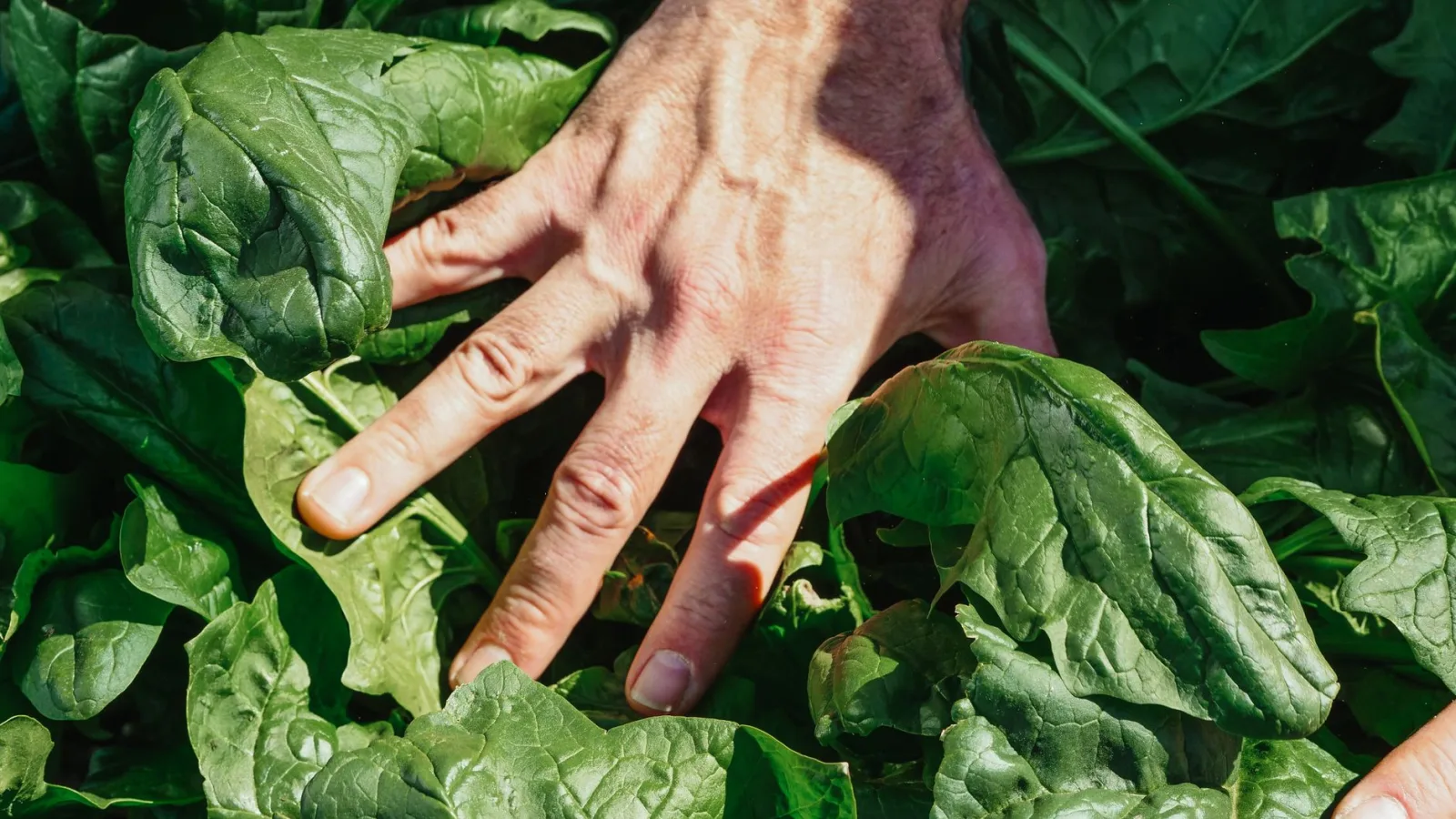
Now that the rainy season has passed, you've probably left a corner of the plot open for fall spinach. Spinach grows fast enough to thin and eat within a month of sowing, which makes it one of the most forgiving leafy greens for a beginner's garden. But that speed cuts both ways. Spinach takes up whatever is in the soil and puts it straight into the leaves — the welcome minerals and the unwelcome heavy metals alike.
What Spinach Brings Up From the Soil
Cadmium is a heavy metal that lingers in roadside dust, old painted materials, and the soil of former industrial sites. Broad-leaved, fast-growing crops — spinach, Swiss chard, and mallow among them — are known to take up relatively more of it. These days cadmium sulfide also turns up as very fine particles, nanoparticles, used in solar cells and light-emitting materials, and some of that makes its way into soil as the products are manufactured, used, and thrown out. Because even small amounts eaten over many years leave a burden on the kidneys, researchers in a number of countries are looking for ways to keep it out of the leaves we eat.
Spinach That Got Silicon, Too
In an experiment published in a plant biology journal in 2026, spinach plants three weeks past planting were dosed with cadmium sulfide nanoparticles for four weeks. One group got cadmium alone. The other got silicon dioxide — silica — nanoparticles alongside it, at a range of concentrations. The plants that received silica accumulated up to about 40 percent less cadmium. They actually took up more of the minerals people need, such as zinc, calcium, and iron, and instead of yellowing, their chlorophyll rose sharply and the leaves deepened in color.
Under an electron microscope, the silica-treated plants showed fewer cadmium particles inside their cells to begin with. The roots appear to have let less in, and for whatever did get through, the leaves ramped up their own antioxidant response. Metabolic pathways moving amino acids, sugars, and sulfur shifted as well. That said, this was a lab study with concentrations dialed in precisely. Whether spreading nanoparticle silica on a home garden would produce the same result hasn't been established, so it isn't something to go out and buy.
What to Do Before You Sow
Silicon itself is nothing exotic. Rice growers have used silicate fertilizers for a long time, and several reports show that rice given plenty of silicon takes up less cadmium. In a home garden, you can add silicon through rice hulls, rice-hull biochar, or a silicate base fertilizer. None of that cleans up contaminated soil, though. Start by looking hard at where you're planting.
- Choose a spot at least ten paces back from a busy road, and skip the soil right up against the walls of old buildings.
- When soil tips acidic, cadmium moves into roots more readily. Spread lime two to three weeks before sowing to bring the pH back into range.
- Working compost in regularly builds humus, which reduces how much of the heavy metal travels into the roots.
If your plot sits near a former factory or a landfill, it's worth running a soil test through your local agricultural extension office — in Korea, the city or county Agricultural Technology Center. Heavy metals are sometimes left off the free test panel, so ask when you apply.
Whether spinach was grown well shows in the depth of its leaf color. Leaves with plenty of chlorophyll also carry more iron, more folate, and more lutein, which supports eye health. Choosing the right spot is what ends up on the table. Today, take a tape measure out and check the distance to the road, and set a bag of lime aside.
Reference — published in Plant Biology, 2026: a study on silicon dioxide nanoparticles easing cadmium sulfide toxicity in spinach.